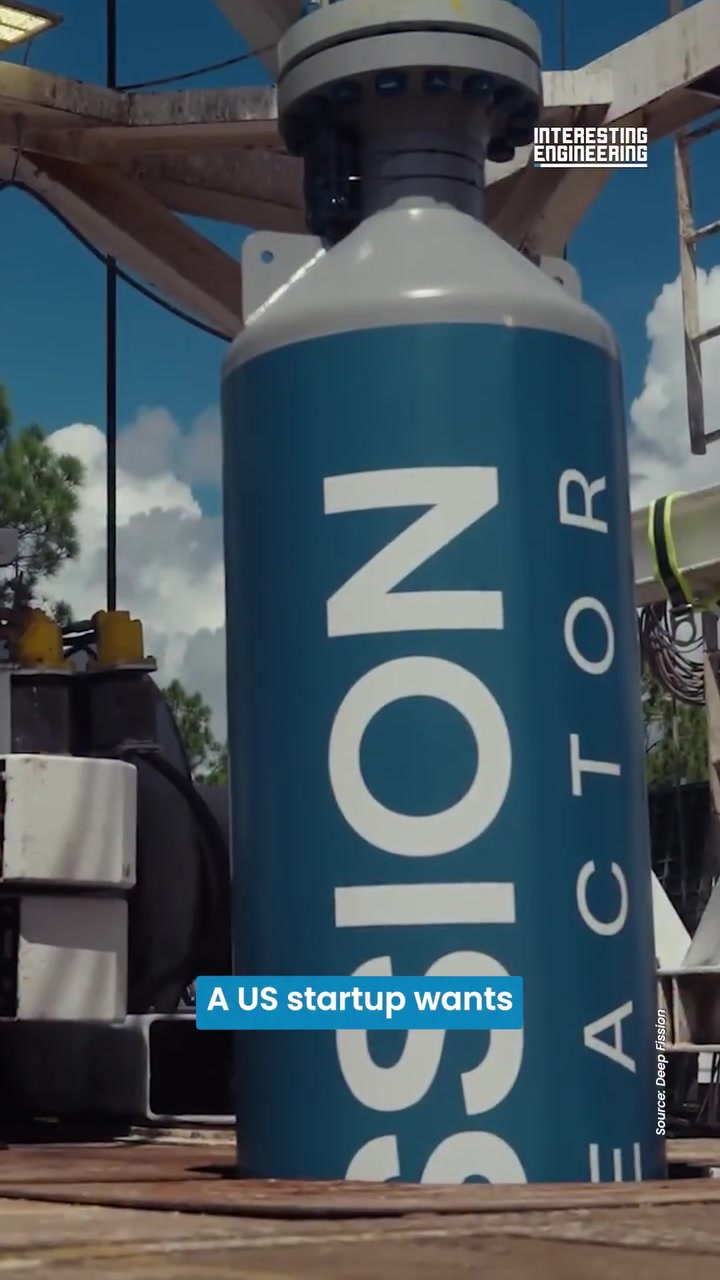
Deep Fusion, a US startup, aims to revolutionize nuclear power with a bold plan to bury small reactors a mile underground in narrow boreholes. The project marks a collaboration between the startup and experienced Florida drillers.
The Gravity Reactor
A small company based in the US designed the compact, pressurized water reactor called Gravity Reactor. It's remarkable for its size and its intended location: a mile below the earth's surface. The reactor uses standard low-enriched uranium and can generate up to 15 megawatts of electricity. The reactors are designed to be placed about a mile deep. At that depth, the water pressure on the borehole reaches approximately 160 atmospheres, which prevents the water from boiling. Water around the reactor helps to cool it off, while gravity provides the necessary pressure to maintain water at over 300 degrees Celsius. Rock layers replace the containment dome typical of other reactors, maintaining structural integrity. A turbine on the surface receives heat from the steam, converting it into electricity. The drill hole forms a slender path just a few feet wide. The reactor's dimensions fit snugly within this narrow space. Fussing over precise measurements, The borehole receives a full-size 20-foot prototype, some 30 inches wide, and is lowered down 100 feet, using an existing commercial drilling rig. The 100 feet is only around 2% of a mile deep. The Youngquist brothers, who have been drilling deep wastewater injection wells in Florida since 1971, have played a crucial role in the project. They have extensive experience building most of Florida’s deep wastewater injection wells
The Drilling Pursuit
The project draws interest due to nuclear power's potential for strong, steady electricity, though concerns about meltdowns and safety threats often stop related projects. Deep Fusion's Gravity Reactor may sidestep many of these risks. The system's reliance on gravity and the earth's inherent pressure for essential functions could simplify reactor designs, reducing the risk of catastrophic failures. Small reactors able to be installed as low as a mile underground can streamline the process of nuclear power production. These reactors are more portable than power plants, can be installed in remote places, and can be placed underground at minimal environmental impact. The equipment enables it to be installed underground. The drill, amounting to a mile beneath the surface of the earth, has a diameter no bigger than a few feet. It's a deceptively small hole to house the reactor. A prototype test was performed with experienced drillers. The prototype was lowered down 100 feet, not even a percent of the planned distance to the reactor's final resting place. The Youngquist brothers successfully drilled a hole about a mile before lowering the reactor down into it.
Rig, Reactor, Rock Drift
Though drilling a hole deep enough to install nuclear reactors sounds simple, the actual execution is an enormous job. The cavities must be precise and exact to prevent any radioactive leakage. If completed correctly, Gravity Reactor’s canister will fit snugly into the borehole, leaving only two inches on each side. A complex melting process is also required to prevent the reactor from overheating.
Florida's drilling expertise
The Gravity Reactor project will use a compact reactor. It is still a heavy device, measuring around 20 feet and weighing thousands of pounds. The success of this venture relies on the expertise of the Youngquist brothers. They are responsible for drilling the borehole and lowering the reactor prototype. The two-inch space left on each side of the reactor will prove a challenge. Equality in size is crucial to prevent any movement and leakage. With the drill 100 feet down, there is a long way to go before hitting the 5280 feet needed to reach the bottom.
Gravity's Hand
Gravity Reactor relies on the earth’s natural pressure to control the water in the borehole. At a depth of a mile, the water pressure is at around 160 atmospheres, allowing the reactor to run under extreme heat without boiling. Water around the reactor aids the cooling system. Gravity's pressure handles the water, which supplies energy for the turbine on the surface, converting steam into energy.
Warm up
The nuclear battery is small, in contrast to the immense energy it can generate. The reactor produces enough energy to power 8000 homes and the most interesting aspect remains its design. The reactor is shallow enough to be lowered into a hole. Its installation is simple, and requires no special consturctions. The 20-foot canister can be placed in a borehole 5280 feet deep, with just 2 inches left on each side. Its small size will allow it to be installed in places that previously couldn't be powered by nuclear power. The project will enable its potential to provide energy without a huge environmental impact.
Testing the Gravity Nuclear Reactor
If you are on a quest to install a compact nuclear reactor, the first step is to find a reliable drilling team. The Reactor is rated to produce 15 megawatts of electricity and relies on a mile deep hole to be installed. It will be buried 5280 feet deep. About one mile down. The water pressure around it will provide the necessary pressure to run the reactor. The water pressure at that depth is around 160 atmospheres. This is the necessary pressure to handle the water in the reactor at over 300 degrees Celsius. The first test was a prototype lowered down 100 feet using a drilling rig, which is why the Youngquist brothers, who've been drilling deep wastewater wells since 1971, are involved.
- Seek reliable help: The gravity reactor is a delicate and precise operation. A horizontal and vertical alignment of 100% accurate must be maintained. Look for drone assistance with equipment to locate the borehole.
- Gauge the terrain: You need to find a terrain that will allow you to drill a mile down. The earth surrounding the reactor will provide sufficient pressure, which will be necessary to prevent the water from boiling.
- Proceed with a prototype: You don't want to risk dropping a reactor a mile down into the ground without any idea of how. You need the minutiae confirmed first.
- Ensure balance: The 20-foot reactor will leave no room for error. Two inches on each side are available in the 34-inch hole. The path for the reactor must be clear and aligned.
The Earth's Bother
Deep Fusion has plans to change the entire industry. Installing a reactor one mile below ground addresses some of the biggest concerns of the nuclear power plant. These reactors can be installed anywhere since their footprint is minimal. They will be buried underground, making them less of a hazard. The cost of nuclear power will be reduced, as the only real cost is drilling the hole and installing the reactor. The reactors can be installed anywhere, including remote locations. The risk of radioactive leakage will be essentially non-existent once the reactor is installed. Gravity plays a significant role in the overall design of the reactor. It provides the necessary pressure and takes care of the water in the reactor to keep it safe. The earth itself encases the reactor, which will be safe for years.
Questions readers ask
What makes Deep Fusion's Gravity Reactor unique compared to traditional nuclear reactors?
The Gravity Reactor is unique because of its small size and underground placement. Instead of using a containment dome like other reactors, it relies on the earth's natural pressure and gravity to maintain water at high temperatures. This design could simplify reactor operations and reduce the risk of catastrophic failures.
How does the Gravity Reactor generate electricity?
The reactor generates electricity by using water to cool it and gravity to maintain water pressure. The heat from the reactor creates steam, which is then sent to a surface turbine to generate electricity. The water pressure at a mile deep prevents the water from boiling, allowing the reactor to operate safely.
What role do the Youngquist brothers play in Deep Fusion's project?
The Youngquist brothers, experienced drillers from Florida, have been instrumental in the project. They have extensive experience drilling deep wastewater injection wells and have successfully drilled a hole about a mile deep for the prototype test of the Gravity Reactor.
Can the Gravity Reactor be installed anywhere?
The Gravity Reactor is designed to be portable and can be installed in remote places. However, the installation site must be carefully selected to ensure the borehole can be drilled safely and the reactor can operate without environmental impact.
How does the Gravity Reactor address safety concerns related to nuclear power?
The Gravity Reactor addresses safety concerns by relying on the earth's natural pressure and gravity for essential functions, which could simplify reactor designs and reduce the risk of catastrophic failures. Additionally, the reactor's underground placement can minimize environmental impact and reduce the risk of radioactive leakage.
What challenges might Deep Fusion face in drilling a mile-deep borehole for the Gravity Reactor?
Drilling a mile-deep borehole requires precise measurements and exact cavities to prevent radioactive leakage. The process is complex and challenging, but the Youngquist brothers' experience and expertise in drilling deep wastewater injection wells could help overcome these challenges.
Are there any ongoing trials or tests for the Gravity Reactor?
The article mentions a 100-foot prototype test using an existing commercial drilling rig. This is a small fraction of the planned depth, but it demonstrates the feasibility of the project. The prototype was successfully lowered into the borehole, indicating progress in the development and testing phase.
Related deep dives
Similar reads based on topic and creator.
Recent articles
Fresh deep dives from the latest Reels we unpacked.

Comments
Be the first to comment.