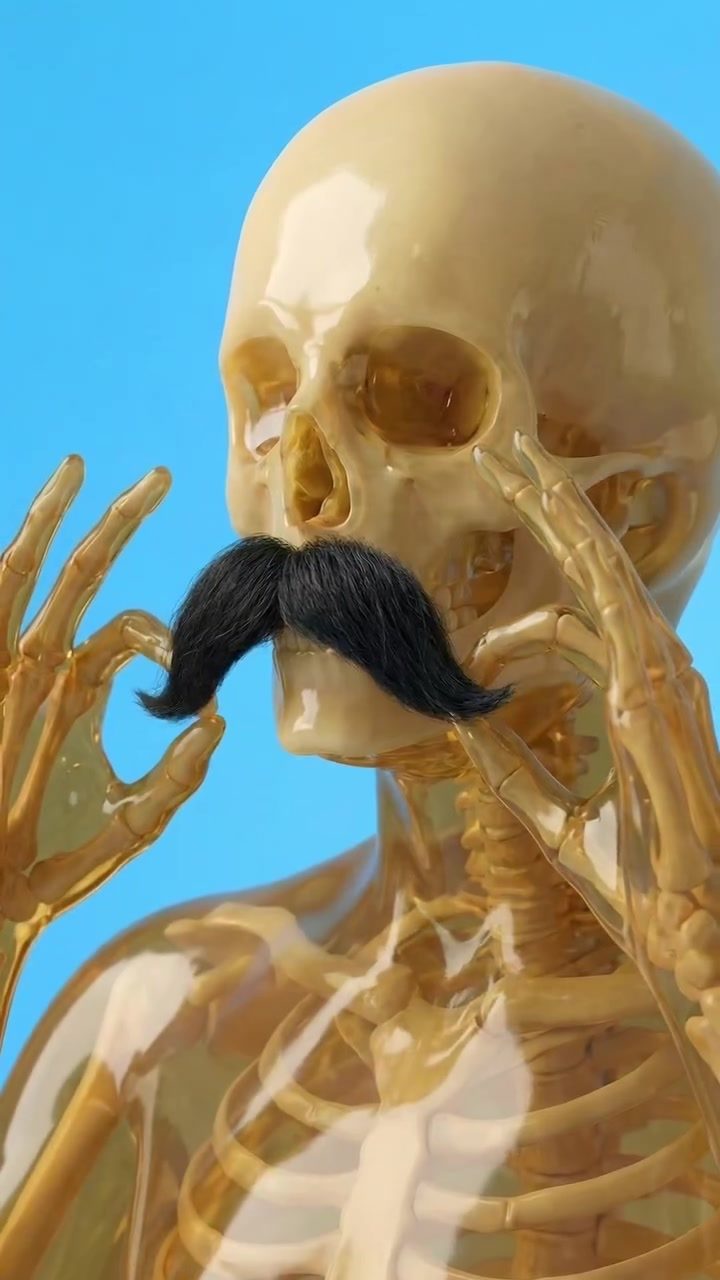
Skeletons with Mustaches
The idea of a skeleton with a mustache might seem humorous and unexpected but raises an interesting question. What if you didn’t shave your mustache for an extended period? Let’s dive into the journey of mustache growth over a decade, exploring the changes in appearance, texture, and even psychological effects.
Why This Matters
Understanding the growth patterns and changes in facial hair can be intriguing for those considering growing a mustache or simply curious about the biological processes involved. While the video uses a skeleton as a lighthearted prop, the underlying information about mustache growth is grounded in real biological facts.
The Journey of a Mustache
Day 1: The Beginning
On the first day, your mustache growth is virtually invisible. The skin feels smooth, and the visible length is barely noticeable. However, beneath the surface, your hair follicles are already waking up and restarting the growth cycle. This initial phase is crucial as it sets the foundation for the mustache's future development.
One Month: The First Signs
After a month, your mustache reaches around 1.5 centimeters. At this stage, it is clearly visible and starts to feel rough to the touch. This growth changes the shape of your face, giving it a different contour. Even at this early stage, the mustache is growing non-stop, and the pattern is beginning to form.
Six Months: Noticeable Growth
By six months, your mustache can reach about 9 centimeters. The growth is more pronounced, and the mustache starts to fall down on the sides. This stage marks a significant change in appearance. The mustache is no longer just a light growth; it has a clear shape and pattern.
One Year: Evolution
At the one-year mark, your mustache can grow to 15 to 23 centimeters. This length is significant as it starts to interfere with daily activities. It moves when you talk, naturally splits, and sometimes you have to move it away from your mouth. The mustache becomes a part of your identity, affecting your posture and confidence.
Ten Years: A New Identity
After ten years, your mustache can reach impressive lengths, depending on your genetics. At this point, it has a noticeable weight and inertia when you move your head. The mustache swings when you move, and it's no longer just hair; it's a physical object attached to your face. This stage marks a significant change in how you interact with the world and how others perceive you.
Practical Tips
If you’re considering growing a mustache, here are some practical tips to help you through the journey:
Maintaining Your Mustache
- Trim Regularly: Regular trimming helps maintain the shape and prevents the mustache from becoming unruly.
- Brush It: Brushing your mustache can help keep it tidy and prevent it from tangling.
- Use Mustache Wax: Wax can help shape your mustache and keep it in place.
- Cleanliness: Keep your mustache clean by washing it regularly to prevent buildup and maintain hygiene.
Psychological Impact
Growing a mustache can have psychological effects. It can boost your confidence and change how you perceive yourself. The growth process can also affect your posture and overall demeanor, giving you a more confident and stoic appearance.
Important Takeaways
Growing a mustache is a gradual process that involves significant changes in appearance and texture. Understanding the growth patterns and the impact on your face and personality can help you make an informed decision. Whether you decide to grow a mustache or not, the journey is an interesting exploration of biological processes and personal identity.
Conclusion
The growth of a mustache over ten years is a fascinating journey marked by significant changes in appearance, texture, and even psychological effects. Understanding this process can provide valuable insights into the biological mechanisms behind facial hair growth and its impact on personal identity.
Questions readers ask
How does a mustache change in appearance over a decade?
Over a decade, a mustache evolves significantly. Initially, it starts as fine, light hairs. Within a few months, it becomes denser and more noticeable. By the end of the first year, the mustache will have a distinct shape and texture. Over the next years, it will become thicker and fuller, with variations in color and thickness across the decades.
What are the different textures a mustache goes through during its growth?
In the first few weeks, a mustache feels soft and thin. As it grows, it becomes coarser and may feel prickly. Around the three-month mark, the mustache will start to feel more robust and defined. Variations in texture can also occur due to hormonal changes and aging, leading to a fuller, more mature feel over the years.
How does growing a mustache affect facial contours?
As a mustache grows, it can subtly alter your facial contours. The mustache can make the upper lip appear more defined, highlighting your cheekbones and jawline. The transformation depends on the mustache's shape, thickness, and your facial structure. Proper grooming can further accentuate or soften the changes in facial contours.
Are there psychological effects associated with mustache growth?
Growing a mustache can have psychological effects. Some people report feeling more confident or assertive with a mustache. Others may experience a sense of identity change, as facial hair can alter one's appearance and how others perceive them. The psychological impact varies from person to person, depending on personal preferences and societal influences.
What factors influence the timeline of mustache growth?
Several factors influence mustache growth, including genetics, age, and hormone levels. Genetics play a significant role in determining hair density, thickness, and growth rate. Hormones, particularly testosterone, also impact mustache growth. As men age, hormonal fluctuations can affect the speed and fullness of mustache growth.
Related deep dives
Similar reads based on topic and creator.




Recent articles
Fresh deep dives from the latest Reels we unpacked.



Comments
Be the first to comment.