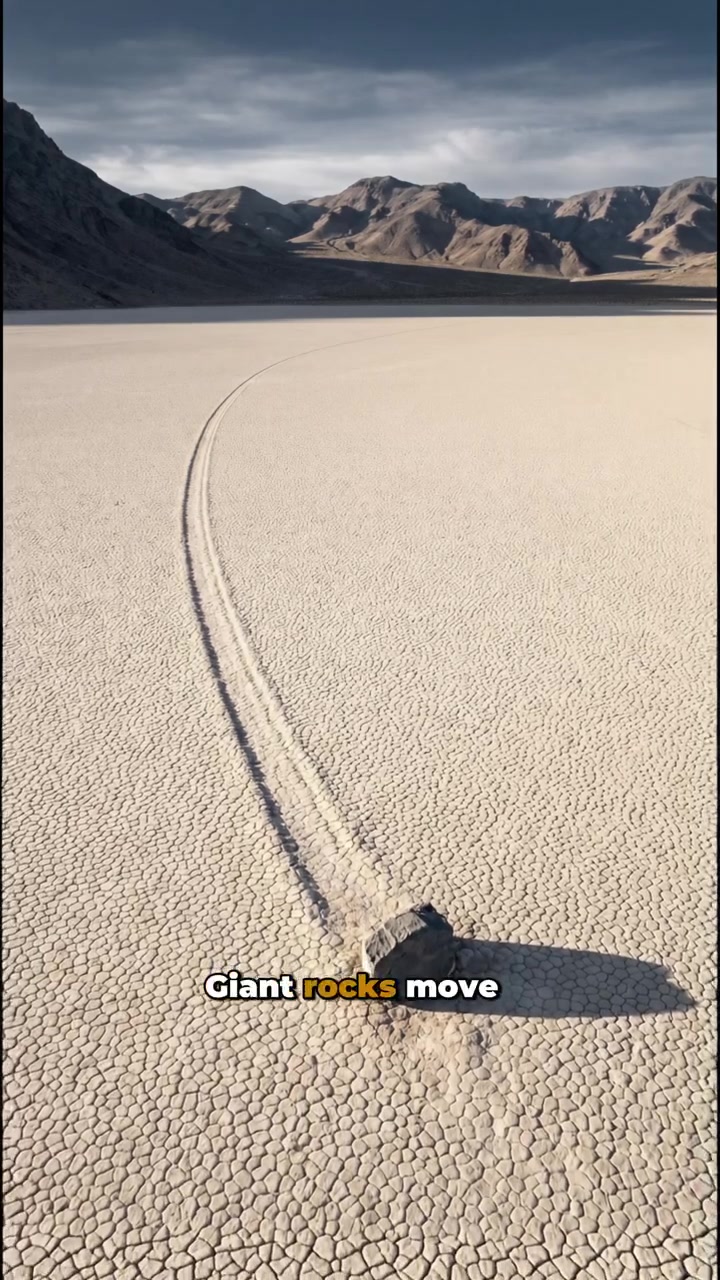
TheRacetrack Playa in Death Valley sprawls beneath the sun, a vast and cracked lakebed. It’s a place where mysterious trails stretch over 200 meters, lingering mostly unseen, a composite of trails that stretch out like a cryptic message left by no human. These trails are the work of giant rocks — some weighing as much as 300 kilograms — that move across the desert, leaving as much evidence of their movement as a ghost. Yet, no one has ever witnessed the rocks inch their way across the cracked mud to leave these tracks, trail markers of an invisible journey.
The Playground of Mysterious Migration
Racetrack Playa hosts one of the many mysteries of the natural world, where rocks and stones drift across the desolate landscape in ways inexplicably believable. This cracked lakebed in Death Valley is something of a natural phenomenon that has left scientists baffled. The rocks, weighing up to 300 kilograms, carve trails that stretch up to 200 meters across the mud. Some of these trails run straight, while others make sudden, sharp turns, making the journey appear as if the rocks changed their minds. The mechanism of the rocks' movement is a source of perpetual curiosity. Speculation has framed the phenomenon in many frames. The wind, appearing too weak to push these rocks, was nominally dismissed as a plausible cause. Nor are the rocks magnetic, which eliminates another possibility. The mystery has been a century-long investigation. Scientists set up cameras and waited, but for years, nothing happened. As one might imagine, the rocks only ever moved when no one was watching, making the mystery even more elusive.
The Desert Floor as a Natural Stage
The terrain around Death Valley's Racetrack Playa is a testament to the importance of long-term observation in natural science. The sudden movement of rocks up to 300 kilograms, as fuzzy video recordings would reveal, requires a delicate conjunction of factors. The travel of these rocks is a scenario too strange for some to believe, inviting speculation ranging from the scientific to the absurd. The delicate mechanism of the rock migration at Racetrack Playa is an oddity worth delving into. The explanation involves a fleeting set of natural conditions. When the playa's muddy floor is flooded and the air is frigid, thin sheets of ice form. This sheet of ice sustains its integrity under the steady morning sun, which slowly melts the ice as the air warms. This creates a delicately balanced sheet that can slide uniformly over the muddy surface with a gentle breeze.
The ICE factor
The geophysical conditions at Racetrack Playa are a testament to the delicate dance required for the rocks to migrate. When the playa floods, a thin sheet of ice forms overnight. Here, this ice sheet, nuzzled by a breeze at dawn, nudges the rocks as it drifts across the slick surface. The necessity of these conditions explains the rarity of the phenomenon.
The Aerial View
Racetrack Playa reveals something of a geological painting from a bird's eye view. The mysterious and unexplained trails of rocks have been captured and studied by scientists for decades. The aerial view of these trails captures their peculiar forms, which point to a movement that no one has ever seen. Some trails are more than 200 meters long, and they often take sharp turns, as if the rocks changed their minds. The mystery behind these trails has been a source of curiosity and speculation for almost a century.
The Limits of Mystery
Racetrack Playa, dry and cracked most of the time, is a mystery. These rocks, which move without leaving human footprints, only do so when the conditions are right. When the playa floods, a thin sheet of ice forms, and at sunrise, that ice slides across the mud, dragging the rocks. Winds around the playa have been measured to be sustained and steady, and the rocks leave trails that suggest it was otherwise.
Your Prospects in the Dry Lakebed
Observing the geometric ballet of rock migration at Racetrack Playa is a labor of patience, resilience, and a bit of luck. If the prospects of camping and waiting for the right weather appeals to you, bear in mind the following.
- The Perfect Weather: Floods, freezing nights, and dawn breezes are all needed.
- Monitor Conditions: Keep an eye on the weather forecast and the condition of the playa.
- Pack in Layers: The desert floor can be a playground for the wind. It is also a playground for the sun.
- Preparation: Bring ample water and other supplies, as it can be a long wait. But be warned: this delicate dance of nature occurs just a few times a decade. The mystery is solved, but the experience is still elusive and rare.
The Next Century of Racetrack Playa
The longstanding mystery of the moving rocks in Death Valley has finally been solved, with an answer that is as gentle as it is unexpected. The story of the rocks' movements has long been a subject of speculation, with theories ranging from wind and magnetic forces to aliens and hoaxes. These large rocks at Racetrack Playa weigh up to 300 kilograms, move with their own unique style, and leave long trails. The rocks exhibit some movement that scientists have been able to capture in the last few years.
Questions readers ask
What makes the rocks at Racetrack Playa move?
The rocks move due to a unique combination of factors. When the playa's muddy floor is flooded and the air is frigid, thin sheets of ice form. As the sun warms the air, the ice melts and creates a delicate sheet that can slide uniformly over the muddy surface with a gentle breeze, nudging the rocks along.
Why do the trails left by the rocks vary in shape and direction?
The trails vary because the rocks are being pushed by the ice sheets, which can move in different directions depending on the wind and the melting of the ice. Some trails run straight, while others make sudden, sharp turns, giving the appearance that the rocks changed their minds.
How long have scientists been studying this phenomenon and why is it so difficult to observe?
Scientists have been studying the moving rocks at Racetrack Playa for over a century. It's difficult to observe because the rocks only move under very specific conditions—when a thin sheet of ice forms on the flooded playa and a gentle breeze nudges them along. These conditions are rare and hard to predict, which is why no one has ever witnessed the rocks moving in person until recently.
What are the rocks made of, and how heavy are they?
The rocks are made of various materials, and some can weigh as much as 300 kilograms. Despite their size, they can be moved by the thin sheets of ice and gentle breezes under the right conditions.
Are there other places in the world where similar rock movements occur?
As of now, Racetrack Playa is the most well-known site for this phenomenon. While there might be other places with similar conditions, this specific combination of factors leading to the rocks moving is unique to Death Valley. There is currently no evidence of such movements elsewhere.
Can visitors to Death Valley see the rocks moving?
It's highly unlikely for visitors to see the rocks moving. The conditions required for the rocks to move are rare and specific, and they typically occur when the playa is flooded and the air is frigid. Plus, the movement is gradual and slow, making it difficult to witness even if you are present during the right conditions. Plus, the rocks are only moving when no one is watching.
How do scientists know the rocks are moving if no one has seen it happen?
Scientists have used time-lapse photography and other monitoring techniques to capture the rocks in motion. These methods have revealed that the rocks move when a thin sheet of ice forms on the flooded playa and a gentle breeze nudges them along, even though no one has directly witnessed the movement in person.
Related deep dives
Similar reads based on topic and creator.



Recent articles
Fresh deep dives from the latest Reels we unpacked.




Comments
Be the first to comment.