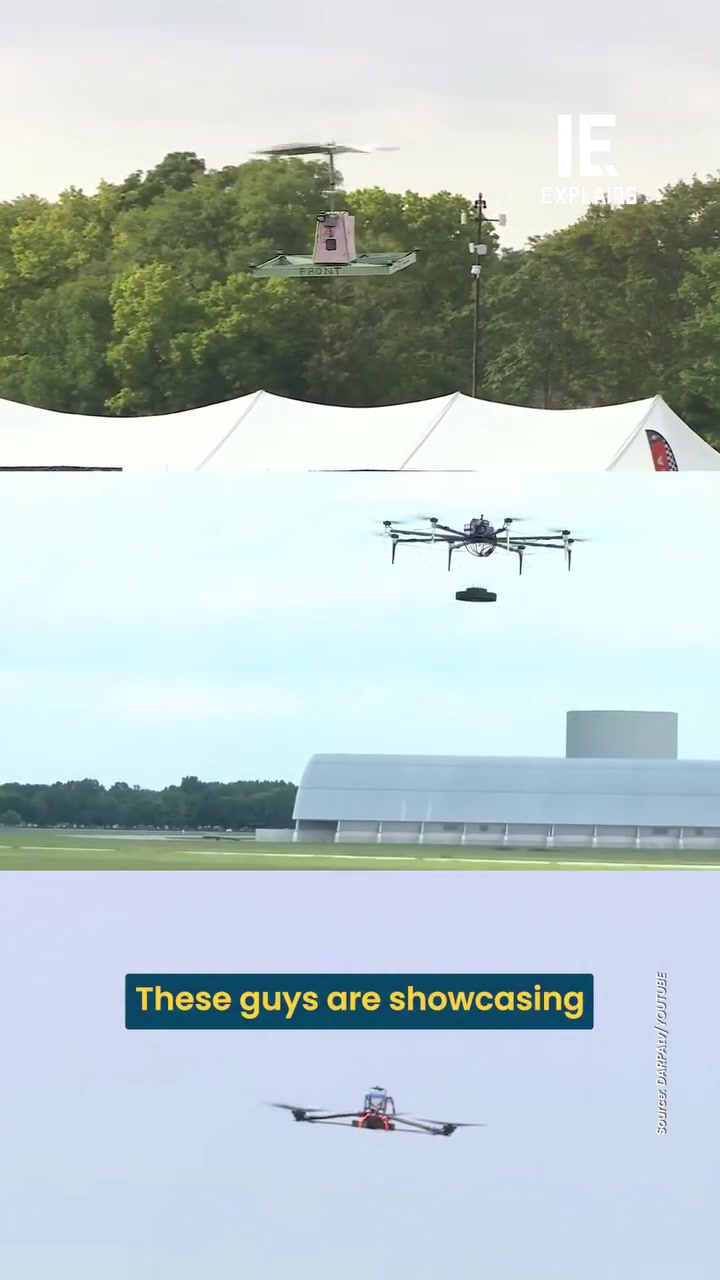
Hundreds of drone prototypes are flying high at the National Museum of the US Air Force, all aiming to lift four times their own weight. The DARPA Lift Challenge is pushing the limits of drone technology, and the competition is fierce.
The DARPA Lift Challenge
The DARPA Lift Challenge is an ambitious competition organized by the US Defense Advanced Research Projects Agency. The goal? To design a quadcopter drone that can lift four times its own weight. 2020 teams from more than 20 nations including students, small businesses, and garage engineers have signed up. Crowds are flocking to the National Museum of the US Air Force the week of the challenge, showcasing drones flying through a 60 feet wide flight lane in a five nautical mile circuit. It's not just about brute strength; precision and endurance matter too. These heavy-lifting drones must carry at least 110 pounds of payload — think disaster response equipment, cargo, or military supplies — without losing it inside the 110-foot course, while dropping it and carrying it for the whole duration. Success demands performing a lap and return without the payload in less than 30 minutes. Most drones today can only carry about as much as they weigh, so this quadruples the payload capacity. This isn’t just a drone race; it's a test of innovation, endurance, and real-world applicability. The competition is all about weight. The drones must have the power and design to carry the payload while staying stable. sixty teams have gathered to tackle this challenge, this means the stakes are high for these teams because the prize pool sits at $6.5 million, with $2.5 million for the top team.
Defining The Expectations Of Drones Today
Drone technology has come a long way, from early designs to the sophisticated quadcopters of today. But most drones today still carry about as much as they weigh. They are excellent for aerial photography, surveying, and even small deliveries. They create an obvious, low-hanging fruit for applications that need a negligible amount of weight lifted — and for some, this makes them cumbersome. Drones haven’t fully invaded the logistics sector because of their performance limits.. The ability to lift four times one’s own weight without losing the payload would open up new frontiers. The DARPA Lift Challenge is pushing these boundaries. By demanding that drones lift a payload of at least 110 pounds and maintain stability and precision, the challenge forces teams to innovate in weight, power, and design.
The Engineering For Heavy Lift
Heavy lifting drones will require a lot more power and structural strength. Teams are exploring different engine types, battery technologies, and materials. The drones need to be lightweight and aerodynamic while carrying heavier payloads, and this requires careful engineering. Materials like carbon fiber and titanium are preferred for their strength-to-weight ratios. The drones will hone in on designs that minimize drag and maximize lift. This involves tweaking the shape of the drone, and the positioning of its blades. The drones under development show intricate designs with large propellers and streamlined bodies.
Confidence In Quadcopter Designs
The drones featured in the challenge are predominantly quadcopter designs. Quadcopters offer stability and maneuverability, making them suitable for this challenge. They have four propellers that allow for precise control and the ability to hover in place, which is crucial for tasks like disaster response and cargo delivery. The quadcopter design allows for a compact and efficient power distribution system. The drones are being pushed beyond previous limits for both speed and endurance. Teams are working on reducing energy consumption and enhancing battery life and energy storage systems are pivotal. The design must be able to lift the weight, distribute it safely, and maintain flight integrity.
The Most Optimizing Technique
Laying the groundwork for the military comes down to developing better logistics and supply systems. The drones need to be able to deliver supplies over long distances, which demands efficient and long-lasting battery life. Teams are focusing on optimizing battery usage and developing energy-efficient designs. The quadcopter design allows for precise control and maneuverability making them ideal for the DARPA challenge. The teams are working on optimizing the drone's flight path to minimize energy consumption and maximize efficiency.
Finding Ways To Compete And Succeed
The DARPA Lift Challenge is an exciting event for drone enthusiasts and engineers alike. Teams are showcasing their innovative designs and pushing the boundaries of what’s possible with drone technology. The challenge is an excellent opportunity for teams to test their designs and learn from their peers. This is an event where current limitations are constantly being re-evaluated, and new ideas are always being born. The competition pushes the teams to innovate, adapt, and modify their designs or come up with something entirely new making them viable for real-world use. The event emphasizes the potential of drone technology in various sectors, from disaster response to military supply operations and beyond. As teams compete, they’re not just vying for a prize; they’re also building the future of drone technology. The DARPA Lift Challenge is more than just a competition. It's a platform for innovation, a test of engineering prowess, and a glimpse into the future of drone technology.
Questions readers ask
What inspired DARPA to create the Lift Challenge?
The DARPA Lift Challenge was inspired by the need to advance drone technology beyond its current limitations. Most drones today can only carry about as much as they weigh, which restricts their use in areas like disaster response, cargo transport, and military logistics. By pushing drones to lift four times their own weight, DARPA aims to unlock new possibilities for these technologies. The challenge also encourages innovation in design, power, and endurance.
How do the drones in the DARPA Lift Challenge manage to lift such heavy payloads?
The drones in the DARPA Lift Challenge are designed with advanced engineering techniques to manage heavy payloads. They use powerful engines, efficient battery technologies, and lightweight yet strong materials like carbon fiber and titanium. The drones are also aerodynamically designed to minimize drag and maximize lift, with large propellers and streamlined bodies. These features allow the drones to carry at least 110 pounds of payload without losing it during the flight.
What are the key requirements for a drone to succeed in the DARPA Lift Challenge?
To succeed in the DARPA Lift Challenge, a drone must be able to lift and carry a payload that is at least four times its own weight, totaling 110 pounds, while maintaining stability and precision. The drone must complete a 60 feet wide flight lane in a five nautical mile circuit, drop the payload, and return without it in less than 30 minutes. The drone must also be able to carry the payload for the entire duration of the flight. This requires a combination of power, design, and endurance.
What makes the DARPA Lift Challenge different from other drone competitions?
The DARPA Lift Challenge stands out from other drone competitions due to its focus on heavy lifting capabilities. While other competitions might emphasize speed, maneuverability, or autonomous flight, the Lift Challenge specifically targets the ability to carry significant payloads. This focus on lifting capacity pushes teams to innovate in areas like power, materials, and design, making it a unique test of drone technology's real-world applicability. Additionally, the high stakes and substantial prize pool of $6.5 million add to the competition's intensity.
What are the potential real-world applications of the drones developed for the DARPA Lift Challenge?
The drones developed for the DARPA Lift Challenge have numerous potential real-world applications. They could be used in disaster response to deliver emergency supplies to hard-to-reach areas. In the logistics sector, these drones could revolutionize cargo transport by carrying heavier loads more efficiently. Military applications could include transporting equipment and supplies to remote locations. The ability to lift four times their own weight makes these drones valuable for any scenario requiring heavy lifting and precise delivery.
What kind of teams are participating in the DARPA Lift Challenge?
The DARPA Lift Challenge attracts a diverse range of participants, including teams from more than 20 nations. These teams consist of students, small businesses, and garage engineers, all bringing unique perspectives and innovative ideas to the competition. The global participation highlights the widespread interest in advancing drone technology and the potential impact of the challenge's outcomes.
Related deep dives
Similar reads based on topic and creator.



Recent articles
Fresh deep dives from the latest Reels we unpacked.


Comments
Be the first to comment.