The Next Generation of Disaster Relief
Cyborg cockroaches may soon crawl through the debris of earthquakes, delivering lifesaving medicine to trapped survivors. These aren’t your average pest, let's dive into cyborg cockroaches as a sci-fi concept turned reality.
The Bioelectric Rescue Squad
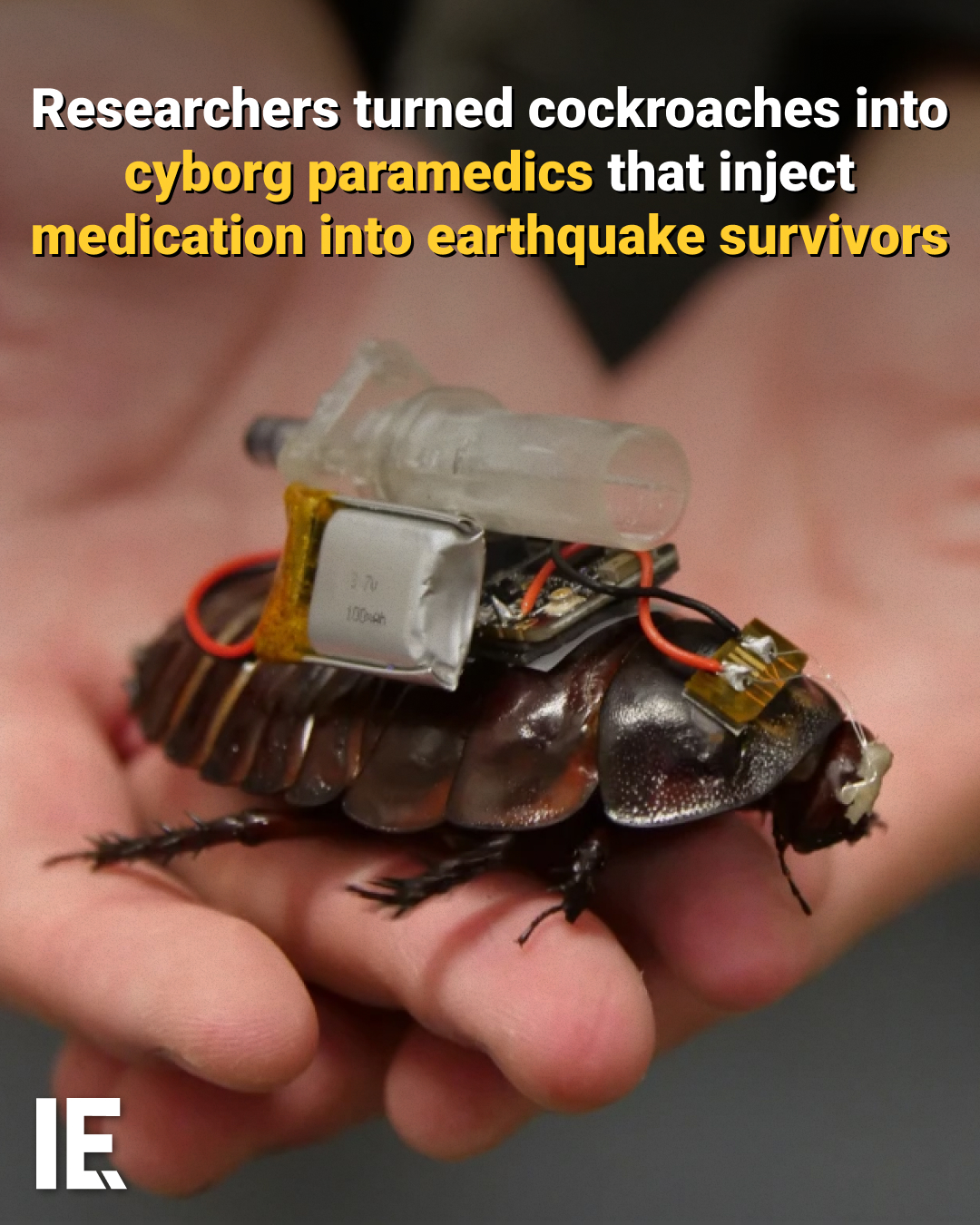
Researchers have transformed common cockroaches into cyborg paramedics. These are not toys or props — the cyborg cockroaches are equipped with electronic components that allow scientists to control the roaches' movements. This is not just a scientific marvel but a mission to improve emergency response. The cockroaches' small size and mobility make them perfectly suited for traversing disaster zones. Unlike humans and is not deterred by the narrow, unstable environments caused by collapsed buildings. Most importantly, as bio-inspired robotic devices, cyborg cockroaches don't just get around obstacles. They can deliver precise amounts of medicine to people trapped under the rubble. Not just any kind of paracetamol; rather, after an earthquake, they can inject adrenaline for heart stimulation. To dislodge dust particles, they carry solution of adrenaline. The roaches' enhanced abilities stem from tiny circuitry implanted into their antennae and legs. Beyond disaster relief, the researchers' work could also pave the way for small, agile robots. These robots mimic nature but are self-powered and designed specifically for use in hazardous environments.
Bug Tech in a Post-Disaster World
DEVASTATING events like earthquakes can leave survivors isolated and in need of urgent medical attention. In such scenarios, reaching people in time can be very hard. This is where disaster relief tech is trying to solve. They could help professionals to move or use them to seek medical supplies. These Robotic cockroaches, equipped with tiny medical supplies and designed to access hard-to-reach places. In fact, they could be the trailblazers of a new era in emergency response. In the near future, cyborg cockroaches may not just be a part of science fiction, but fight disasters in real life.
A Living Robot
The Paramedics' New Best Friend
Cyborg cockroaches are not just insects; they are living robots. In scientific terms, they are “cyborg hybrids”. This is because they combine biological and artificial components. The Cockroaches get woken up when an antenna is turned right or by signals. Using technology built into their antennae. Researchers can command them to move right, left, or keep still. The roach's physiological and behavioral traits serve a purpose in this relationship. Damping solutions can be applied on their wings. Combined with the electronic elements, scientists can guide the roaches to target areas.
The Miracle of Medication Delivery
The cockroaches' small size makes them ideal for delivering critical supplies in tight, confined spaces. To this end, a micro-needle, and a gas cylinder is built into their undersides. By applying a damping solution to the roach's wings, scientists can guide the cockroaches to inject medication from the micro-needle and the gas cylinder. This precise delivery system is designed to keep medication safe and stable until it's injected.
The Medical Side of The Pest
Cockroaches are intelligent, resilient creatures. Trained scientists can detect, attach medical supplies to the cockroach and train them to go. In the process of training, the roaches don't even realize they're not in their natural habitat. As soon as they're taught, they are ready to go on a rescue mission. The simple commands and signals are enough to operate them. Their natural instincts kick in making them carry on their deliveries smoothly. They’ve been developing the devices for 2 years at the moment.
But Can They Really Save Lives?
The concept of cyborg paramedics offers a myriad of advantages. This solution is a win-win because it works for both humans and the cockroaches. The roaches dive through disaster zones giving humans a way out. On the other hand, it offers them a chance to get back to the natural world. Though the idea of cyborg cockroaches delivers medications to injury survivors is a step forward in disaster relief research, it's not without risks. One potential concern is that they could cause allergic reactions. Before we deploy these roach paramedics en masse, the devices must prove their safety and efficacy. Yet, the research is still in its early stages, and there are multiple hurdles to overcome before these "all-purpose cockroaches" are ready for large-scale deployment.
A Future Rescue Mission
If cyborg cockroaches become successful in the future, then they can be used to deliver medical supplies and drugs to other remote locations. Other drugs and supplies could also be delivered with a simple adjustment in the device. In the near future of disaster relief, cyborg cockroaches may become an invaluable asset in saving lives.
Questions readers ask
What kind of medicine can cyborg cockroaches deliver to survivors?
Cyborg cockroaches are designed to deliver precise amounts of medicine tailored to post-earthquake needs. Specifically, they can inject adrenaline to stimulate the heart and help clear dust particles from the lungs of trapped survivors.
How do researchers control the movements of cyborg cockroaches?
Researchers control the cyborg cockroaches using electronic components implanted in their antennae and legs. By sending specific signals, they can command the roaches to move left, right, or stay still, navigating them through disaster zones effectively.
Are these cyborg cockroaches available for use right now, or are they still in development?
As of now, cyborg cockroaches are still in the development and research phase. While they show great promise for future disaster relief efforts, they are not yet ready for widespread deployment in real-world scenarios.
What happens to the cyborg cockroaches after they've delivered the medicine?
The article does not specify what happens to the cyborg cockroaches post-delivery. However, it's reasonable to assume that once they've completed their mission, they might be retrieved and potentially reused, or they could be left to naturally decompose, given their biological nature.
Can cyborg cockroaches be used for other types of disasters besides earthquakes?
While the article focuses on earthquake scenarios, the technology behind cyborg cockroaches could potentially be adapted for other types of disasters where hard-to-reach areas and hazardous environments are present, such as collapsed buildings from other natural disasters or even man-made catastrophes.
How do cyborg cockroaches navigate through rubble and debris?
Cyborg cockroaches are equipped with tiny circuitry that allows researchers to control their movements. Their small size and natural agility enable them to traverse narrow, unstable environments caused by collapsed buildings, making them ideal for navigating through rubble and debris.
Related deep dives
Similar reads based on topic and creator.



Recent articles
Fresh deep dives from the latest Reels we unpacked.



Comments
Be the first to comment.