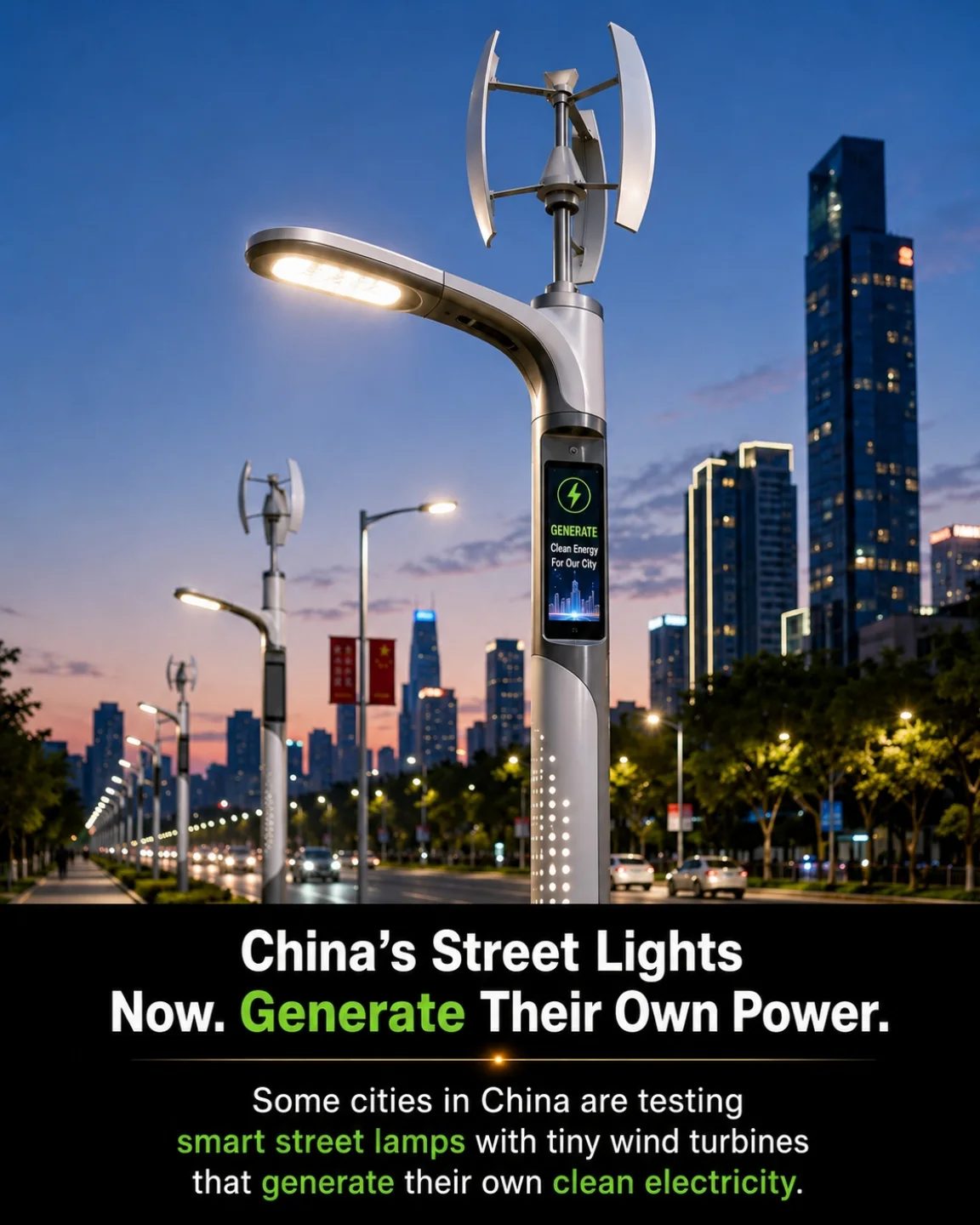
Wind-Powered Street Lights: A Sustainable Urban Solution
Wind-powered street lights are an innovative solution to urban lighting challenges. These street lamps, equipped with small wind turbines, generate their own clean electricity. This sustainable approach to urban infrastructure is currently being tested in some cities in China. The technology not only aims to provide reliable street lighting but also to reduce the carbon footprint of urban areas.
Context
Urban infrastructure is constantly evolving to meet the demands of growing populations and environmental concerns. Traditional street lighting systems rely heavily on grid electricity, which can be costly and environmentally taxing. Wind-powered street lights offer a more sustainable alternative, harnessing the power of wind to generate the electricity needed to illuminate public spaces.
Main Discussion
The Technology Behind Wind-Powered Street Lights
The integration of wind turbines into street lamps is a novel approach to sustainable urban lighting. These turbines are designed to be compact and efficient, capable of generating enough electricity to power the lamp even in low-wind conditions. The turbines are typically placed at the top of the lamp, where they can capture the wind most effectively.
Benefits of Wind-Powered Street Lights
There are several advantages to using wind-powered street lights in urban areas. First and foremost, they reduce the reliance on grid electricity, which can lower energy costs and decrease the carbon emissions associated with power generation. Additionally, these smart street lamps can be more reliable, especially in areas where power outages are common. The independence from the grid means that the lights can continue to function even during power disruptions.
Implementation in China
China is at the forefront of testing these smart street lamps with tiny wind turbines. The country's urban areas are some of the most densely populated in the world, making the need for efficient and sustainable urban lighting all the more pressing. By integrating wind turbines into street lamps, China aims to create a more sustainable urban environment while also reducing the strain on its power grid. The success of these pilots could pave the way for wider adoption of this technology in other cities around the world.
Challenges and Considerations
While wind-powered street lights offer many benefits, there are also challenges to consider. One of the primary concerns is the efficiency of the wind turbines in urban environments, where wind conditions can be unpredictable. Additionally, the initial cost of installing these smart street lamps can be higher than traditional street lights. However, the long-term savings on energy costs and the environmental benefits may outweigh these initial investments.
Practical Tips
Choosing the Right Location
The effectiveness of wind-powered street lights depends greatly on their location. Urban planners should consider areas with consistent wind patterns and minimal obstruction from buildings and other structures. Rooftops, open plazas, and along major thoroughfares are often good candidates for these smart street lamps.
Maintenance and Upkeep
Regular maintenance is crucial to ensure the longevity and efficiency of wind-powered street lights. This includes checking the turbines for any damage, ensuring that the electrical components are functioning correctly, and addressing any issues with the lighting fixtures. Ideally, these tasks should be part of a comprehensive urban infrastructure maintenance plan.
Public Engagement
Encouraging public awareness and support for wind-powered street lights can help in the successful implementation of this technology. This can be achieved through community meetings, informational campaigns, and showcasing successful pilot projects. Engaging the public can also provide valuable feedback on the performance and acceptability of these smart street lamps.
Important Takeaways
Wind-powered street lights represent a significant step forward in sustainable urban infrastructure. By generating their own clean electricity, these smart street lamps offer a reliable and environmentally friendly solution to urban lighting challenges. While there are challenges to overcome, the benefits in terms of energy savings and environmental impact make them a worthy investment.
Conclusion
The integration of wind turbines into street lamps is a practical and innovative solution to the urban lighting needs of the 21st century. As cities around the world look for ways to reduce their carbon footprint and improve the efficiency of their infrastructure, wind-powered street lights offer a promising path forward. With continued development and widespread adoption, this technology could transform the way we illuminate our urban spaces, creating a more sustainable and energy-efficient future.
Questions readers ask
How do wind-powered street lamps generate electricity?
Wind-powered street lamps generate electricity through small wind turbines integrated into their design. These turbines convert the kinetic energy from the wind into electrical energy, which is then used to power the lamps. This process allows the lamps to operate independently of the traditional power grid.
What are the environmental benefits of using wind-powered street lamps in urban areas?
Wind-powered street lamps significantly reduce carbon emissions by decreasing the reliance on grid electricity, which is often generated from fossil fuels. This makes them a greener alternative for street lighting. Additionally, these lamps contribute to cleaner air and help mitigate the urban heat island effect.
Are wind-powered street lamps reliable in varying weather conditions?
Wind-powered street lamps are designed to be reliable in a variety of weather conditions. While they perform best in areas with consistent wind, many models are equipped with rechargeable batteries that store excess energy generated during windy periods. This stored energy can be used to power the lamps when wind speeds are low.
How do wind-powered street lamps contribute to smart city initiatives in China?
Wind-powered street lamps in China are part of a broader effort to create smart cities with sustainable infrastructure. These lamps can be integrated with smart city technologies, such as sensors and IoT devices, to optimize energy use, monitor maintenance needs, and enhance public safety through better lighting management.
What are the maintenance requirements for wind-powered street lamps?
Maintenance for wind-powered street lamps is generally low. Regular inspections are needed to ensure the wind turbines are functioning properly and to check for any debris or damage. Additionally, the batteries and electrical components should be periodically inspected and serviced to ensure optimal performance and longevity.
Can wind-powered street lamps be installed in any urban environment?
While wind-powered street lamps are versatile, they are most effective in areas with consistent wind speeds. Urban planners need to assess the local wind conditions to determine the best locations for these lamps. They are typically suited for parks, open plazas, and other areas with good wind exposure.
How do wind-powered street lamps compare to solar-powered street lamps in terms of efficiency?
Both wind-powered and solar-powered street lamps offer clean energy solutions, but they have different strengths. Wind-powered lamps can generate electricity at night and in overcast conditions, making them more reliable in certain environments. Solar-powered lamps, on the other hand, depend on sunlight and may require backup power sources during extended periods of darkness.
Related deep dives
Similar reads based on topic and creator.

Recent articles
Fresh deep dives from the latest Reels we unpacked.



Comments
Be the first to comment.