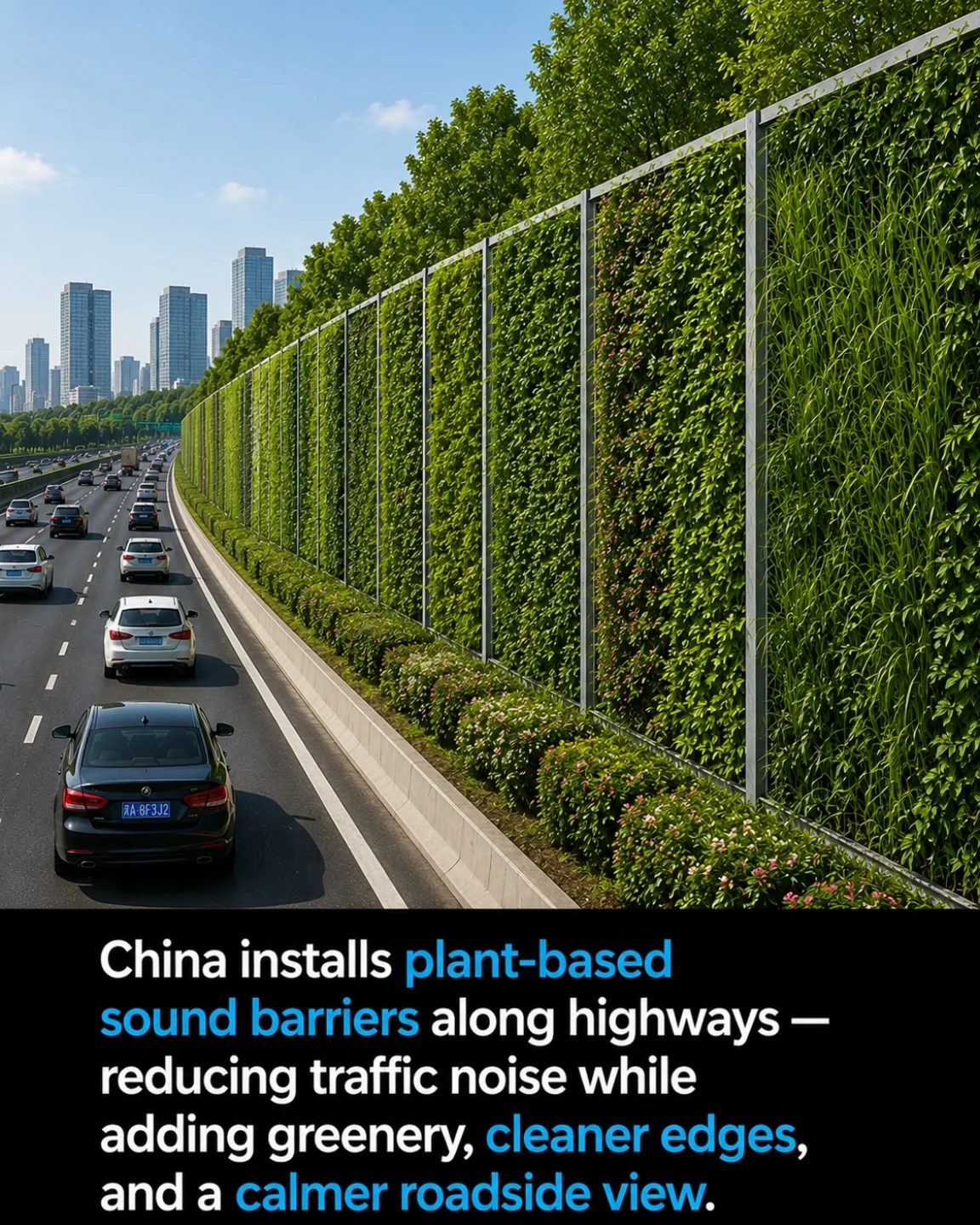
Sound Barriers with Greenery
Plant-based sound barriers along highways are becoming an increasingly popular solution in China, where roadsides are now adorned with living walls that serve dual purposes: reducing traffic noise and enhancing the environment. These green barriers, a blend of nature and infrastructure, are transforming highways across China.
Context / Why this matters
Highways are essential for transportation and economic growth, but they come with a significant drawback: noise pollution. The relentless hum of engines and tires can disrupt nearby communities, impacting the quality of life for residents. Traditional noise barriers, such as concrete walls, offer a solution but often at the cost of aesthetic appeal and environmental impact. Plant-based sound barriers, however, present a more harmonious alternative.
The Benefits of Plant-Based Sound Barriers
Noise Reduction
The primary function of any sound barrier is to reduce noise. Plant-based barriers, by virtue of their density, effectively absorb and deflect sound waves, creating a quieter environment for nearby residents. This is particularly important in urban areas, where the constant hum of traffic can be a significant source of stress and discomfort.
The dense foliage of these barriers acts as a natural sound absorber, reducing the decibel levels of traffic noise. This not only improves the quality of life for those living near highways but also contributes to a more peaceful environment for both people and wildlife.
Environmental Impact
One of the most compelling aspects of plant-based sound barriers is their environmental benefit. These barriers help to mitigate the environmental impact of highways by absorbing carbon dioxide and releasing oxygen. This contributes to better air quality and helps combat climate change. Additionally, the greenery promotes biodiversity by providing habitats for birds, insects, and other wildlife.
The presence of these green barriers also helps to prevent soil erosion, which can be a problem in areas where heavy rainfall and runoff are common. The roots of the plants help to stabilize the soil, preventing it from being washed away and reducing the risk of landslides.
Aesthetic Appeal
Beyond their functional benefits, plant-based sound barriers offer a significant aesthetic improvement over traditional noise barriers. Concrete walls, while effective, can be visually unappealing and contribute to an industrial feel. In contrast, the lush greenery of plant-based barriers creates a more natural and pleasing landscape. This not only enhances the beauty of the roadside but also provides a more soothing experience for motorists.
The visual appeal of these barriers can also have a psychological impact. Studies have shown that natural environments can reduce stress and improve mental health. By incorporating nature into highway infrastructure, cities are not only addressing functional needs but also enhancing the overall well-being of their residents.
Types of Plant-Based Sound Barriers
Living Walls
Living walls are vertical gardens installed along the highway. These walls are often composed of a variety of plants, including climbing vines, bushes, and flowering plants. They are designed to be self-sustaining, with irrigation systems that ensure the plants receive the necessary water and nutrients. Living walls can be customized to suit different climates and soil types, making them a versatile option for various regions.
Green Roofs
Green roofs are similar to living walls but are installed on top of existing structures, such as sound barriers or retaining walls. These roofs are covered with vegetation, which not only reduces noise but also helps to insulate the structure, reducing energy costs. Green roofs are particularly effective in urban areas, where they can help to mitigate the urban heat island effect by providing natural cooling.
Vegetated Mounds
Vegetated mounds are large, earthen structures planted with a variety of vegetation. These mounds are designed to be gentle slopes, which not only reduce noise but also improve the safety of the highway. They can be used in areas where traditional barriers are not feasible, such as in mountainous regions or near bodies of water.
Plant Selection and Maintenance
The success of plant-based sound barriers depends largely on the selection of the right plants. Plants must be chosen based on their ability to thrive in the specific climate and soil conditions of the area, as well as their noise-absorbing properties.
Native Plants
Native plants are often the best choice for plant-based sound barriers. These plants are adapted to the local environment and require less maintenance, making them a cost-effective and sustainable choice. Additionally, native plants support local ecosystems by providing food and habitat for wildlife.
Hardy and Low-Maintenance
The plants chosen for these barriers should be hardy and low-maintenance, as they need to withstand harsh conditions, including exposure to traffic pollution and varying weather conditions. Plants with deep root systems are particularly effective at stabilizing soil and preventing erosion.
Seasonal Considerations
Seasonal changes can impact the effectiveness of plant-based sound barriers. Deciduous plants, for example, will lose their leaves in the fall, reducing their noise-absorbing properties. Evergreen plants, on the other hand, provide year-round coverage, although they may be more susceptible to pests and diseases.
Practical Tips
When considering the implementation of plant-based sound barriers, there are several practical tips to keep in mind. These tips can help ensure that the barriers are effective, sustainable, and visually appealing.
Site Assessment
Before installing plant-based sound barriers, conduct a thorough site assessment. This should include an analysis of soil conditions, climate, and the specific noise reduction needs of the area. This assessment will help determine the best type of barrier and the most suitable plants for the location.
Design and Installation
The design and installation of plant-based sound barriers require careful planning. Consider the height and width of the barrier, as well as its orientation relative to the road. The barrier should be designed to maximize noise reduction while minimizing visual obstruction.
Ongoing Maintenance
Plant-based sound barriers require ongoing maintenance to ensure their continued effectiveness. Regular pruning, watering, and fertilizing are essential to keep the plants healthy and thriving. Additionally, monitoring for pests and diseases and addressing any issues promptly will help to prolong the life of the barrier.
Important Takeaways
Plant-based sound barriers along highways are an innovative solution to the problem of traffic noise. They offer numerous benefits, including noise reduction, environmental improvement, and aesthetic enhancement. By incorporating nature into infrastructure, cities can create more sustainable and livable environments. However, it is important to select the right plants and provide the necessary maintenance to ensure the long-term success of these barriers.
Conclusion
Plant-based sound barriers are transforming the way highways are designed and constructed. These innovative solutions offer a harmonious blend of nature and infrastructure, providing noise reduction, environmental benefits, and aesthetic appeal. By implementing these barriers, cities can create more sustainable and livable environments, improving the quality of life for residents and contributing to a greener future.
Questions readers ask
How do plant-based sound barriers work to reduce noise pollution?
Plant-based sound barriers function by absorbing and deflecting sound waves. The dense foliage and varied surfaces of these living walls help to dissipate noise, making them effective in reducing highway noise. These barriers are especially beneficial in urban areas where both noise and air pollution are significant issues.
What are the environmental benefits of using green barriers along highways?
Green barriers along highways provide numerous environmental benefits. They absorb carbon dioxide, release oxygen, and support local biodiversity. Additionally, they help mitigate the urban heat island effect and improve air quality. These living walls also contribute to a more aesthetically pleasing environment, enhancing the overall roadside landscape.
How do plant-based sound barriers compare to traditional concrete barriers?
While both plant-based and concrete barriers reduce noise, plant-based barriers offer several advantages. They are more visually appealing, environmentally friendly, and can be integrated into the local landscape. Concrete barriers, on the other hand, are often criticized for being unsightly and contributing to urban heat islands. Plant-based barriers also provide additional environmental benefits that concrete barriers lack.
What types of plants are commonly used in China's green highway barriers?
China's green highway barriers often feature a mix of plant species that are hardy, fast-growing, and effective at absorbing noise. Commonly used plants include bamboo, evergreen trees, and various shrubs. These plants are selected for their durability, noise-reducing properties, and ability to thrive in roadside conditions, ensuring the barriers remain effective and visually appealing over time.
How do these green barriers improve the quality of life for nearby residents?
By reducing traffic noise, the green barriers significantly improve the quality of life for nearby residents. Living near highways can be challenging due to the constant noise, which can disrupt sleep, affect mental health, and cause stress. These barriers help to mitigate these issues, creating a more peaceful and enjoyable living environment.
What kind of maintenance is required for plant-based sound barriers?
Plant-based sound barriers require regular maintenance to ensure their effectiveness and aesthetics. This includes pruning, watering, and occasionally replacing plants that do not thrive. The maintenance responsibilities can be shared between local authorities and community volunteers, fostering a sense of ownership and environmental stewardship. Proper maintenance ensures that the barriers continue to provide noise reduction and environmental benefits.
Can plant-based sound barriers be installed on existing highways?
Yes, plant-based sound barriers can often be installed on existing highways, though it may require some planning and adaptation. It is best to consult with experts in environmental engineering and landscaping to determine the feasibility and best practices for installation. Local climate, soil conditions, and available space are all factors that need to be considered to ensure the success of these green barriers.
Related deep dives
Similar reads based on topic and creator.




Recent articles
Fresh deep dives from the latest Reels we unpacked.




Comments
Be the first to comment.