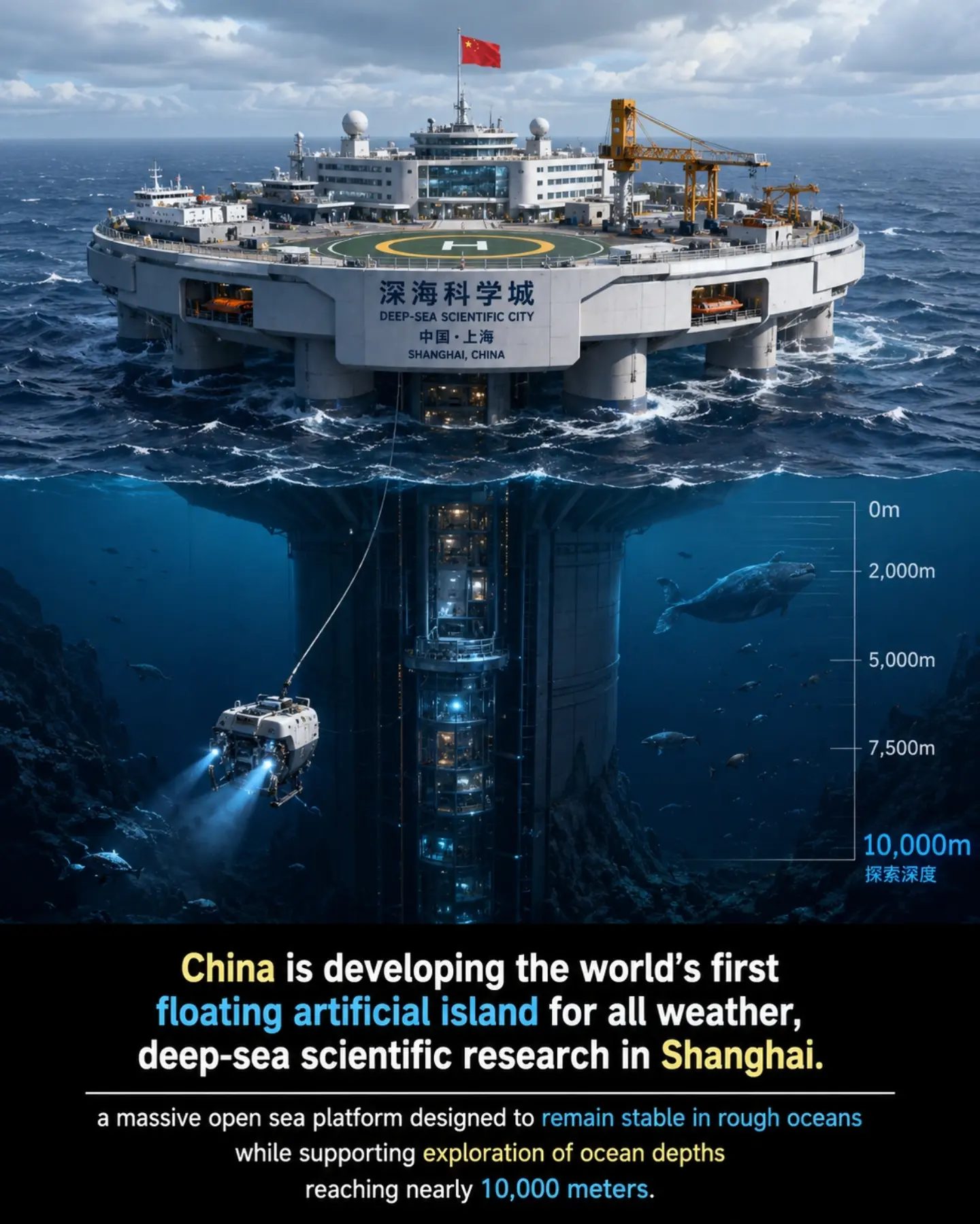
Floating Scientific Research Platforms: The Future of Ocean Exploration
A floating scientific research platform is a cutting-edge technology designed to support extensive research activities in the ocean. These platforms are engineered to withstand the harsh conditions of the open sea, providing a stable environment for scientists to conduct experiments and gather data.
Why Floating Research Platforms Matter
Ocean exploration is crucial for understanding our planet's ecosystems, climate patterns, and potential resources. Traditional research vessels have limitations, such as limited endurance and stability in rough seas. Floating research platforms address these challenges, offering a more reliable and efficient solution for deep-sea exploration.
Deep-Sea Scientific Platforms: Capabilities and Design
China's Deep-Sea Scientific City
China is at the forefront of developing floating research platforms with the "Deep-Sea Scientific City" located in Shanghai. This innovative platform is designed to remain stable in rough oceans, making it ideal for all-weather operations. The platform can explore depths up to 10,000 meters, providing unprecedented access to the deepest parts of the ocean.
Stability and Endurance
One of the key features of these platforms is their stability. They are engineered to withstand heavy waves and strong winds, ensuring that scientific research can continue uninterrupted. This stability is achieved through advanced engineering techniques and materials that can withstand the harsh marine environment.
Deep-Sea Exploration
The ability to explore depths up to 10,000 meters is a game-changer in ocean exploration. This depth allows scientists to study deep-sea ecosystems, geological formations, and even potential resources like minerals and energy sources. The platform's design includes advanced equipment and laboratories that support a wide range of scientific research activities.
All-Weather Operations
Another significant advantage of these platforms is their ability to operate in all weather conditions. They are equipped with state-of-the-art weather monitoring systems and can withstand extreme weather events, ensuring that research activities can continue even during severe storms or rough seas.
Practical Tips for Maximizing Research Efficiency
To make the most of a floating scientific research platform, researchers can follow these practical tips:
Equipment and Technology
Ensure that the platform is equipped with the latest scientific instruments and technology. This includes advanced diving equipment, remote-controlled underwater vehicles, and high-tech laboratories.
Training and Expertise
Invest in training programs for researchers and crew members. Specialized training can help them handle the unique challenges of working on a floating platform and maximize the efficiency of research activities.
Collaboration and Partnerships
Collaborate with other research institutions and organizations to share resources and expertise. Partnerships can enhance the capabilities of the platform and provide a broader scope of research activities.
Data Management
Implement a robust data management system to handle the vast amount of data collected during research activities. This includes data storage, analysis, and sharing protocols to ensure that valuable insights are not lost.
Important Takeaways
- Floating scientific research platforms represent a significant advancement in ocean exploration, providing a stable and efficient environment for research activities.
- The "Deep-Sea Scientific City" in Shanghai is a prime example of such a platform, designed to explore depths up to 10,000 meters and operate in all weather conditions.
- Advanced engineering and technology are crucial for the stability and endurance of these platforms, making them suitable for deep-sea exploration.
- Researchers can maximize the efficiency of these platforms by investing in advanced equipment, training, and collaboration.
Conclusion
Floating scientific research platforms offer a new frontier in ocean exploration, providing a stable and efficient environment for deep-sea research. With advancements such as the "Deep-Sea Scientific City" in Shanghai, researchers can explore the depths of the ocean like never before. By leveraging advanced technology, training, and collaboration, these platforms can unlock new insights into our planet's vast and mysterious oceans.
Questions readers ask
What is the 'Deep-Sea Scientific City' in Shanghai?
The 'Deep-Sea Scientific City' in Shanghai is China's advanced floating research platform designed for deep-sea exploration. It can operate in challenging sea conditions and explore depths up to 10,000 meters, providing a unique environment for scientists to conduct research.
What advantages do floating research platforms offer over traditional research vessels?
Floating research platforms offer several advantages, including better endurance and stability in rough seas. They provide a more reliable environment for scientists to conduct experiments and gather data, making them ideal for extensive ocean exploration.
What kind of research can be conducted at the 'Deep-Sea Scientific City'?
The 'Deep-Sea Scientific City' supports a wide range of research, including the study of deep-sea ecosystems, geological formations, and potential resources. It is equipped to handle various scientific investigations related to ocean exploration.
How deep can the 'Deep-Sea Scientific City' explore?
The platform is designed to explore depths up to 10,000 meters, making it capable of reaching some of the deepest parts of the ocean. This allows scientists to access and study areas that were previously difficult to reach.
What makes the 'Deep-Sea Scientific City' suitable for deep-sea exploration?
The platform's advanced design allows it to operate in rough seas and maintain a stable environment for scientific research. This stability is crucial for conducting precise experiments and gathering accurate data in deep-sea conditions.
Why is ocean exploration important for understanding our planet?
Ocean exploration is vital for understanding our planet's ecosystems, climate patterns, and potential resources. It helps scientists uncover the mysteries of the deep sea and contributes to our knowledge of the Earth's processes and its connection to marine life and climate change.
Related deep dives
Similar reads based on topic and creator.



Recent articles
Fresh deep dives from the latest Reels we unpacked.



Comments
Be the first to comment.