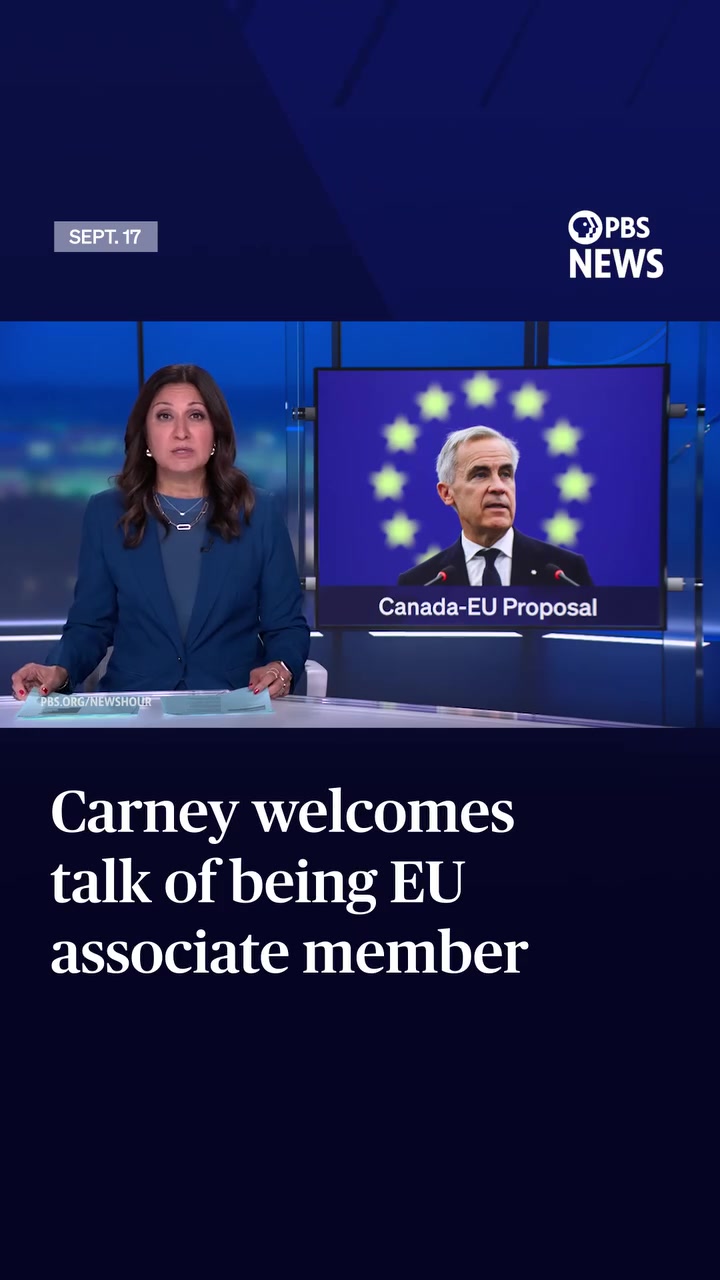
At the heart of a recent diplomatic push, Canadian Prime Minister Mark Carney has publicly endorsed a proposal to join the European Union as an associate member. The announcement, made in Strasbourg, France, highlights Canada's ambition to solidify ties with the EU in areas such as trade, defense, and energy. This move comes as the U.S. and Canada relations are under strain, marked by a prolonged trade war and debates about statehood.
An Associate Path
Traditionally, when countries seek closer ties with the EU, they aim for full membership, requiring them to meet certain criteria and commit to integration in various political and economic realms. But the EU has also created pathways to partial integration. The associate member status does not require full participation in the various EU institutions, but still offers a degree of cooperation in specific areas. Countries must meet certain standards of democracy and human rights, as well as align foreign policy with the EU. Canada is not new to such arrangements and has made similar arrangements in the past. Canada's potential EU associate membership is multifaceted. The proposed expansion of cooperation, from trade to defense, mirrors the EU's flexible approach to strategic partnerships. This arrangement is designed to accommodate countries that want closer ties but do not wish to fully join or cannot meet the rigorous criteria for full EU membership. The associate status has become an attractive option for certain countries seeking economic and political integration, without the full commitments. The proposal does not just reflect Canada's own geopolitical position, but also mirrors the EU's broader efforts to strengthen its international influence.
Blind Spots
Given the EU's complex bureaucracy and political landscape, many countries need to know what to expect. Such an integration might not always run smooth. Recent events have emphasized the potential drawbacks. The EU is facing challenges with its existing members, internal political shifts, and external pressures. European, American, and other countries involved in this diplomatic activity are also vulnerable to international policies. This diplomatic maneuvering, with both sides making explicit and implicit demands, could still encounter political pushback, strategic missteps, and economic repercussions. Any step taken in alignment with the EU, for any country, must account for these political and economic factors.
Economic Integration Goals
Canadian Prime Minister Mark Carney delineated a clear goal in seeking associate membership. In his recent remarks, Canadian Prime Minister Mark Carney emphasized that "Canada is seeking deeper cooperation in areas like trade, defense, energy and more." This move signals the intention to elevate bilateral trade relations and foster partnerships in defense and energy sectors. As Canada and the EU align their economic policies, both parties stand to gain from increased trade, technological exchanges, and strategic investments. The proposal seeks to mitigate the growing power and influence of non-member nations adversely affecting the economic sovereignty of Canada, thereby fostering their international trade relations.
Exercising Sovereignty
The sovereignty discussion goes right to the heart of the issue: does associate membership mean Canada could still act independently or are they opening up to the idea of more control from the EU. Since his speech, Carney has repeatedly emphasized the independence of Canadian sovereignty. His commitment to national sovereignty and democratic rule of law offers assurances that Canada would not relinquish its autonomy for the sake of EU cooperation. The Canadian government clarified, "We are pursuing resilience so no one, no one can control our open markets, impair our sovereignty, threaten our territorial integrity, or undermine our freedoms, our democracies, our rule of law." This underscores Canada's intention to seek deeper economic cooperation without compromising its sovereignty and independent policy-making.
Don’t Call it a Laughably Simple Choice
President Trump’s response punctuated the seriousness of any Canada-European Union cooperation. The US is still a major player, considering Trump’s response to the proposal as “laughable” and threatening "serious tariffs or even to stop trading with the European Union." What was once a silent public dialogue has morphed into a peacefully negotiated, but strained debate. The EU will need to plan this partnership so that it’s a “win-win,” and that is no easy task. The Europe has to navigate a path between balancing a potential strategic ally and avoiding a major international trade fallout.
Relative to British Model
Partnerships of this nature aren’t new to the EU. Post-Brexit, the EU has, like with Britain, been exploring new ways to widen its influence, without granting full membership. This kind of strategic arrangement could help Canada modernize its economy, but also bring along potential issues in the world stage. The UK model of association includes a tailored trade agreement, extensive regulatory collaboration, and a degree of mutual involvement in various sectors. This approach balances integration with national sovereignty. The EU’s willingness to entertain these complex relationships may be due to the benefits it could provide for international economic expansion and defense collaboration. Canada’s proposed associate membership closely mirrors this strategy, allowing for deeper cooperation without full membership status.
A Path to the Future
The Canadian EU proposal involves more than just economics. It is a way of determining the extent to which Canada might be willing to compromise its sovereignty and national interests in favor of joining the EU. This proposed relationship would epitomize flexibility and long-term planning and would herald a new era for international trade and defense. It will require broad vision, politics, and a commitment from both parties for it to serve mutual advantages.
What You Need to Know
Navigating the Canada/EU proposal takes a big-picture understanding of the trade-offs. It also takes navigation of realpolitik — a demonstration of a deeper understanding of the goals of both countries, and the potential stakeholders in these relationships.
- Economic Perspective: The EU proposal offers a gateway to broader economic cooperation, including trade and defense initiatives. This could see partnership for technology, communication, and influence in the future. These commitments entail compliance with stringent standards and commitments to transparency and mutual respect — something Canada has already demonstrated a willingness to adapt to.
- Greening Energy: Stronger defense ties are another layer to the proposal. This includes support for energy and trade, renewable energy, and oil & gas initiatives. This is a pathfinder in multi-country greening where the EU will help to align energy policies and practices, improve efficiency, and enhance the deployment of clean energy technologies.
Questions readers ask
What exactly is an associate member of the European Union?
An associate member of the EU is a country that has a special relationship with the EU but isn't a full member. They cooperate in specific areas like trade, defense, and energy, but don't have to meet all the criteria for full membership. This allows for a degree of integration without full commitment. This arrangement is useful for countries like Canada, which want closer ties with the EU but don't want to fully join.
Why is Canada considering this associate membership?
Canada is considering EU associate membership to strengthen ties in trade, defense, and energy. The current trade war with the U.S. has strained relations, and this move is a way for Canada to diversify its international partnerships and reduce dependence on the U.S. It’s also a strategic move to counter the growing influence of other non-member nations.
How does this associate membership differ from full EU membership?
Full EU membership requires countries to meet strict criteria and integrate into various political and economic realms. In contrast, associate membership allows for cooperation in specific areas without full integration. This means Canada can align with the EU in areas like trade and defense without having to adopt all EU policies and regulations.
What are the potential challenges Canada might face with this proposal?
Canada could face several challenges, including political pushback from both EU and North American countries, economic repercussions, and strategic missteps. The EU's complex bureaucracy and the current political climate within the EU and among its member states could also pose obstacles. Additionally, aligning with the EU could affect Canada's existing relationships, particularly with the U.S.
How does this proposal impact Canada's relationship with the United States?
The proposal comes at a time when U.S.-Canada relations are strained due to a prolonged trade war and debates about statehood. By seeking closer ties with the EU, Canada is looking to diversify its international partnerships and reduce dependence on the U.S. This could potentially shift the balance of power in North America and reshape regional dynamics.
Related deep dives
Similar reads based on topic and creator.


Recent articles
Fresh deep dives from the latest Reels we unpacked.




Comments
Be the first to comment.