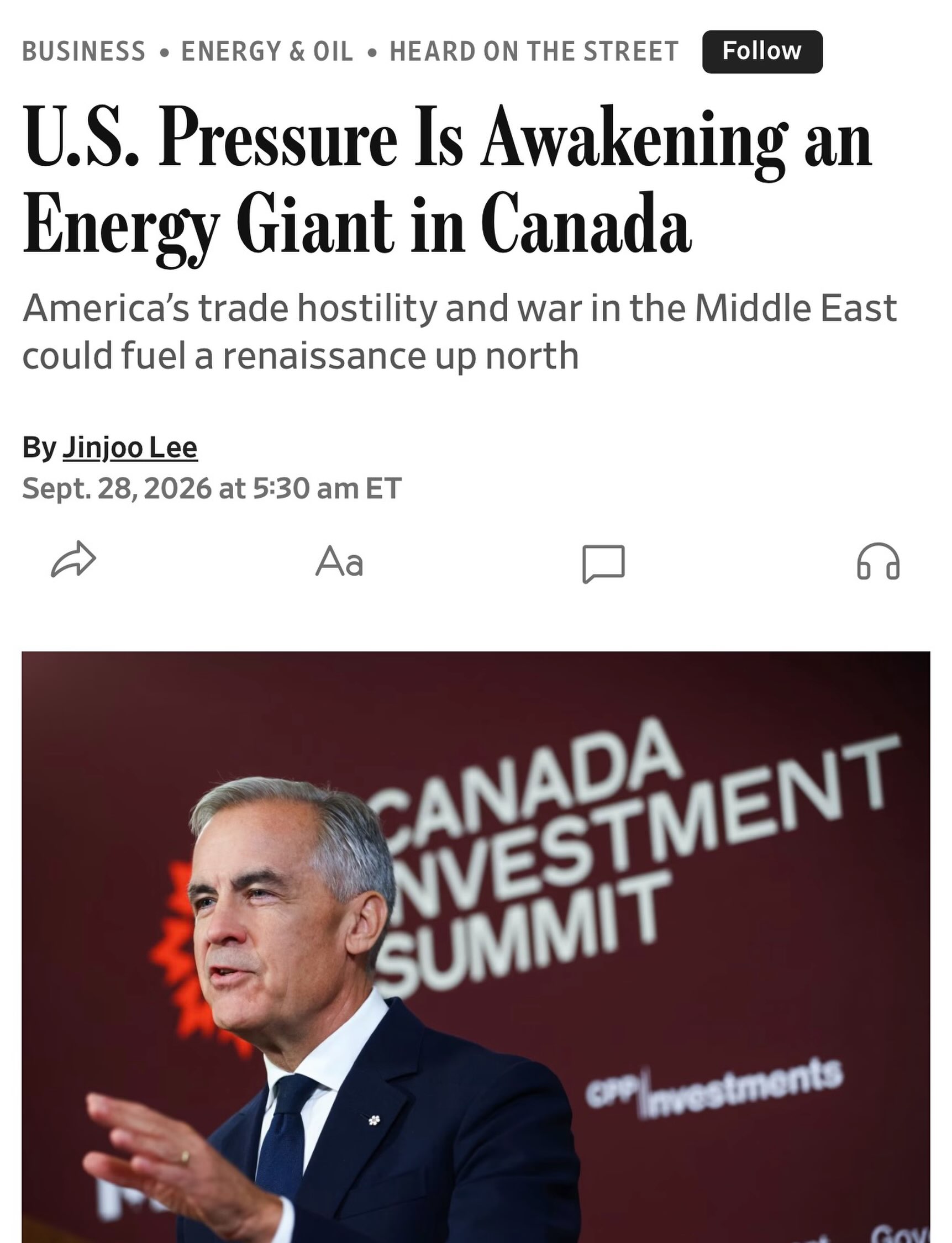
Renaissance in the North: Oil and Gas is Down, but it's Not Out
Canada's energy sector is poised for a dramatic shift. The catalyst? America's trade policies and geopolitical conflicts. At the heart of the potential transformation is the oil and gas industry, swirling in a complex mix of political and economic forces. Dispersed across pinnacles of Western Canada is petroleum and natural gas. These resources are integral to the country. So, when external factors like trade policies or international conflict destabilize global energy markets, the energy sector appears poised to take advantage and return to its prowess.
Positioned to Flourish: What's Driving an Energy Revolution
Canada’s potential energy renaissance isn’t just about resources—it’s about opportunity. The energy sector in Canada is diverse. Over 60% of Canada’s is comprised of oil and natural gas, accounting for more than 10% of the country’s GDP and 5% of Canada’s total jobs. Key provinces, such as Alberta, are especially influenced by these industries. But production is only half the equation. Canada also boasts robust refineries and oil containment technologies. With approximately 45 refineries across the country, Canada has the capacity to refine nearly all its crude oil domestically and export refined products. This creates a unique value proposition for investors, as it means Canada can manage the supply chain almost entirely in-house. Geopolitical tensions in the Middle East pose an encouraging setback for Canada’s energy exports—conflict disrupts supply and drives prices up, making Canadian resources more appealing. And the U.S., long a steadfast ally, has been re-examining its trade policies. Friction, whether political or economic, can lead to new business opportunities. Leaders in Canada’s energy industry are a mix of visionaries and capitalizers. Every area, from exploration to refining, is likely to see investment.
From Adversity to Opportunity: The Role of U.S. Trade Policies
The relationship between America and Canada’s energy sectors is symbiotic. The U.S. is Canada’s largest trading partner, and Canada’s energy exports to the U.S. are substantial and varied. The partnership appears to be strained. Trade policies and geopolitical conflicts in North America or the Middle East can destabilize energy markets. A growing number of North American energy projects are subject to scrutiny. For example, developments on the Keystone XL pipeline have recently faced challenges. Likewise, the relationship between the two nations can affect strategic decisions and investment. Each time conflict rises, it exposes consumers to higher prices and forces energy companies to explore new areas and diversify investments. Nevertheless, it opens avenues for Canada to capture a larger share of global markets. Investors seem eager to break free from the political and economic constraints, launching a flurry of renewable energy investments.
Energy Renaissance: The Roots of Oil and Gas Investment
Most of the energy in Canada is developed through unconventional methods. Technologies like horizontal drilling and hydraulic fracturing can unlock new exploration and production opportunities in more remote areas of Canada, such as the Canadian oil sands. As such, the potential for new energy sources continues to rise. Alberta alone is home to the majority of Canada’s oil sands deposits. Historically, energy development in Canada has relied on heavy equipment and a large workforce. But the industry is evolving, becoming increasingly automated and efficient. Oil and gas extraction are now increasingly high-tech. Advanced technologies such as seismology, 3D imaging, and real-time data analytics make resource extraction safer and more reliable. Backed by innovation, the energy industry is paving the way for new revenue streams and investment opportunities. These technologies are key to extracting fossil fuels. They also lay the groundwork for newer energy solutions.
Clean Energy: A Growing Intersection with Oil and Gas Investment
Canada is home to both extensive fossil fuel reserves and renewable energy sources. The country’s climate goals encourage companies to pivot towards cleaner energy, often by integrating renewables with oil and gas operations. Combining the two industries isn’t about compromise—it's about optimization. Wind and solar are leading the charge in the clean energy sector. But they face seasonal inconsistencies and higher costs, requiring innovative solutions. Gas-powered turbines and nuclear plants can provide energy that complements renewable sources. Investment in clean energy is booming — but it doesn't take away from oil and gas. Instead, it diversifies the energy portfolio. Canadian companies are pioneering new ways to produce and refine fossil fuels. By investing in new technologies, clean energy also helps secure energy investments for the future.
Exceeding Expectations: The Nanotechnology Expansion
A recent breakthrough involves the use of nanotechnology to better extract fossil fuels. The technique enhances oil recovery rates and minimizes the environmental impact. Investments in research and development allow the country to diversify its economy and meet rising global energy demands. The country’s extensive energy resources and continually evolving regulatory environment are making its oil and gas industry an appealing choice for investors. Government initiatives like the Canada–U.S. Clean Energy Dialogue aim to optimize clean energy production, reduce energy costs, and secure the energy sector. Oil and gas are quintessential to Canada’s energy sector. Advancing investment and new technologies will allow the country to maintain its competitive edge and solidify its role in the global energy market.
Building the Future: Investing in Canada’s Energy Sector
Canada’s energy landscape is at a turning point. Investing in the energy sector is a high-stakes game. It demands strategy and foresight. Energetics is a skilled team of investment professionals. They can advise investors on how to optimize their energy portfolio. To remain competitive while meeting growing global energy demands? Follow the investment community.
- Sector Explanation: Investors must understand the unique risks and opportunities of the oil and gas sectors. This includes geopolitical fluctuations, technological advancements, and climate mitigation.
- Regulatory Environment: Canada’s energy sector is subject to various regulatory frameworks. Investors must know the rules to avoid pitfalls like the carbon tax.
- Portfolio Diversification: Diversification can hedge risks and enhance returns. Investing across Canada’s abundant energy resources is a tactic.
- Sustainable Energy: Technology integration allows for cleaner and more efficient energy production. The energy sector is evolving. It's also deeply rooted in the Canadian economy and its diverse energy resources. Renewed interest in Canada’s energy sector arises from a mix of external pressures and internal innovation. And the timing couldn't be better for companies like Energetics, who can help investors capitalize on this opportunity.
Questions readers ask
What specific U.S. trade policies are influencing Canada's energy sector transformation?
The article doesn't name specific policies but mentions that changes in U.S. trade policies are a key driver of Canada's energy sector transformation. These policies are creating new opportunities for Canada's oil and gas industry, which makes up over 60% of the country's energy sector. The article does mention that America's trade policies are part of what's fueling a potential boom for the country's oil and gas.
How does Canada's energy sector benefit from geopolitical tensions in the Middle East?
Geopolitical tensions in the Middle East can disrupt global energy supplies, leading to higher prices. This makes Canadian oil and gas resources more attractive to investors and buyers. The current climate is causing countries to seek out alternative energy suppliers, which could be a major opportunity for Canada.
What role do refineries play in Canada's energy sector transformation?
Canada has approximately 45 refineries across the country, giving it the capacity to refine nearly all its crude oil domestically and export refined products. This domestic refining capability creates a unique value proposition for investors, as it allows Canada to manage the supply chain almost entirely in-house, reducing reliance on foreign markets.
How does the relationship between the U.S. and Canada's energy sectors affect investment opportunities?
The U.S. is Canada's largest trading partner, and any friction between the two countries can lead to new business opportunities for Canada's energy sector. For instance, trade policies and geopolitical conflicts can destabilize energy markets, forcing energy companies to explore new areas and diversify investments, which could benefit Canada.
What technologies are being used to develop energy in Canada?
Canada is developing most of its energy through unconventional methods, such as horizontal drilling and hydraulic fracturing. These technologies can unlock new exploration and production opportunities, potentially driving the country's energy renaissance.
How does Canada's energy sector compare to that of the United States?
Canada's energy sector is diverse, with over 60% of its energy coming from oil and natural gas. In comparison, the U.S. has a more varied energy mix, with significant contributions from renewable sources. However, Canada's energy sector is heavily influenced by its relationship with the U.S., which is its largest trading partner, and Canada exports a substantial and varied amount of energy to the U.S.
Recent articles
Fresh deep dives from the latest Reels we unpacked.




Comments
Be the first to comment.