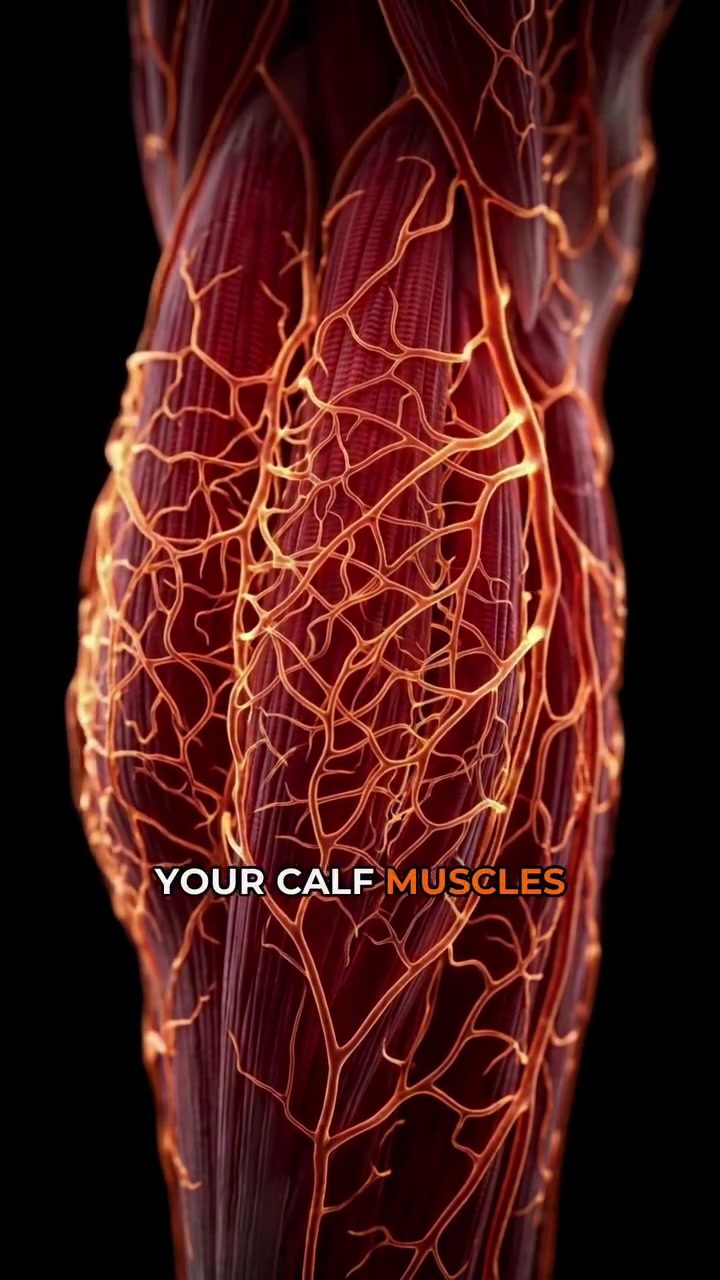
The Second Heart in Your Legs
Your calves do more than stabilize your steps or look great in jeans. They're powerhouses for blood flow — every step you take, every time you flex your ankle, your calves pump blood back up to the heart, countering gravity's pull. This blood pumping mechanism is so effective that a person's blood pressure drops significantly within just a few steps. Standing still, the pressure in the veins at your ankle is around 90 millimeters of mercury — drop to 22 millimeters after 10 steps because your calves have cleared the blood out. Your calf muscles are often called your second heart, and there's a genuine reason for that.
Why Desk Jobs Need A Calf Workout
Calves muscle health matters, especially if you're seated for extended periods, because your calf muscles can stay active even when the rest of your body remains sedentary. A study showed regular calf raises and even ankle flexions could improve a person's blood sugar response to a meal by about 50%. Walking or getting up regularly can keep your blood flow going, especially in environments that encourage extended sitting. Calf raises can keep you healthier.
The Blood Circulation Pump
the pump going
The calf muscles work as a pump, squeezing the deep veins running through the muscle. These veins have one-way valves, which push blood toward your heart when your calves contract. This mechanism is crucial because, when you're standing, gravity pulls blood down into your lower legs, and your heart can't easily draw it back up on its own. Every muscle contraction, even a subtle ankle flexion, boosts this pump and aids blood circulation. The calf muscles are often called your second heart, and there's a genuine, tangible reason for that.
Soleus vs. Gastrocnemius
The calf muscles are made up of two main parts. The gastrocnemius is the larger, more visible muscle that gives the calf its characteristic shape and aids in flexing the foot. The soleus, on the other hand, is a deeper muscle that runs beneath the gastrocnemius. Soleus tends to activate more during standing or walking, and it's more responsible for the calf muscle's pump action. The soleus can keep burning fuel at a high rate for hours, helping to maintain consistent blood flow through the body.
The role of your lower legs
The calf muscles are involved in several key functions. Walking and running, for starters, but more importantly your calves respond to any activity that involves extending the ankle. This is called ankle flexion. It might mean simply standing or walking, but it also happens when you lift your toes off the ground. Whether moving or standing still, your calf muscles are actively pushing blood upward, counteracting gravity. The visual data confirms this activity, as it's clear that any time we extend our ankles, the calf muscles actively engage in pushing blood toward the heart.
Calf Exercises For Your Daily Routine
- Calf raises: Simple calf raises are straightforward and effective. You can do them anywhere, anytime. Stand on the edge of a step, then lower your heels as you flex your knees and then rise back up on your toes.
- Sitting calf raises: If you sit too often, consider doing calf raises while seated. Engage your calf muscles by pressing down and then lifting the ball of your foot while keeping your heel on the ground. This targets the soleus muscle, which is crucial for maintaining blood flow while seated.
- Ankle pumps: Perform ankle pumps by extending and flexing your ankles. This activates the calf muscles, promoting blood flow and helps to reduce the risk of blood clots during long periods of sitting.
- Calf walks: Take a casual walk, but with a deliberate emphasis on pushing off with your toes. This forces your calves to work harder, improving both strength and circulation. Walking can also help improve the veins at your ankles, which in one study improved blood sugar response to a meal by 50%.
- Keep moving: Avoid extended periods of standing or sitting without movement. If you must sit for prolonged periods, try to get up and walk around every 30–60 minutes. Even short walks can make a big difference in promoting blood flow.
Calves As The powerhouse For Circulation
This unique muscle structure and function make the calf muscles a vital component of overall health. If you find yourself seated for long periods, incorporating calf exercises into your routine isn’t just a good idea—it's essential. Regular calf raises and ankle flexions can improve your blood sugar response and even combat the effects of prolonged sitting. So next time you're at your desk, remember that a few simple calf exercises could make a world of difference.
Questions readers ask
What exactly is the 'calf pump' and how does it function in the body?
The calf pump is a mechanism where the calf muscles act like a secondary heart, squeezing the deep veins in the legs to push blood upwards towards the heart. This is especially important when you're standing or walking, as it helps counteract gravity. The one-way valves in the veins ensure that blood flows in the right direction, back to the heart.
How do calf muscles help regulate blood pressure?
Calf muscles play a significant role in regulating blood pressure, especially when you're moving. Every step you take or every time you flex your ankle, your calves pump blood back up to the heart, which can drop your blood pressure by as much as 78%. This is why even small movements, like ankle flexions, can make a big difference in maintaining healthy blood flow.
Are there specific exercises to boost calf muscle performance and therefore improve circulation?
Yes, exercises like calf raises, both standing and sitting, can significantly improve calf muscle performance. These exercises help keep the calf muscles active, even when you're seated for long periods, thereby enhancing blood circulation. Regular calf raises can also improve your body's blood sugar response to a meal by about 50%.
What's the difference between the soleus and gastrocnemius muscles in the calves?
The gastrocnemius is the larger, more visible muscle that gives the calf its characteristic shape and aids in flexing the foot. The soleus, on the other hand, is a deeper muscle that runs beneath the gastrocnemius. The soleus is more responsible for the calf muscle's pump action, especially when standing or walking, and it can maintain consistent blood flow through the body for extended periods.
Can I improve my circulation by simply standing more often at work?
Yes, simply standing and moving your ankles more often can greatly improve your circulation. Standing activates the calf muscles, which in turn pumps blood back up to the heart. This is especially beneficial for those with desk jobs, as it helps counteract the negative effects of prolonged sitting, though calf raises are an even more effective way to improve circulation.
Related deep dives
Similar reads based on topic and creator.



Recent articles
Fresh deep dives from the latest Reels we unpacked.




Comments
Be the first to comment.