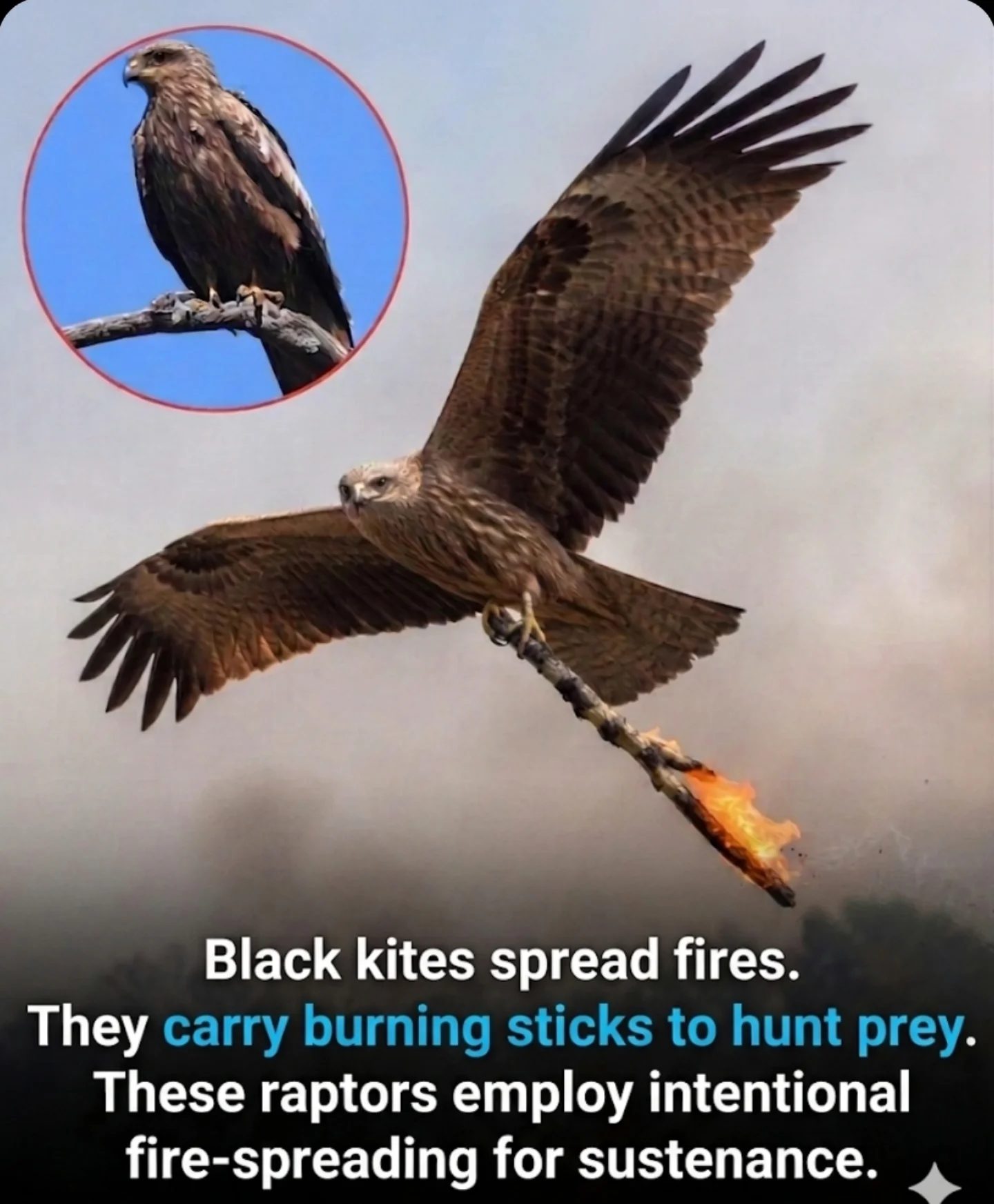
Black Kites and Their Remarkable Fire-Spreading Behavior
Firehawk raptors, specifically the Black Kite (Milvus migrans), Whistling Kite (Haliastur sphenurus), and the Brown Falcon (Falco berigora), exhibit a fascinating and extraordinary hunting behavior in the tropical savannas of Northern Australia. These birds use fire as a tool to hunt prey, a behavior that has been recorded for millennia in Indigenous Ecological Knowledge and scientifically documented in a 2017 study published in the Journal of Ethnobiology.
Why This Matters
Understanding the unique behavior of these raptors offers insights into the complex interactions between wildlife and their environment. The intentional use of fire by these birds challenges traditional views of animal behavior and highlights the ingenuity of non-human species in adapting to and manipulating their surroundings.
The Behavior of Fire-Spreading Raptors
The Process of Fire-Spreading
During bushfires, these raptors forage along the margins of the fire's front lines. They use their sharp talons or beaks to pick up smoldering sticks, twigs, or embers. Carrying these burning materials, they fly up to a kilometer away and deliberately drop them into unburnt patches of dry grass, sparking new blazes. This strategic behavior is not random but a well-calculated method to flush out prey.
The Intentional Spread of Fire
The raptors' intentional fire-spreading is a remarkable example of avian tool use. By spreading the fire, they create a smokescreen and panic among the small mammals, reptiles, and large insects trying to escape the flames. These creatures flee into the open, making them easily accessible as prey for the raptors. This behavior underscores the birds' intelligence and adaptability in utilizing environmental elements to their advantage.
The Role of Fire in Hunting
The raptors' use of fire as a hunting tool is not just an isolated behavior. They systematically employ this strategy to flush out and capture prey, ensuring their sustenance. The fires they spread create an environment where their prey has limited options for escape, making the hunting process more efficient.
Practical Tips for Observing This Behavior
Observing the fire-spreading behavior of these raptors in person is challenging and potentially dangerous due to the risks associated with bushfires. However, there are a few practical tips for those interested in understanding and learning more about this phenomenon:
Safety First
Never attempt to observe or study this behavior during an active bushfire. Always prioritize safety and adhere to local guidelines and warnings regarding wildfires.
Indigenous Knowledge
Engage with Indigenous communities who have a deep understanding of the local flora and fauna. They can provide valuable insights and stories about the firehawk raptors and their behaviors, grounded in centuries of observation and experience.
Scientific Research
Stay updated with the latest scientific research and studies on the topic. Publications in journals like the Journal of Ethnobiology offer in-depth analysis and documentation of the raptors' behaviors and their ecological significance.
Important Takeaways
Understanding the fire-spreading behavior of the Black Kite, Whistling Kite, and Brown Falcon offers several key insights:
- Intelligent Adaptation: These birds exhibit a high level of intelligence and adaptability, using fire as a tool to create a hunting advantage.
- Environmental Interaction: The use of fire by these raptors shows how non-human species can manipulate and interact with their environment in complex ways.
- Ecosystem Impact: The intentional spreading of fire by these birds can have significant impacts on the local ecosystem, affecting the distribution and behavior of other species.
Conclusion
The fire-spreading behavior of the Black Kite, Whistling Kite, and Brown Falcon is a testament to the intricate and surprising ways in which animals adapt to and interact with their environment. By understanding and documenting this behavior, we gain a deeper appreciation for the complexity and ingenuity of wild animals. This phenomenon reminds us that the natural world is full of surprises and that there is always more to learn from the creatures that share our planet.
Questions readers ask
Which species of birds are known as firehawk raptors?
Firehawk raptors are a group of birds that use fire to aid in their hunting strategies. The three species known for this behavior are Black Kites, Whistling Kites, and Brown Falcons, which are commonly found in Northern Australia.
How do Black Kites use fire to hunt?
Black Kites use fire to flush out prey by spreading the flames, which causes small animals and other prey to flee from their hiding spots, making them easier to catch. This strategy has been observed and documented in Indigenous Ecological Knowledge and scientific studies.
What types of prey do Black Kites target with their fire-hunting strategy?
While the article does not specify the exact types of prey, it is likely that Black Kites target small animals and other creatures that hide in the savanna, which are forced to flee their shelters by the spread of the fires, making them vulnerable to the birds' aerial attacks.
In which region do firehawk raptors exhibit this unique hunting behavior?
This remarkable hunting behavior is observed in the tropical savannas of Northern Australia, where Black Kites and other firehawk raptors have adapted to use fire as a tool to help them catch prey.
What is the significance of understanding this behavior in these raptors?
Understanding how these birds use fire for hunting provides valuable insights into the complex interactions between wildlife and their environment. It challenges conventional views of animal behavior and shows how these raptors have adapted to their surroundings in extraordinary ways.
How long has this fire-hunting behavior been documented?
The fire-hunting behavior of Black Kites and other firehawk raptors has been recorded for millennia in Indigenous Ecological Knowledge. Additionally, the phenomenon has been scientifically documented in a 2017 study published in the *Journal of Ethnobiology*.
What tools do Black Kites use to spread fire?
Black Kites, when they use fire to hunt, do not need to carry or transport the fire directly. Black Kites have been observed picking up burning sticks from existing fires and transporting them to new locations, effectively spreading and controlling the spread of the fire to their advantage, showcasing their intelligent behavior.
Related deep dives
Similar reads based on topic and creator.




Recent articles
Fresh deep dives from the latest Reels we unpacked.




Comments
Be the first to comment.