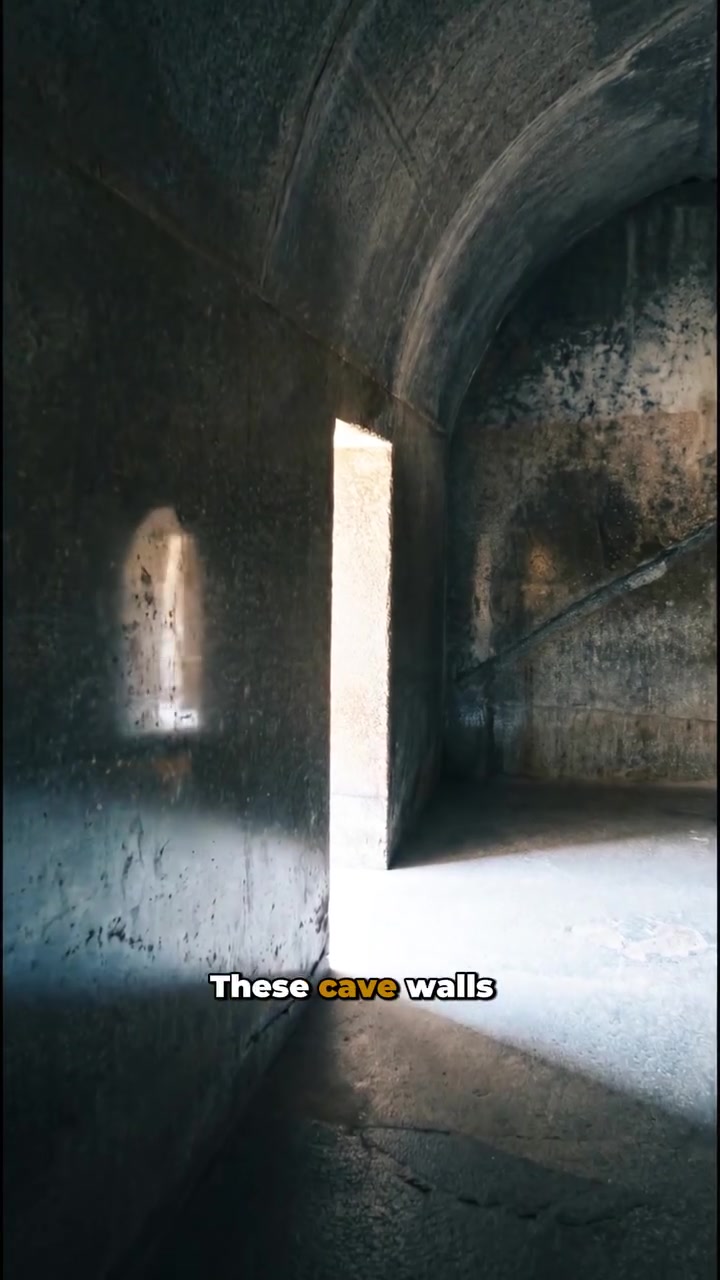
Mirror-Like Walls Cut from Solid Granite
The Barabar Caves in India offer a glimpse into an ancient mystery. The cave walls, polished over 2,300 years ago, shine like mirrors. Today, a visitor might look at a wall and see their reflection. The cine of these caves is meticulously crafted granite, one of the hardest stones on Earth. The enigmatic technique they used to achieve this finish, however, remains a mystery.
A Lost Technique and Vanishing Beliefs
The Barabar Caves sit inside a mountain of rock, carved meticulously by human hands. Experts scratch their heads, unable to fathom how these chambers were shaped and polished to such perfection. This technique, sometimes called the Mauryan polish, is still one of the unsolved problems of ancient technology. These caves were crafted for the Ajivikas, a religion that rivaled Buddhism. The Ajivikas, however, have since vanished from human history, leaving questions to fester in the shadows of their once-great shrines. Later civilizations tried to replicate the Mauryan polish, but no one succeeded.
The Mirror-Like Perfection Technique
The granite walls are polished to a mirror finish, which is undeniably one of the most intriguing. It remains unclear how they achieved this perfection thousands of years ago. The technique that created this flawless polish has since been lost to time. The Mauryan polish is one of the few examples of ancient technology. There is no other instance of ancient technology being able to polish granite to the degree of perfection.
The Perfect Reflection and the Lost Technique
The caves' polished chambers create a unique acoustic experience. A single sound can echo for seconds, bouncing endlessly off the flawless walls. The chambers' surfaces are so smooth that they reflect light and sound with surprising clarity. Despite advanced technology, no one can replicate this ancient technique. The Taj Mahal is another example of ancient Indians achieving incredible feats of engineering and architecture. The Taj Mahal is a testament to human ingenuity and the ability to create something timeless. Similarly, the Barabar Caves are a testament to the ingenuity of ancient people. The technique and purpose behind these caves, however, remain shrouded in mystery.
Unreplicatable Acoustics and the Ajivikas
The polished chambers of the Barabar caves have a mysterious trait in their acoustics. They yield an unpredictable echo effect that no one can replicate, no matter how closely they mimic the interior’s specifics. The Ajivikas, whose beliefs these shrines were built to honor, are lost to history. Every echo felt in these chambers means a mystery unraveled by the years.
Narrative Juxtapoition: Cave and Sea
There are other examples of ancient civilizations achieving amazing feats of engineering and architecture, such as the British engineers of the Great Barrier Reef. The Great Barrier Reef is a stark contrast to the Barabar Caves. The Reef is a living, breathing entity that changes and evolves with the ocean. It is a testament to the power of nature and the resilience of life. The Barabar Caves, on the other hand, are a testament to the power of human ingenuity and the ability to create something timeless.
Such a Smooth Finish
The Ajivikas may seem an obscure sect unfamiliar to modern ears, but they represented an ancient philosophy nearly as old as Buddhism. Yet, the religion vanished from history, leaving behind caves. The polished walls were built for believers who are long forgotten. The construction techniques of the Ajivikas were likely extensive and involved complex methods. How these chambers were created remains a mystery of grandeur.
How to Experience the Enigmas of the Granite Walls
Visiting the Barabar Caves offers a unique opportunity to experience an ancient mystery up close:
- Location: The caves, located in central India, are accessible from the towns of Makhdoom and Jehanabad in Bihar. Plan your journey with transportation from Jehanabad or Makhdoom
- Best Times to Visit: The Barabar Caves are open to visitors all year round, but the best times to visit are during the winter months. The weather is pleasant and ideal for exploring the caves, which get extremely hot in the summer.
- Accessibility: The caves are surrounded by a dense forest and steep rocky terrain, so be prepared for a bit of a hike. Wear comfortable shoes and clothing suitable for hiking. While there is no charge for entering the caves, it's a good idea to hire a guide to help you navigate the terrain and provide insights into the history and significance of the caves.
- Accommodation and Food: There are no accommodations or food options near the caves, so plan accordingly. Bihar currently does not offer luxurious hotels. However, you can find budget accommodations in nearby towns. Remember that these caves are a UNESCO World Heritage Site, and it's important to treat them with respect and preserve their natural beauty for future generations to enjoy. It is strictly prohibited to damage or remove any part of the caves or their surroundings. Refrain from eating, drinking, or smoking inside the caves.
Vanishing History and a Final Note
What else did these people know that we've forgotten? This question lingers and echoes off the polished walls. The Barabar Caves stand as a testament to the ingenuity of our ancestors and the mysteries of the ancient world. The Ajivikas' history might be lost, but their legacy lives on in these remarkable caves. The future may bring answers to the cave's mysteries, but for now, the Barabar Caves stand as a great legacy of ancient technology and forgotten religions.
Questions readers ask
What exactly are the Barabar Caves, and why are they significant?
The Barabar Caves are a group of rock-cut Buddhist shrines located in Bihar, India, dating back over 2,300 years. They're significant because of their incredibly polished granite walls, which reflect light and sound with astonishing clarity, and the mystery surrounding the ancient polishing technique used to achieve such a finish.
How did the ancient craftsmen achieve such a mirror-like finish on the granite walls?
Despite extensive study, the exact technique used to polish the granite walls of the Barabar Caves to a mirror-like finish remains unknown. This enigmatic process, sometimes referred to as the Mauryan polish, has not been replicated successfully, even with modern technology.
Who were the Ajivikas, and what is their connection to the Barabar Caves?
The Ajivikas were a religious sect that rivaled Buddhism in ancient India. The Barabar Caves were carved for them, but the Ajivikas have since vanished from historical records, leaving many questions about their beliefs and the purpose of these caves.
What makes the acoustics of the Barabar Caves so unique, and why can't it be replicated?
The polished chambers of the Barabar Caves create a unique acoustic environment, with sounds echoing for seconds. The unpredictable echo effect is due to the flawless surfaces of the chambers, which reflect sound with surprising clarity. Despite efforts to mimic these conditions, no one has been able to replicate this acoustic phenomenon.
How do the Barabar Caves compare to other ancient architectural marvels, like the Taj Mahal or the Great Barrier Reef?
While the Taj Mahal and the Great Barrier Reef are also testaments to human ingenuity and natural wonders, the Barabar Caves stand out due to their enigmatic polishing technique and the mystery surrounding the Ajivikas. The caves' unique acoustics and mirror-like walls set them apart from other ancient architectural achievements.
Are the Barabar caves open to the public, and can visitors experience the unique acoustics and polished walls for themselves?
Yes, the Barabar Caves are open to the public and can be visited. The caves are accessible via a trek, and visitors can experience the unique acoustics and polished walls firsthand. However, it's important to note that the caves are a delicate archaeological site, so visitors should be respectful and mindful of their surroundings.
Related deep dives
Similar reads based on topic and creator.




Recent articles
Fresh deep dives from the latest Reels we unpacked.




Comments
Be the first to comment.