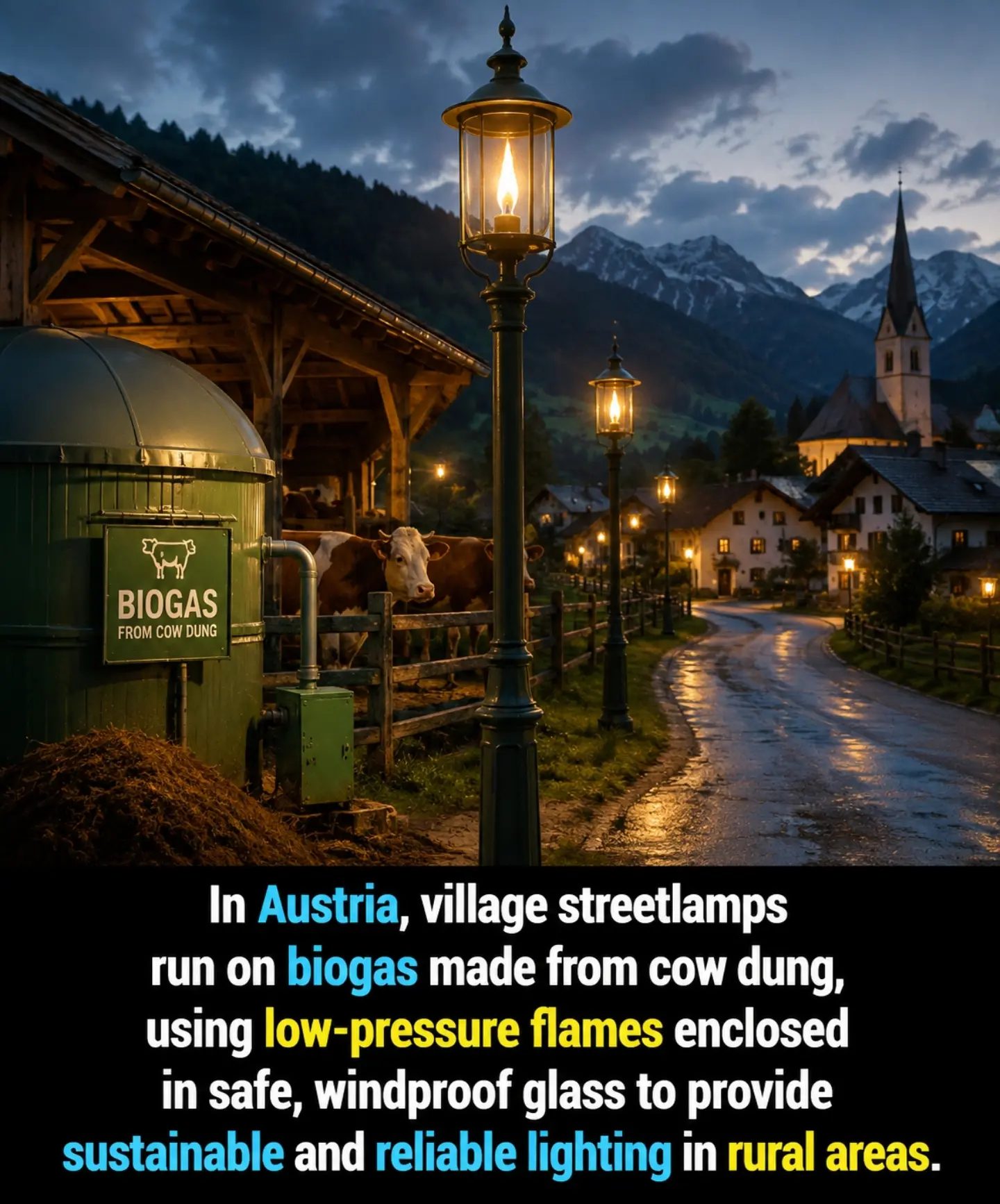
Sustainable Rural Lighting in Austria
Rural communities often face challenges in providing reliable and sustainable lighting. However, a unique solution has emerged in Austria, where village streetlamps are powered by biogas derived from cow dung. This innovative approach not only addresses the issue of lighting but also provides a sustainable and efficient use of resources.
Context: The Role of Sustainable Lighting
Rural areas often rely on traditional energy sources, which can be both costly and environmentally damaging. The use of biogas for lighting offers a cleaner and more sustainable alternative. Biogas is produced through the anaerobic digestion of organic materials, such as cow dung. This process not only generates a renewable energy source but also helps in managing waste, reducing greenhouse gas emissions, and improving soil quality. For rural communities, biogas can be a game-changer in terms of energy sustainability.
The Technology Behind Biogas-Powered Street Lamps
The streetlamps in these Austrian villages are equipped with low-pressure flames enclosed in windproof glass. This design ensures safety and efficiency, making them suitable for outdoor use. The biogas is produced from cow dung, a readily available resource in rural areas where livestock farming is common. This setup not only provides a reliable source of lighting but also reduces the dependency on fossil fuels.
How Biogas is Produced
The production of biogas involves the anaerobic digestion of organic waste, such as cow dung. This process is carried out in a biogas plant, where the organic matter is broken down by microorganisms in the absence of oxygen. The resulting biogas is a mixture of methane and carbon dioxide, which can be used as a fuel source.
The Benefits of Windproof Glass
The use of windproof glass in these streetlamps is a critical feature. It ensures that the flames are protected from external elements, making the system more durable and reliable. This is particularly important in rural areas where weather conditions can be harsh. The low-pressure flames are designed to burn efficiently, providing consistent lighting while minimizing fuel consumption.
Safety Features
Safety is a paramount concern when dealing with combustible materials. The low-pressure flames and windproof glass design ensure that the risk of accidents is significantly reduced. This makes the system safe for use in public spaces, such as village streets.
Practical Tips for Implementing Biogas-Powered Lighting
Implementing a biogas-powered lighting system in rural areas can be a complex process, but with the right approach, it can be highly effective. Here are some practical tips to consider:
Assess Resource Availability
Before implementing a biogas system, it's crucial to assess the availability of organic waste, particularly cow dung. Rural areas with a significant livestock population are ideal for this type of system. Conducting a feasibility study can help determine the scalability and sustainability of the project.
Choose the Right Technology
The technology used in the biogas production process is critical. Opt for anaerobic digestion systems that are efficient and reliable. The streetlamps should be equipped with low-pressure flames and windproof glass to ensure safety and efficiency.
Community Engagement
Engaging the local community is essential for the successful implementation of a biogas-powered lighting system. Educating the community about the benefits and proper use of the system can foster support and ensure its sustainability. Community involvement can also help in managing the biogas plant and maintaining the lighting system.
Regular Maintenance
Regular maintenance of the biogas plant and the lighting system is crucial for their longevity and efficiency. This includes monitoring the production process, cleaning the digesters, and ensuring that the streetlamps are in good working condition.
Important Takeaways
The use of biogas for powering streetlamps in rural areas is a sustainable and efficient solution. It not only provides reliable lighting but also helps in managing organic waste and reducing greenhouse gas emissions. The technology used in these systems, including low-pressure flames and windproof glass, ensures safety and durability.
Environmental Benefits
Biogas production is an environmentally friendly process. It reduces the need for fossil fuels and helps in managing organic waste, thereby minimizing greenhouse gas emissions. This makes it a sustainable choice for rural communities.
Economic Benefits
The use of biogas for lighting can also have significant economic benefits. It reduces the cost of energy and provides a reliable source of lighting, which is crucial for the development of rural areas.
Social Benefits
Biogas-powered lighting can have a positive impact on the social fabric of rural communities. It improves the quality of life by providing reliable lighting and can also create job opportunities in the maintenance and management of the biogas plant.
Conclusion
The use of biogas for powering streetlamps in rural areas, particularly in Austria, showcases a pioneering approach to sustainable lighting. By leveraging readily available resources like cow dung and employing efficient technology, rural communities can achieve reliable and eco-friendly lighting solutions. This not only improves the quality of life for residents but also contributes to a cleaner, more sustainable future.
Questions readers ask
How is biogas produced from cow dung for use in streetlights?
Biogas is produced through the anaerobic digestion of cow dung. This process involves breaking down organic materials in the absence of oxygen, resulting in a gaseous byproduct that can be used to power streetlamps. The biogas generated is then utilized in low pressure biogas lamps to provide sustainable outdoor lighting.
What are the benefits of using biogas for village lighting?
Using biogas for village lighting offers several benefits, including reduced dependence on fossil fuels, lower environmental impact, and efficient waste management. Additionally, biogas streetlamps provide reliable and sustainable lighting for rural communities, enhancing safety and convenience.
Is biogas a renewable energy source?
Yes, biogas is considered a renewable energy source. It is produced from organic waste materials, such as cow dung, which can be continually replenished. This makes biogas a sustainable option for powering streetlights and other applications in rural areas.
How does biogas lighting help manage waste?
Biogas lighting helps manage waste by utilizing organic materials, like cow dung, that would otherwise be discarded. Through the process of anaerobic digestion, these materials are converted into a usable energy source, reducing the volume of waste and mitigating environmental issues associated with waste disposal.
What are low pressure biogas lamps and how do they work?
Low pressure biogas lamps are designed to efficiently utilize biogas for lighting purposes. These lamps are specifically calibrated to operate with the biogas produced from organic materials. The lamps work by burning the biogas in a controlled environment, providing a consistent and reliable light source for village streetlights.
Can biogas lighting be implemented in other regions?
Yes, biogas lighting can be implemented in other regions, especially those with agricultural activities that generate organic waste. The key is to have a steady supply of organic materials for biogas production. Regions with access to cow dung or other agricultural waste can adopt this sustainable lighting solution to reduce their environmental footprint and improve rural lighting infrastructure.
What are the environmental benefits of using biogas for streetlights?
Using biogas for streetlights significantly reduces greenhouse gas emissions compared to traditional fossil fuel-based lighting. Additionally, it helps in managing waste by converting organic materials into a useful energy source, thereby reducing landfill waste and methane emissions. This contributes to a greener and more sustainable environment.
Related deep dives
Similar reads based on topic and creator.




Recent articles
Fresh deep dives from the latest Reels we unpacked.



Comments
Be the first to comment.