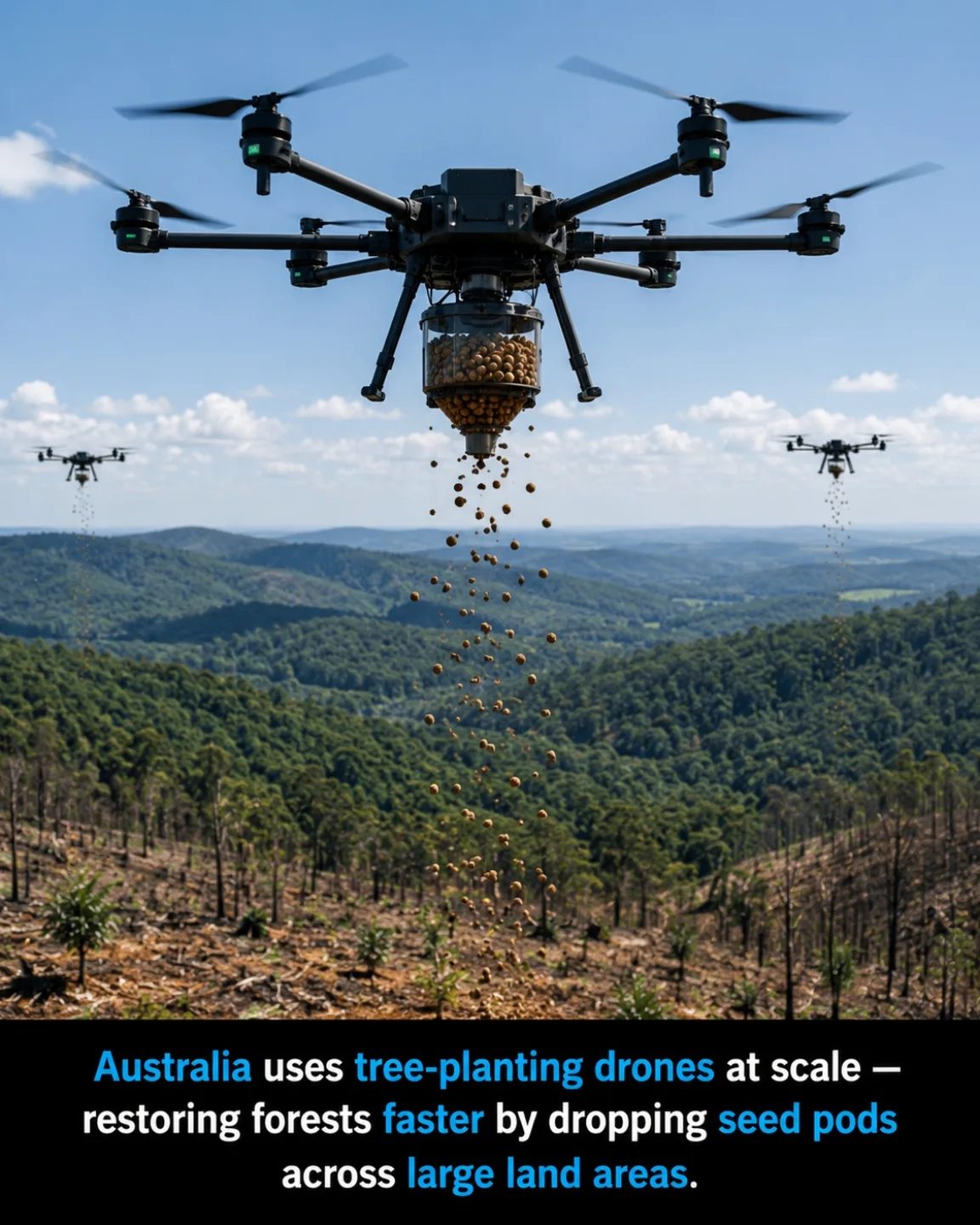
Drone Restoration: Australia's Innovative Approach to Forest Regrowth
Drone reforestation is an innovative method of planting trees on a large scale. Drones are being used to drop seed pods across deforested areas, aiding in the restoration of forests in Australia.
Why This Matters
Deforestation is a global issue that has significant impacts on the environment. Trees play a crucial role in absorbing carbon dioxide, releasing oxygen, and maintaining biodiversity. When forests are cleared, this delicate balance is disrupted, leading to soil erosion, loss of habitats, and increased carbon emissions. Australia, like many countries, faces challenges in reforestation due to the vast areas affected by deforestation and the limited manual labor available to plant trees. Here, drones emerge as a promising solution.
The Role of Drones in Forest Restoration
What Are Drones Doing in Forest Restoration?
Drones are being used in Australia to restore forests by dropping seed pods over large, deforested areas. This method involves drones equipped with pods that contain seeds. These drones fly over the targeted areas and drop the seed pods at regular intervals, ensuring that a large area is covered efficiently.
The Technology Behind Drone Planting
The technology behind drone planting is quite advanced. The drones are programmed to fly along predetermined paths, ensuring even distribution of seeds. The pods are designed to contain the necessary nutrients to promote seed germination. The drones can also be outfitted with sensors to monitor the soil and environmental conditions, optimizing the planting process.
The Benefits of Using Drones
Efficiency and Speed
One of the primary advantages of using drones for reforestation is the efficiency and speed at which large areas can be covered. Traditional methods of planting trees manually are labor-intensive and time-consuming. Drones can cover vast areas quickly, dropping thousands of seeds in a short period.
Precision and Accuracy
Drones can be programmed to drop seed pods with high precision. This ensures that seeds are planted at the optimal depth and spacing, increasing the likelihood of successful germination. Traditional planting methods often result in uneven planting, which can affect the overall health and density of the reforested area.
Access to Remote and Difficult Terrain
Many deforested areas are located in remote or difficult-to-reach locations. Drones can access these areas with ease, making reforestation possible in places where manual planting would be impractical or impossible. This capability is particularly valuable in countries like Australia, which has large, rugged landscapes.
Cost-Effectiveness
Using drones for reforestation can be more cost-effective in the long run. While the initial investment in drone technology and equipment is high, it reduces the need for manual labor and the associated costs. This makes drone reforestation a viable option for large-scale projects.
Environmental Impact
Drone planting has a lower environmental impact compared to traditional methods. The use of drones reduces the need for heavy machinery, which can cause soil compaction and damage to the ecosystem. Additionally, drones can be programmed to avoid sensitive areas, such as wildlife habitats and water sources, minimizing disruption to local ecosystems.
Challenges and Limitations
While drone reforestation offers numerous benefits, it also comes with its own set of challenges and limitations.
Weather Conditions
Drones are susceptible to weather conditions, which can affect their ability to operate effectively. Strong winds, heavy rain, and extreme temperatures can hinder or even prevent drone operations. This can delay or disrupt the reforestation process.
Battery and Payload Limitations
The battery life and payload capacity of drones are also limiting factors. Drones have limited flight times and can only carry a certain amount of seed pods at a time. This means that multiple trips are often required to cover a large area, which can be time-consuming and logistically challenging.
Regulatory and Safety Concerns
The use of drones for reforestation is subject to regulatory and safety concerns. In many countries, including Australia, drone operations are regulated to ensure public safety and privacy. This can add complexity and additional costs to the reforestation process.
Practical Tips for Implementing Drone Reforestation
Choose the Right Drone
Selecting the right drone for the job is crucial. Consider factors such as flight time, payload capacity, and durability. Some drones are specifically designed for agricultural and environmental applications, making them well-suited for reforestation tasks.
Plan the Route
Carefully plan the flight path to ensure even distribution of seeds. Use mapping software to identify deforested areas and determine the optimal routes for the drones. Consider factors such as terrain, soil conditions, and environmental sensitivity.
Monitor and Maintain
Regularly monitor the drones and maintain the equipment to ensure optimal performance. Conduct routine inspections and updates to address any issues that may arise. Also, monitor the reforestation progress to assess the effectiveness of the planting process.
Engage with Local Communities
Engaging with local communities can enhance the success of drone reforestation projects. Involve local stakeholders in the planning and implementation process to ensure that their needs and concerns are addressed. Community involvement can also help to build support and ensure the long-term sustainability of the reforested areas.
Important Takeaways
Australia's use of drones for reforestation offers a groundbreaking approach to restoring forests on a large scale. This method leverages advanced technology to improve efficiency, precision, and cost-effectiveness. While there are challenges and limitations, the benefits make drone reforestation a compelling solution for countries facing significant deforestation issues. By embracing this innovative approach, Australia is paving the way for future reforestation efforts worldwide.
Conclusion
The use of drones for reforestation in Australia represents a significant advancement in environmental technology. By leveraging the speed, precision, and versatility of drones, Australia is making strides in restoring its forests and mitigating the impacts of deforestation. As this technology continues to evolve, it has the potential to revolutionize reforestation efforts globally, offering a sustainable and efficient solution to one of the world's most pressing environmental challenges.
Questions readers ask
How do drones aid in forest restoration in Australia?
Drones in Australia are used to plant trees on a large scale by dispersing seed pods across deforested areas. This method helps to cover vast regions efficiently, making it a promising solution for rapid reforestation.
What are the benefits of using drones for reforestation?
Drones can access hard-to-reach areas, reduce the need for manual labor, and cover large areas quickly. They also minimize soil disturbance compared to traditional planting methods, promoting better seed germination and plant growth.
What types of seed pods are used in drone reforestation?
The seed pods used in drone reforestation are typically designed to contain a mixture of native plant species. These pods often include a growing medium and nutrients to ensure the seeds have the best chance of germination and growth once planted.
How does drone reforestation help combat deforestation in Australia?
Drone reforestation helps combat deforestation by quickly planting large numbers of trees in areas that have been cleared. This aids in restoring forests, which helps to absorb carbon dioxide, release oxygen, and maintain biodiversity, countering the effects of deforestation.
What challenges does Australia face in reforestation that drone planting addresses?
Australia faces challenges such as vast deforested areas and limited manual labor for planting trees. Drone planting addresses these issues by efficiently covering large regions and reducing the need for extensive human effort, making reforestation more feasible.
Can drones be used for reforestation in other countries as well?
Yes, the use of drones for reforestation is not limited to Australia. This technology can be applied in any country facing deforestation issues, especially where large areas need to be replanted and manual labor is scarce. Drone reforestation projects have already been implemented in several countries with varying levels of success, highlighting its potential for global application.
What role do native plant species play in drone reforestation?
Native plant species are crucial in drone reforestation as they are best adapted to the local environment. By dispersing seeds of native plants, drones help restore biodiversity and create forests that are more resilient to local pests, diseases, and climate conditions. This ensures that the reforested areas thrive and support local ecosystems effectively.
Related deep dives
Similar reads based on topic and creator.
Recent articles
Fresh deep dives from the latest Reels we unpacked.
Comments
Be the first to comment.