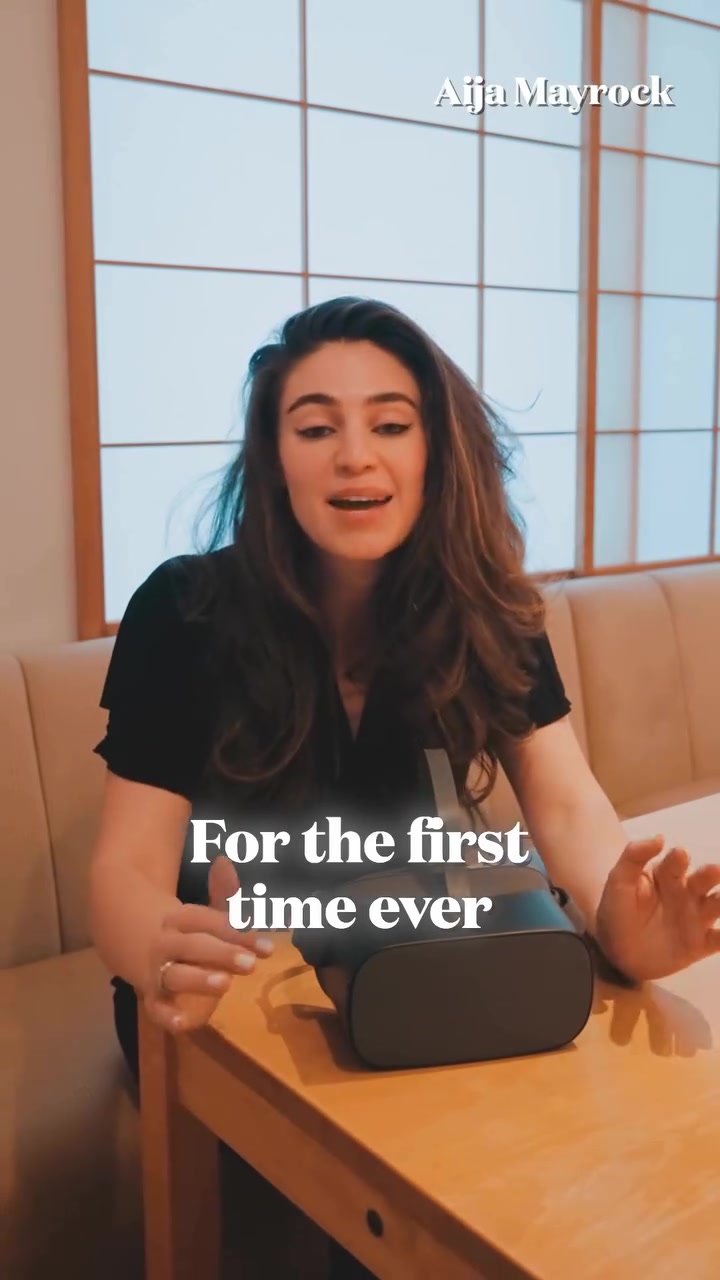
For the first time, a virtual reality experience called Angle Shift invites anyone to walk a day in the shoes of someone with dementia. Demonstrating a VR headset in a home or studio space, the experience recreates the disorienting experience of trying to navigate everyday scenarios, like exiting a train, for those suffering from dementia.
Demystifying Dementia: The VR Simulation
Angle Shift is an intuitive, immersive VR experience. Users don a VR headset and find themselves embedded in daily scenarios like riding a train. “This simulates that you’re sitting on a train and you have dementia and you don’t know where you are or when to get off and you feel completely isolated” users are told by someone experiencing the simulation. What this person feels is a literal sense of being lost: “I really felt paralyzed in this. I really felt like I was stuck on this train and I didn’t know where I was or where to go.” The feeling of isolation is overwhelming from the user’s perspective. The creators of this experience included those living with dementia and engineers. It aims to humanize the daily reality of this condition for caregivers. The VR experience has a two-fold call to action: to empathize and to protect. It intends to help caregivers understand what it is like to have dementia. Per the transcript, the simulation succeeds at its goal: "it works". The VR technology replicates the disorientation and confusion that comes with dementia: The narrator says they felt paranoid, confused, and helpless. It conveys the intense fear and helplessness people with dementia might face daily. The users who experience this technology are free to develop a better understanding of those living with it. In the process, they become better equipped to provide the right level of empathy and care to those who are so afflicted.
The Cultural Push for Empathy
While dementia is one of the most challenging health conditions to tackle, empathy is needed more than ever: "because of this technology it is possible to not only understand someone better but to learn to care for them better too." This simulation pushes the boundaries of social awareness and empathy. Many of those who need the most care are the invisible ones in our society. The most evident example: those suffering from dementia. VR technology allows users to experience the world from a different perspective, fostering a level of empathy. When the narrator says "you can't understand someone until you see the world through their eyes," it's a call to action. Someone who has never experienced dementia can form a unique understanding and empathy for those who have.
The Train Ride Experience
Narrators walk a fine line between describing the VR simulation and their personal feelings. The train is a visual environment that simulates what it’s like to have dementia. In the VR experience, users feel as if they are inside of an old train. You can't tell where you should get off, and the ride is endless. You find yourself in a strange environment with no landmarks to guide you forward. This constant feeling of disorientation creates an intense fear of not finding your way. "What to do? What should I do? What is it going to stop at?" This feeling of being in a continuous loop is terrifying and frustrating. But it’s terrifying only for a duration of the VR experience. This is a stark reminder of what those who live with it experience every moment of every day. This simulation is a painstaking reminder that those living with dementia are forced to navigate the world without a sense of security, of knowing where to be, or going. They have to navigate this tough world on their own, with no masks, and no hope of understanding someone else. And what’s worse, they can’t opt out of this experience. This VR experience forces you to take on their shoes, for a brief period, and see the world through their eyes, and yet, you can take off the mask after twenty minutes, 30 minutes, or an hour. This experience doesn’t end after a few minutes or an hour. It’s their life, every second of every day.
The potential future of VR in understanding and empathy
What is most fascinating about the VR technology is that it provides a unique opportunity to empathize with those who live with conditions like dementia, who are different from us. Caregivers often struggle to understand the frustration, isolation, and confusion felt by people who have dementia. “It’s really a technology that allows you to empathize at a whole other level than I’ve ever seen before.” This technology could be an essential instrument in the caregiving process. It could bridge the gap between medical support and emotional support. By experiencing the confusion and fear firsthand, caregivers can learn better ways to support and empathize. “I can try to help them.” VR feels like it's here to stay, and it could just revolutionize the way we perceive and extend empathy to others.
How to Experience the VR Simulation
There are VR experiences available in multiple locations, and the View is one of the most highly recommended VR experiences for caregivers:
- Setup: VR setups are available across various locations. Simply find the nearest VR center with Angle Shift and reserve a time to visit with a caregiver. The center will provide the VR headsets and proper instruction on its usage.
- Experience: The VR experience will walk you through a day in the life of a dementia patient, guiding you through various scenarios like navigating public transportation or remembering directions. The experience will simulate sensory deprivation, disorientation, and confusion.
- Technical Difficulties: There is a minimal learning curve when it comes to handling the VR headset. The center’s personnel will walk you through the processes. This may seem more complex to first-time users, but you can get the hang of it within minutes.
Elevating Empathy
The future of VR is endless. For the technology that allowed the narrator to experience what it’s like to have dementia, it paves the way for the field. Caregivers and health professionals can effectively train and empathize with those under their care. This is a huge step in the right direction. This technology is here to stay, and it has endless possibilities in improving the quality of life and care for those living with this debilitating disorder.
Questions readers ask
How does the Angle Shift VR experience simulate the disorientation of dementia?
Angle Shift uses VR to recreate everyday scenarios, like riding a train, and alters the environment to mimic the confusion and isolation that people with dementia might feel. For example, users might find themselves unable to determine where to get off the train or feel completely lost in an unfamiliar environment. The experience is designed to evoke feelings of paranoia, confusion, and helplessness, providing a glimpse into the daily struggles of those living with dementia.
Who developed the Angle Shift VR experience and why?
The Angle Shift VR experience was created by a collaboration between individuals living with dementia and engineers. Their goal was to create an immersive simulation that would help caregivers and others understand the daily reality of living with dementia, fostering empathy and better care. The experience aims to humanize the condition and bridge the empathy gap.
Can anyone experience Angle Shift VR, or is it limited to certain groups?
Angle Shift VR is designed to be accessible to anyone who wants to gain a deeper understanding of dementia. It is intended for caregivers, family members, and even the general public who want to experience what it's like to live with dementia. The experience can be demonstrated in a home or studio space, making it relatively accessible to a wide range of people.
What emotions does the VR experience aim to evoke in users?
The VR experience aims to evoke a range of emotions that mimic the daily struggles of those with dementia. Users may feel paralyzed, isolated, paranoid, confused, and helpless. These emotions are intended to provide a deeper understanding of the fear and disorientation that people with dementia might experience, fostering empathy and better care.
How does the train ride scenario in Angle Shift VR simulate dementia?
In the train ride scenario, users find themselves in a disorienting environment where they can't tell where to get off, and the ride seems endless. The lack of familiar landmarks creates a constant feeling of disorientation, which is designed to replicate the confusion and fear that people with dementia might experience in their daily lives. This scenario is a key part of the immersive experience, helping users understand the challenges faced by those with dementia.
Related deep dives
Similar reads based on topic and creator.




Recent articles
Fresh deep dives from the latest Reels we unpacked.




Comments
Be the first to comment.