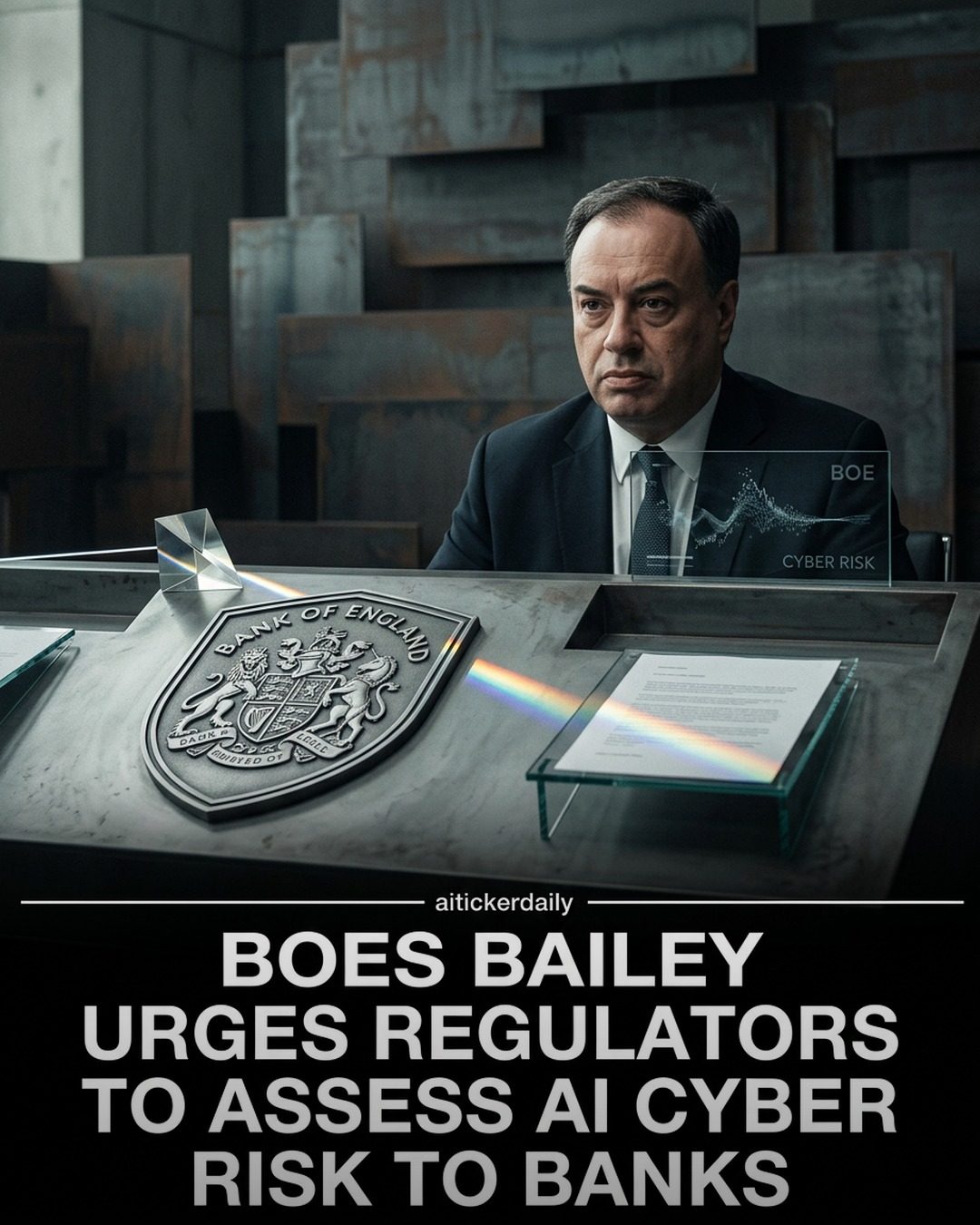
AI Cyber Risk Assessment in Banks
AI is revolutionizing the banking sector, but it also introduces new cyber risks. The Bank of England's Governor, Andrew Bailey, has emphasized the urgent need for global regulators to evaluate and mitigate these risks, particularly those associated with frontier AI models like Anthropic's Mythos.
Context / Why this matters
The integration of AI in banking brings significant benefits, from enhanced customer service to improved fraud detection. However, it also presents unique cybersecurity challenges. AI models can be exploited to identify vulnerabilities, manipulate data, or even create sophisticated phishing schemes. Regulators must stay ahead of these threats to ensure the stability and security of the financial system.
Main discussion
The Threat Posed by AI
AI models like Anthropic's Mythos can pose substantial risks to banks. These models are designed to process vast amounts of data and make complex decisions, but they can also be manipulated or exploited by malicious actors. For instance, an attacker could use a model to identify vulnerabilities in a bank's systems or to create convincing phishing attempts.
The Role of Regulators
Regulators play a crucial role in mitigating these risks. By assessing the threat posed by AI models, they can ensure that banks are prepared to defend against potential attacks. This includes evaluating the security measures in place, conducting regular audits, and enforcing strict compliance standards.
Cross-Border Coordination and Vendor Risk Management
AI cyber risks in banking are not confined to a single jurisdiction. Banks often use AI models developed by vendors based in different countries, and cyber threats can originate from anywhere in the world. Therefore, cross-border coordination is essential for effective risk management. Regulators must work together to share information, set global standards, and coordinate responses to threats.
Additionally, managing vendor risk is critical. Banks must ensure that the vendors they work with have robust security measures in place and are compliant with regulatory standards.
The Impact on Bank Security and Third-Party Risk Teams
When regulators single out a specific AI model, such as Anthropic's Mythos, it can have immediate effects on bank security and third-party risk teams. These teams can expect tighter review cycles and more stringent procurement and architecture reviews. This heightened scrutiny is necessary to ensure that banks are adequately prepared to defend against the specific risks posed by these models.
Practical tips
- Regular Security Audits: Conduct regular security audits to identify and address vulnerabilities in AI systems.
- Vendor Risk Management: Ensure that vendors have robust security measures in place and are compliant with regulatory standards.
- Cross-Border Coordination: Work with regulators in other jurisdictions to share information and coordinate responses to threats.
- Stay Informed: Keep up-to-date with the latest developments in AI and cybersecurity. Subscribe to newsletters or follow industry experts to stay informed.
- Tight Review Cycles: When a specific AI model is named by regulators, expect tighter review cycles. Be prepared to conduct more thorough procurement and architecture reviews.
Important takeaways
- AI Poses Unique Risks: AI models can be exploited to identify vulnerabilities, manipulate data, or create sophisticated phishing schemes.
- Regulators Play a Critical Role: They assess the threat posed by AI models and ensure that banks are prepared to defend against potential attacks.
- Cross-Border Coordination is Essential: Banks must work with regulators in other jurisdictions to share information and coordinate responses to threats.
- Vendor Risk Management is Crucial: Ensure that vendors have robust security measures in place and are compliant with regulatory standards.
- Be Prepared for Tighter Review Cycles: When a specific AI model is named by regulators, expect more stringent procurement and architecture reviews.
Conclusion
The integration of AI in banking brings significant benefits, but it also introduces new cyber risks. By assessing these risks and implementing robust security measures, banks can protect themselves from potential threats. Regulators, vendors, and third-party risk teams all have a crucial role to play in this endeavor. Staying informed, conducting regular audits, and working together are essential for ensuring the security and stability of the financial system.
Questions readers ask
What are the primary AI cyber risks in banking, according to Andrew Bailey?
Andrew Bailey highlights several key AI cyber risks in banking, including the potential exploitation of AI models to identify vulnerabilities, manipulate data, and create sophisticated phishing schemes. These risks stem from the integration of advanced AI technologies, like Anthropic's Mythos, into financial services.
Why is global cooperation important for managing AI risks in banking?
Global cooperation is vital because AI cyber risks in banking can have cross-border implications. Effective management and regulation require international coordination to ensure that all parties are aligned and can collectively address these complex challenges in the financial system.
What specific actions is the Bank of England taking to address AI cyber risks?
The Bank of England, under the leadership of Andrew Bailey, is advocating for global regulators to assess and mitigate AI cyber risks. This includes developing robust governance frameworks and fostering cross-border collaboration to safeguard the financial system against potential AI-related vulnerabilities.
How does the integration of AI benefit the banking sector, despite the risks?
AI integration in banking offers numerous benefits, such as enhanced customer service through personalized experiences and improved fraud detection systems. These advancements can lead to more efficient and secure financial operations, but they must be balanced with stringent cybersecurity measures to mitigate associated risks.
What role does regulation play in managing AI risks in financial services?
Regulation is crucial for managing AI risks in financial services as it provides the necessary frameworks and guidelines to ensure the safe and responsible use of AI. By keeping pace with technological advancements, regulators can help banks anticipate and mitigate potential cyber threats, thereby maintaining the stability of the financial system.
What are some examples of AI vulnerabilities in banking that regulators need to address?
Examples of AI vulnerabilities in banking include the potential for AI models to be manipulated to exploit personal data, create convincing phishing attacks, or facilitate fraud. Regulators need to address these vulnerabilities by implementing strict security protocols and ensuring that AI systems are resilient against cyber threats.
How does the Bank of England plan to enhance AI risk management in the banking sector?
The Bank of England plans to enhance AI risk management by fostering a collaborative environment among global regulators, promoting the development of advanced cybersecurity measures, and encouraging banks to adopt comprehensive risk management strategies. This approach aims to safeguard the financial system against the evolving threats posed by AI technologies.
Related deep dives
Similar reads based on topic and creator.




Recent articles
Fresh deep dives from the latest Reels we unpacked.




Comments
Be the first to comment.