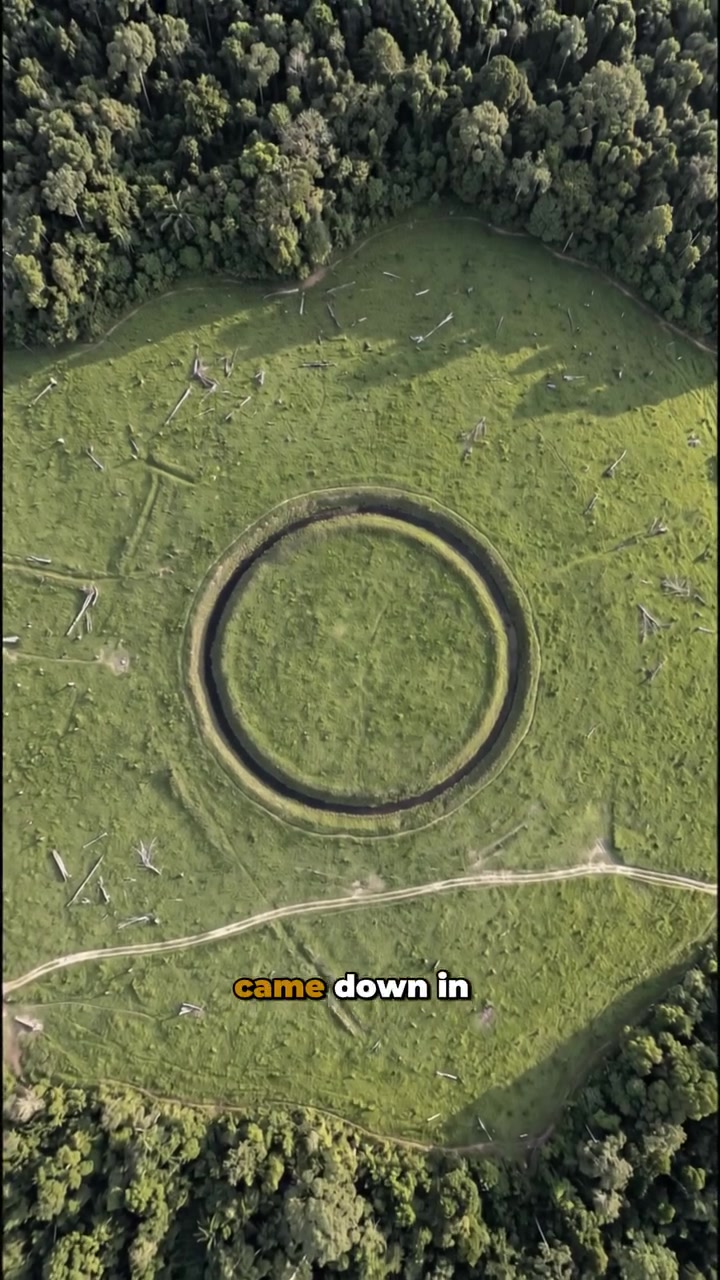
Aerial surveys unveiled a massive, ancient civilization hiding beneath the Amazon
The ongoing destruction of the Amazon rainforest in Brazil revealed a vast network of ancient settlements. When the trees began to fall, enormous geometric shapes emerged from the earth, in Brazil's Acre region. These were not natural — nor were they recent. "Whoever built them had no metal tools,", and these shapes stretch more than 300 metres across. Hundreds of metres across, they were meticulously carved into the ground.
What are geoglyphs?
Geoglyphs are large, earthen structures, created by excavating the land. In the Amazon, these geoglyphs are circles and squares, with some complex and irregularly shaped earthworks. At least 400 of these geometric patterns have been found, spanning more than 300 sites. Geoglyphs are the longest-surviving human-made structures on Earth. Archaeologists are still unsure "of what they were for". They originated over 2,000 years ago, and theirs are large enough to be visible from above. But until recently, they remained hidden. These geoglyphs were discovered in large part because of human logging activity. The geoglyphs were constructed in the Amazon rainforest, but they had been completely hidden under the forest canopy. When humans cleared the trees, these man-made earthworks emerged.
The unknown Amazon civilization
The discovery of these geoglyphs has made scientists question what they know about the Amazon. They are now challenging a long-held belief. Archaeologists originally believed the Amazon to be sparsely populated. Now they question that idea. Geologists estimate there to be 20,000 ancient earthworks in the region. This suggests that the Amazon may have been home to far more people than originally believed. Individuals who first saw these circles and squares remarked that they appeared to have been constructed by an advanced and organized civilization. The sheer number of earthworks suggests that people lived in large groups. Researchers speculate that these people built a thriving civilization, with these earthworks connected to their daily lives. Archaeologists found the geoglyphs to be connected to roads, which suggest that these settlements were interconnected. What appears as untouched may be the remnants of one of the world's largest prehistoric civilizations. Yet "even now archaeologists don't agree on what they were for."
Deforestation exposed these ancient earthworks.
Early geoglyphs were discovered by accident, as farmers and loggers cleared the Amazon canopy. These geometric structures predominantly appeared in the Acre and neighbouring regions. These circles and squares appear to have been carved into the earth with "no metal tools." They are so large that they were often discovered by sight when people cleared the trees. These man-made structures could never be perceived from ground level, prompting them to remain hidden for thousands of years. The researcher then used the same process of using laser surveying.
The infrared laser surveys made the geoglyphs visible
Researchers for the Amazon used an advanced form of laser survey. They sent laser beams deep through the grasses and trees and scanned the areas. These lasers could specifically scan the ground and the trees at the same time. LIDAR uses infrared light to cut through the jungle's thick canopy. This method provides the researchers with an aerial map of the Amazon. They could utilise a series of these aerial scans to see the shapes of these earthworks. Researchers estimate there are over 300 sites across the Amazon, which may hold between 20,000 and 30,000 geoglyphs. The sheer number of earthworks suggests that people lived in large groups, and had a strong capability for building these complex earthworks. It also shows that people in the region were focused on building structures, not solely on hunting and gathering.
No one yet understands why the Amazon had geoglyphs
These more recent surveys also discovered that the geoglyphs were part of a larger pattern. The aerial surveys discovered "a network of intricate lines and shapes [that] resemble a city layout." Researchers estimate that this ancient civilization had up to 3 million people. People created very complex shapes. Over 400 of these patterns have been found, some of which appear to be connected. They revealed that the ancient civilization preferred living in large groups. The Amazon people had a high level of organization and were likely more advanced than previously believed.
What the Amazon geoglyphs mean
Their recent discovery offers insight into a forgotten civilization. The Amazon geoglyphs have forced archaeologists to question their assumptions. Archaeologists have assumed that the Amazon was a vast, untouched wilderness. The recent archaeological finds challenge that idea. They reveal that the Amazon may have once been home to a powerful and organized civilization. The sheer scale of the earthworks shows that the Amazon may have once been home to large, thriving communities. It's now up to archaeologists to determine exactly what these geometric sites were for. So remains the mystery of who lived in them and more importantly, why they built such enormous earthworks in the first place. These forms could become critical information in establishing why the Amazon rainforest has started to diminish. All we have to do is examine what happened when the rainforest was thriving. They might even reveal why the Amazon is such a crucial part of the world.
Questions readers ask
What exactly are geoglyphs and how were they constructed?
Geoglyphs are large, earthen structures created by excavating the land to form geometric shapes, like circles and squares. In the Amazon, these were carved into the ground without the use of metal tools, making them quite an engineering feat. They were constructed over 2,000 years ago and are large enough to be visible from above, but remained hidden under the dense forest canopy until deforestation revealed them.
How do scientists know these geoglyphs are man-made and not natural formations?
The geometric patterns of the geoglyphs, such as perfect circles and squares, are not typical of natural formations. Additionally, their sheer size and the fact that they are interconnected with roads suggest a high level of organization and intentional design by an ancient civilization.
What do the geoglyphs tell us about the civilization that created them?
The discovery of these geoglyphs challenges the long-held belief that the Amazon was sparsely populated. The sheer number and size of these earthworks suggest that a large, organized civilization lived in the Amazon, and the interconnected nature of these settlements indicates a complex society.
Why were the geoglyphs hidden for so long, and how were they finally discovered?
The geoglyphs were hidden for thousands of years under the dense canopy of the Amazon rainforest, making them invisible from ground level. They were only revealed when loggers and farmers cleared the trees, exposing these ancient earthworks to the world. Advanced laser surveys have since been used to map and study these structures.
What methods are used to study these geoglyphs today?
Researchers use advanced laser surveying techniques to map and study the geoglyphs. This involves sending laser beams through the grasses and trees to create detailed images of the earthworks, allowing scientists to better understand their structure and purpose without disturbing the sites.
Can visitors see these geoglyphs today, and if so, how?
Unfortunately, due to the remote locations and ongoing deforestation, these sites are not typically open to the public for direct viewing. However, aerial tours or guided expeditions may be available through specialized tour operators. Many of the sites have been mapped and documented using laser surveys, so virtual tours and detailed images are also available for those interested in learning more about these ancient structures.
Recent articles
Fresh deep dives from the latest Reels we unpacked.




Comments
Be the first to comment.