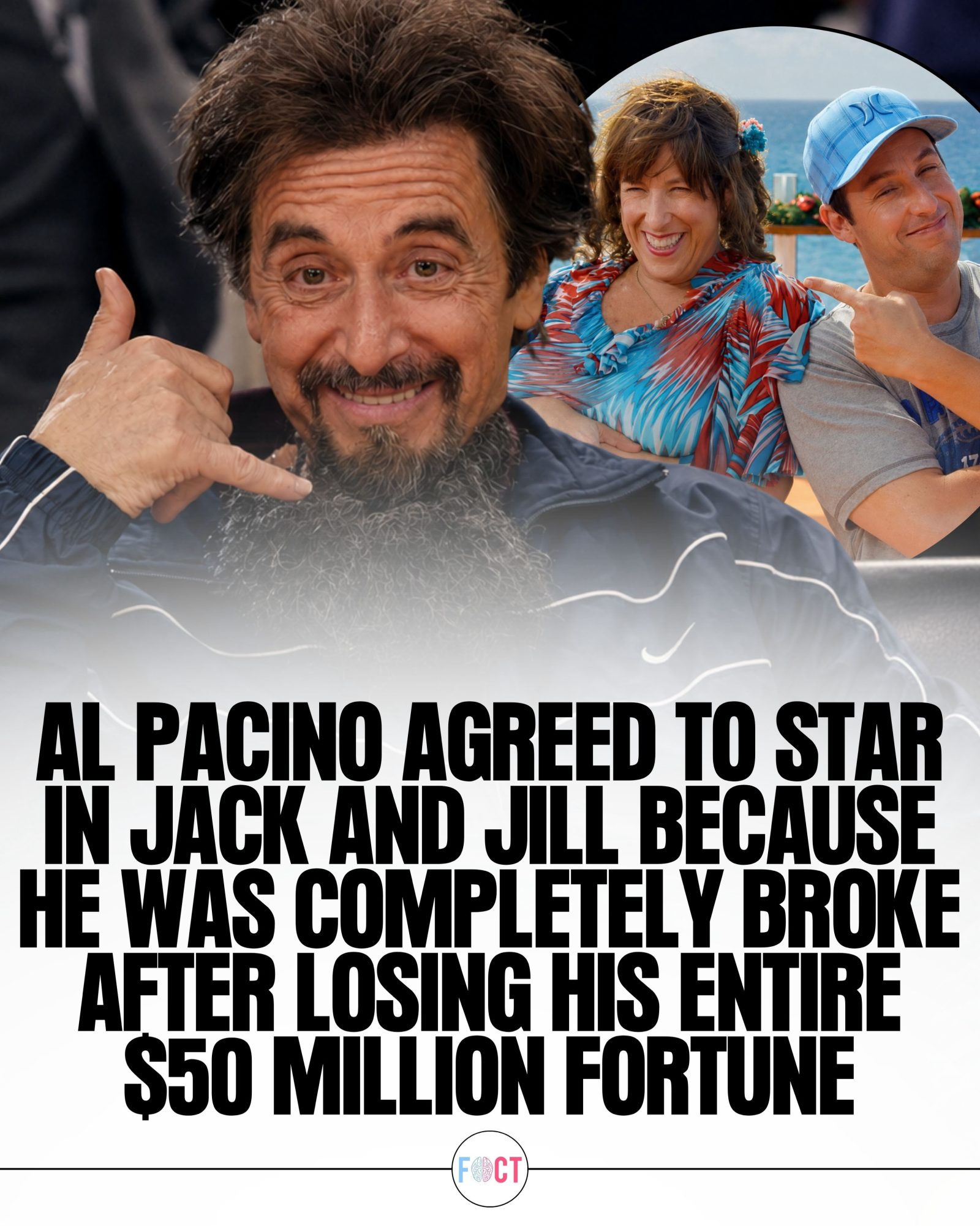
Al Pacino's Financial Struggles and His Role in "Jack and Jill"
Al Pacino's role in the 2011 comedy film "Jack and Jill" is often a subject of curiosity and amusement. The film, directed by Dennis Dugan and starring Adam Sandler, is notorious for its low critical reception. However, the inclusion of the legendary actor Al Pacino in the cast adds an intriguing layer to the story. Pacino's decision to star in "Jack and Jill" was not driven by artistic choices but by a pressing financial situation.
Context: Why This Matters
Financial struggles are not uncommon, even among the wealthy and famous. Al Pacino's experience serves as a reminder that financial security can be fragile, regardless of one's status. The actor's revelations about his financial hardship also underscore the importance of vigilance in managing one's finances, especially when dealing with financial advisors and accountants.
The Financial Downfall
The Ponzi Scheme
Al Pacino's financial troubles began with a massive Ponzi scheme orchestrated by his accountant. The term "Ponzi scheme" refers to a type of investment fraud where returns are paid to investors using funds from new investors rather than from legitimate profits. This type of fraud can have devastating consequences, as it often only benefits the scheme's architect while leaving investors with significant losses.
In Pacino's case, his accountant managed to drain his entire $50 million fortune. The scheme was so extensive that it sent the accountant to prison. Pacino's memoir reveals that he discovered he was completely broke right around the time Adam Sandler offered him the part in "Jack and Jill." Despite still owning valuable real estate, Pacino's liquid cash was gone, leaving him with massive bills and no steady income.
The Impact on Pacino's Career
Pacino's financial hardship had a profound impact on his career choices. Facing a dire financial situation, he accepted the high-paying comedy role in "Jack and Jill" simply because he needed the money to survive. This decision was a departure from his usual roles, which often involved more dramatic and serious characters.
Pacino's acceptance of the role in "Jack and Jill" highlights the practical considerations that can influence an actor's career decisions. While the film was not well-received by critics, it provided Pacino with the financial stability he needed at the time.
The Role in "Jack and Jill"
The Movie and Its Reception
"Jack and Jill" is a comedy film that follows the story of Jack Sadelstein, played by Adam Sandler. The film's plot revolves around Jack's strained relationship with his twin sister Jill, played by Sandler in drag. Al Pacino plays himself in a dual role as Jack and Jill's idol, adding to the film's comedic value.
However, "Jack and Jill" received overwhelmingly negative reviews from critics. The film was criticized for its lack of originality, poor humor, and repetitive jokes. Despite these criticisms, the film managed to generate significant revenue at the box office, largely due to Sandler's fan base.
Pacino's Performance
Al Pacino's performance in "Jack and Jill" was a departure from his typical dramatic roles. However, his presence in the film added a layer of intrigue and star power that attracted audiences. Pacino's character, playing himself, interacts with the film's lead characters in a comedic fashion, providing some of the film's most memorable moments.
Despite the film's critical reception, Pacino's involvement in "Jack and Jill" showcases his versatility as an actor. The role allowed him to explore a different genre, demonstrating his ability to adapt to various types of performances.
Practical Tips
Financial Management
Pacino's financial difficulties serve as a reminder of the importance of prudent financial management. It is crucial to conduct thorough background checks and due diligence when selecting financial advisors. Regular audits and reviews of financial statements can help detect any irregularities or fraudulent activities early on.
Diversifying Income Sources
Having multiple income sources can provide a safety net during financial hardships. Diversifying income streams can include investments, real estate, and other passive income sources. This approach can help mitigate the impact of financial setbacks and ensure financial stability.
Recognizing the Signs of Financial Distress
Recognizing the signs of financial distress is essential for taking timely action. These signs can include a sudden increase in debt, inability to meet financial obligations, and a significant decrease in liquid assets. Addressing these issues promptly can help prevent a complete financial meltdown.
Important Takeaways
Al Pacino's experience with financial hardship and his decision to star in "Jack and Jill" offer valuable insights into the challenges that even the wealthy and famous can face. The importance of vigilant financial management, diversifying income sources, and recognizing the signs of financial distress are critical lessons that everyone can learn from.
Conclusion
The story of Al Pacino's financial struggles and his role in "Jack and Jill" is a reminder that financial stability is not guaranteed, even for the wealthy. Pacino's experience underscores the importance of prudent financial management and the need to be cautious when dealing with financial advisors. His decision to take on the role in "Jack and Jill" highlights the practical considerations that can influence career choices, even for a legendary actor.
Questions readers ask
What drove Al Pacino to accept his role in 'Jack and Jill'?
After losing his entire fortune in a Ponzi scheme, the legendary actor needed to stabilize his finances. Hence, Al Pacino accepted the role in the 2011 film 'Jack and Jill' despite the low critical reception of the comedy, which was directed by Dennis Dugan and starred Adam Sandler. This decision was driven by his pressing financial situation, not by artistic choices.
How did Al Pacino lose his entire fortune?
Al Pacino became a victim of a Ponzi scheme, a fraudulent investing scam promising high rates of return with little risk to investors. These schemes often collapse, causing those who invested to lose their money. This unfortunate experience led to the actor losing all of his assets and contributed to his decision to take on roles like the one in 'Jack and Jill'.
Why is Al Pacino's role in 'Jack and Jill' often a topic of interest?
Al Pacino's involvement in 'Jack and Jill' is a subject of curiosity and amusement due to the film's notorious low critical reception. Despite its poor reviews, the inclusion of a legendary actor like Pacino in the cast adds an intriguing layer to the story, making his participation a topic of interest among fans and critics alike.
What other notable films did Al Pacino star in around 2011?
Apart from 'Jack and Jill', Al Pacino did not have many other film releases in 2011. His other notable films were released in different years. Some of his most renowned works include 'The Godfather' trilogy, 'Scarface', and 'Heat'.
What is a Ponzi scheme and how does it work?
A Ponzi scheme is a fraudulent investing scam that pays returns to separate investors with funds obtained from newer investors, instead of profit earned from investments. The scheme often collapses when it becomes difficult to recruit new investors and the money from existing investors dries up, leading to significant financial losses.
What does Al Pacino's experience tell us about financial security?
Financial struggles can affect anyone, including wealthy and famous individuals. Al Pacino's experience with a Ponzi scheme highlights the fragility of financial security, regardless of one's status. It serves as a reminder that maintaining a diversified portfolio and being cautious of investment opportunities can help safeguard one's wealth.
Related deep dives
Similar reads based on topic and creator.


Recent articles
Fresh deep dives from the latest Reels we unpacked.




Comments
Be the first to comment.