The Power of Women Against the Burning World
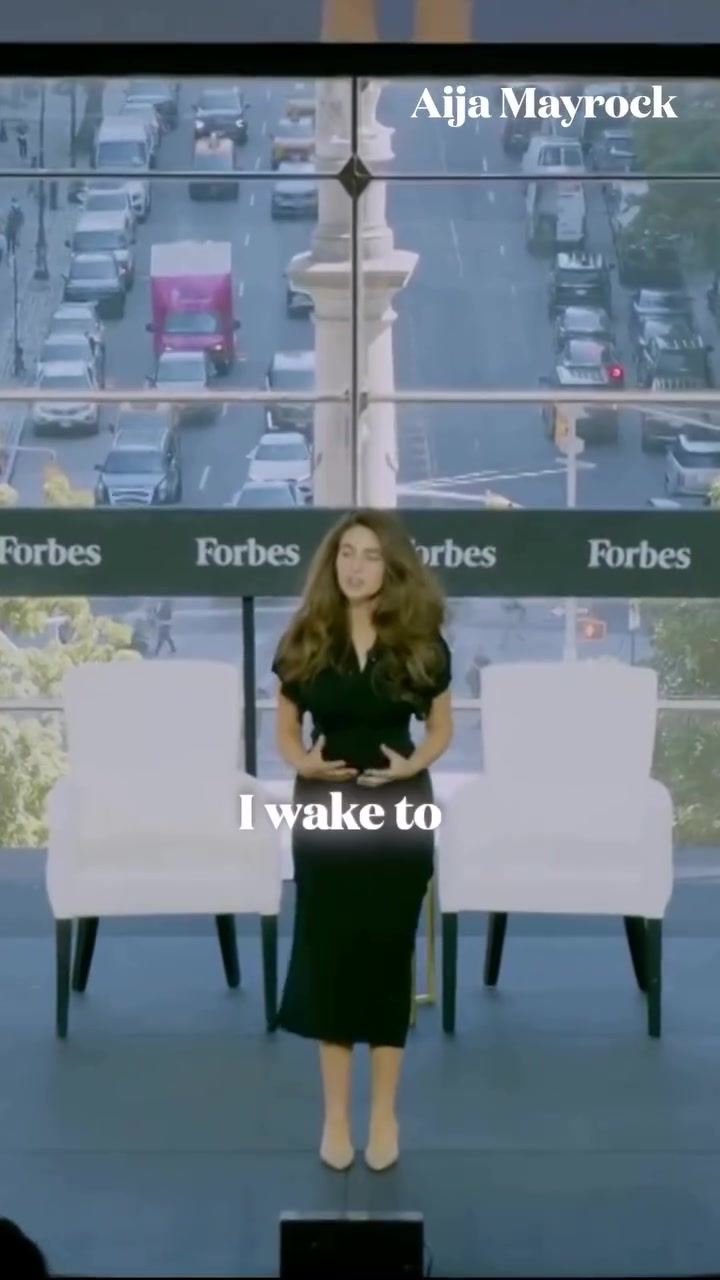
A woman stands before a backdrop. It's not another office or boardroom, but the Forbes brand dominates the frame, indicating the seriousness of the occasion. She declares, "I wake to a burning world." This is not merely a figure of speech; she describes a world of war, hatred, and divisions. Yet, amidst this chaos, she finds something extraordinary. Aija Mayrock, speaking before a global audience, acknowledges the suffering she witnesses. She contrasts the screaming with a voice still hopeful — a voice capable of acting to filter out the noise. This is no reflective moment. The speaker understands the urgent need to drive change, to create a different future.
The Power of Women as Hope
The narrative pivot on hope comes in sharp relief against this backdrop of gloom. Mayrock, with a clear, deliberating tone, doesn't just point to hope but shifts the frame. Hope is tangible, embodied. She advocates,
"Old women, young women from every corner of this earth who dare to build, to create, to heal and rise." This is more than a theoretical construct — hope is the cumulative power of individual women stepping forward to change society. One doesn't only hear the speaker; one is almost part of the room, listening to the raw power of her words. As Mayrock outlines, hope is in the woman who can crack through walls to get a degree. Hope is in a single mother who holds her family together. It is in the visionary and the survivor. Hope, she insists, is in the constant rebuilding and healing, something too deeply felt to be just a cliché.
Women Rebuilding the World
The Universality of Women's Power
When Mayrock speaks of women rebuilding the world, she isn't merely paying lip service. She emphasizes the global reach and deep-rooted dedication of such efforts. In an interview without much visual embellishment, the visceral quality of her message still needs a soundtrack. Instead, it gains force from the repetition of terms like "burning world," her call to wake up and act. Consider, for example, a young woman who might not see a way out of poverty or another who is confronting the world with her first business idea. The power of the speaker’s words is that she encapsulates the entire arc of struggle and triumph. This is a message meant to inspire action and a deeper sense of collective hope.
The Many Faces of Hope
Hope, for Mayrock, is not an elusive concept like a “thing with feathers.” Instead, it is a lived experience, “a woman who rebuilds the world she was born into.” She doesn't speak in abstracts or hypotheticals. Hope is the engineer, the poet, the leader — roles that resonate across cultures and boundaries. The sheer diversity in descriptions gives a crystal clarity to the message: hope is versatile, resilient, and alive.
"The Power of Powerful Women"
The narrative arc of this interview structure is overlaid with the omnipresent hope Mayrock finds in women across different walks of life. As the speaker continues, the tone shifts from somber to hopeful, encapsulating the soul of her message — there is hope, and it is alive and active.
"A powerful woman is a single mother holding her family together by threads." One small, practical example of hope she outlines is a woman who balances the household with the challenges of parenting while still striving for professional growth. This embodiment goes beyond the emotional appeal, carrying a practical and actionable depth. It outlines the ways we can all contribute to a better world.
The Reality of Hope
Mayrock also reframes hope through more conceptual terms. It is not an elusive aspiration — it's about "faith in humanity, a vision of prosperity." It's about women who wage peace and carry dreams. Her narrative shifts, emphasizing the tangible and the practical, adding layers to the very notion of hope. The burning world is not a force of nature but a condition we shape, Mayrock contends. If there is chaos, we have the capacity to create something new, something better. "We are hope" is both a plea and a proclamation of hope.
Applying the Hope
Building Hope in Your Own Life
For those inspired by such a narrative of hope, the call to action is clear. You don’t need to embark on grand gestures alone. Start by looking at the small ways you can contribute to a better future. Everyone can become a beacon of hope in their own way.
- Empower Others: Mentor someone who is trying to find their way. This could be a student, a friend, or a family member.
- Consistent Effort: Realize that hope is not about grand gestures alone but consistent efforts to make things better.
- Believe in People: Support and believe in individuals working towards a better future. They need encouragement to keep going. Mayrock’s words remind us that the transformation starts at a personal level, yet it amplifies exponentially when it is shared.
Burning World, New Beginnings
The interview ends on a hopeful note, with a room full of women as a testament to the collective strength that can rebuild the world. Hope, it seems, is not something we look for but something we embody. By standing up and recognizing the power within each of us, we can reshape the world.
Questions readers ask
What specific examples does Aija Mayrock give to illustrate women's power and hope in a world on fire?
Mayrock highlights a variety of examples, including women who overcome barriers to get a degree, single mothers holding families together, and visionaries and survivors who rebuild and heal their communities. She emphasizes that these examples are tangible representations of hope in action.
How does Aija Mayrock describe the 'burning world' she refers to in her speech?
Mayrock paints a vivid picture of a world plagued by war, hatred, and divisions. It's a world where suffering and chaos are prevalent, but she also sees it as a place where hope can emerge and thrive, especially through the actions of women.
What does Mayrock mean when she says, 'Hope is a woman who rebuilds the world she was born into'?
When Mayrock says this, she is emphasizing that hope is not just an abstract idea, but a tangible force embodied by women who actively work to improve their world. It's about the everyday heroes who take action and make a difference, whether that's through education, family, or leadership.
How does Mayrock's message translate into actionable steps for women around the world?
Mayrock's message encourages women to step forward and take action. Whether it's pursuing education, supporting families, or leading initiatives, she calls on women to use their power to create a different future. Her words are meant to inspire collective hope and action, emphasizing that hope is in the constant rebuilding and healing.
How does Mayrock contrast hope with the chaos and suffering she acknowledges in the world?
Mayrock contrasts hope with the chaos and suffering by presenting it as a tangible, embodied force. While she acknowledges the burning world, she highlights that hope is in the actions of women who rebuild, heal, and create. It's a voice that can filter out the noise and drive change, making hope a powerful counterpoint to the suffering.
What roles does Mayrock mention as examples of hope in action, and why are these roles significant?
Mayrock mentions roles like the engineer, the poet, and the leader, emphasizing that hope is versatile and resilient. These roles are significant because they resonate across cultures and boundaries, showing that hope is alive and active in various forms and contexts. Each role represents a different way in which women can embody and enact hope.
What is the significance of Mayrock's use of the phrase 'burning world' in her speech?
The phrase 'burning world' is significant because it captures the urgency and gravity of the challenges we face. It's a stark reminder of the suffering and chaos but also serves as a call to action. By repeating this phrase, Mayrock emphasizes the need to wake up and act, highlighting that hope is the force that can rebuild and heal this world.
Related deep dives
Similar reads based on topic and creator.


Recent articles
Fresh deep dives from the latest Reels we unpacked.
Comments
Be the first to comment.