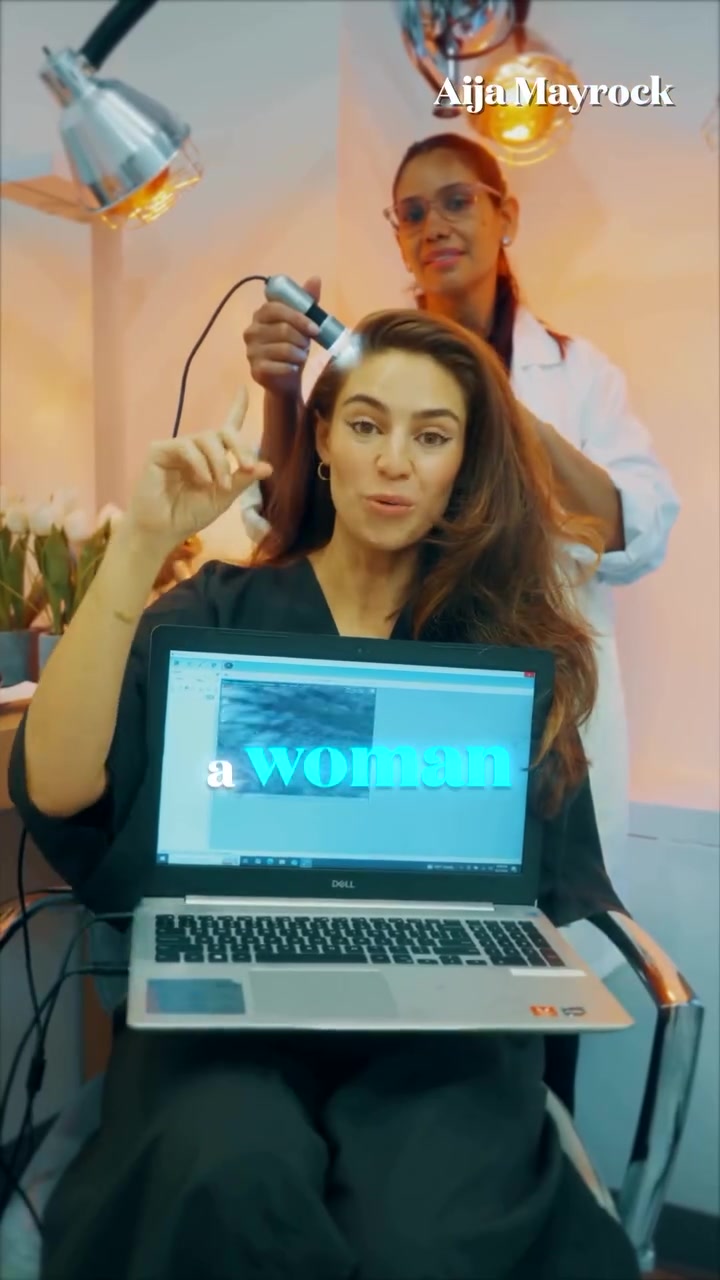
Aija Mayrock sat across from Dani, a trichologist, to examine her hair and scalp in minute detail in a clinical setting. As Mayrock considers her hair's health, Dani is bent closer to the problem, using a magnifying device to closely observe the roots. Scalp inflammation is the chief issue, the hair expert advises. It is no surprise that scalp and hair health is an important topic. Hair loss is a common problem, affecting millions of people around the world, yet very few people know how to solve it. "Your hair can fall out because of hormonal imbalance, nutrition, medication, and scalp conditions," Dani explains, emphasizing that attention to scalp health can help diagnose the root cause of your thinning.
The Examiner's Art
A trichologist is perhaps the most underutilized specialist when it comes to hair loss and scalp health. It is a licensed specialist trained to diagnose and treat hair and scalp conditions. Dani, the trichologist for Philip Kingsley, works in a clinical setting, and her examination looks like a forensic investigation. Using a magnifying device, Dani examines the pores and hair follicles at a microscopic level to diagnose hair and scalp conditions. Mayrock elaborates, "Dani looks at the pores in your scalp to see if they are clogged; she looks at how strong each hair is." Dani looks at the length of the hair that falls out, to identify the type of hair loss the person is experiencing. Each examination is tailored to the client's situation, and Danie's services are distinct in that she assesses the length of the hair that falls out to determine the type of hair loss. Philip Kingsley's trichologists examine hair and scalp health with a holistic approach, taking into account factors such as hormones, nutrition, medication and lifestyle. This includes blood work, hormone levels, and lifestyle, to prescribe the best treatment plan, along with the best hair products, for the client.
The Nation's Hair Conundrum
While hair loss remains a significant problem for many Americans, most patients are unaware of the many ways that hair loss is treated. Most of the general public think of hair loss as an incurable condition, which is why people who suffer from hair loss might feel overwhelmed when trying to figure out how to handle their hair. The U.K. is home to the Philip Kingley Trichology Clinic, the first clinic of this type to diagnose, treat and prevent of scalp and hair conditions. The clinic started in 1967 and has grown to over 300 employees today. Using specialized techniques, they are able to diagnose the cause of the hair loss and take steps to prevent it. Philip Kingley's holistic approach is unique in that it identifies and addresses the root cause of the user's hair problems. The clinic also uses specialized techniques to diagnose the reasons behind the hair loss. The Philip Kingsley team include consultations that focus on examining the client’s hair and scalp health, as well as considering the client's overall health. They consider all of the factors that could be impacting the client’s hair loss, including hormones, medication, and nutrition. Moreover, Mayrock observed, "Most doctors won't ever look at your hair follicles to tell you why your hair is thinning or falling out, but they should, because there is usually a reason behind it, and a trichologist may have the tools to help you figure it out."
The Tools Of The Trichologist
Trichology is the study of the hair and scalp and includes diagnosis and treatment of hair and scalp conditions. It is also about the covering of the head, called the integumentary system, which includes the skin and nails. Although hair loss is not always an indicator of a serious health problem, hair and scalp issues can sometimes be symptomatic of a deeper underlying medical issue. There are many reasons that the hair can fall out, including stress, genetics, hormones, and more. That is why it is important that a trichologist inspect not only the hair, but also the scalp. The specialist examines the scalp and pores of the head, looking for signs of potential issues, including inflammation. The trichologist may notice clogged pores, which are often associated with over-production of oil. If the examination reveals an excess of oil, the trichologist might recommend a scalp exfoliation or shampoo to encourage a clean scalp. The trichologist will measure the strength of the hair shaft. If the hair shaft is thin, weaker, or the hair shaft's diameter is changing, it can indicate potential hair loss. If the hair is thin or weak, the trichologist might recommend a treatment plan that includes hair fibers and restoring treatments. If the hair shaft is strong, but the hair is falling out, the trichologist may look for the factors that could be causing the hair loss, such as inflammation, nutrition, or scalp conditions.
How does this track with Philip Kingsley?
Phillip Kingsley was founded in 1967, the clinic is not only open to diagnosing all hair and scalp conditions, but also ways to prevent and treat. So while the trichology is key to helping understand hair loss, the overall clinic does offer a program of preventive hair products and treatments. Philip Kingley's clinical team works in a collaborative holistic approach, offering a wide variety of products, such as flake control shampoo, scalp serum, and thickening treatments, to keep hair and scalp healthy.
Are Home Remedies Effective?
Authors from sources like WebMD, however, offer some hair-loss remedies that can be tried at home. Hair fall can be caused for a variety of reasons and can be treated in different ways. Nutrition is one of the key factors that can affect the quality of hair. Some nutrients such as vitamins and minerals, are essential for hair growth. Lack of nutrition can cause hair to fall. This is why maintaining a balanced diet is important. Certain foods contain essential vitamins and minerals. The nutrients that can be found in the human hair itself can also determine the vitality of hair.
Get Help — See A Specialist
If you suspect that you may be experiencing hair loss, visiting a trichologist can help to diagnose the issue. A trichologist can identify the underlying cause of the issue and help to manage the issue. During a consultation, a specialist will look at a variety of factors, including the color, texture, and strength of the hair, as well as the condition of the scalp. Phillip Kingsley's standard consultation includes a scalp analysis, which can help to identify the root cause of the issue and will recommend a course of treatment. Depending on the severity of the issue, the consultation may also include a blood test, a complete physical examination, and a study of the lifestyle and medical history. These methods are only a few of the tools used to diagnose the issue, help to address the issue, and prevent the issue in the future.
Questions readers ask
What exactly is a trichologist and what do they do?
A trichologist is a specialist trained to diagnose and treat hair and scalp conditions. They use specialized tools, like magnifying devices, to examine the scalp and hair follicles at a microscopic level. This helps them identify issues like clogged pores, hair strength, and the type of hair loss a person is experiencing.
How does a trichologist's examination differ from a typical doctor's visit?
A trichologist's examination is much more focused and detailed when it comes to hair and scalp health. Unlike a typical doctor, a trichologist uses specialized tools to closely observe the scalp and hair follicles, and they consider a wide range of factors, including hormones, nutrition, medication, and lifestyle, to diagnose and treat hair and scalp conditions.
What are some common causes of hair loss that a trichologist might identify?
A trichologist can identify various causes of hair loss, including hormonal imbalances, nutritional deficiencies, certain medications, and scalp conditions. By examining the scalp and hair follicles in detail, they can pinpoint the root cause of hair loss and provide a tailored treatment plan.
What kinds of tools does a trichologist use during an examination?
Trichologists use tools like magnifying devices to get a close-up view of the scalp and hair follicles. This allows them to assess the health of the pores, the strength of each hair, and the length of the hair that falls out, which helps in diagnosing the type of hair loss.
How can a holistic approach help in treating hair loss?
A holistic approach to treating hair loss considers all the factors that could be impacting a person's hair health, including hormones, nutrition, medication, and lifestyle. By addressing these underlying issues, a holistic approach can help identify and treat the root cause of hair loss, rather than just the symptoms.
What makes the Philip Kingsley Trichology Clinic unique?
The Philip Kingsley Trichology Clinic is unique because it was the first clinic of its kind to diagnose, treat, and prevent scalp and hair conditions. They use a holistic approach and specialized techniques to identify the root cause of hair loss and provide personalized treatment plans for their clients.
Related deep dives
Similar reads based on topic and creator.


Recent articles
Fresh deep dives from the latest Reels we unpacked.



Comments
Be the first to comment.