AI App Security: Essential Pre-Launch Checklist
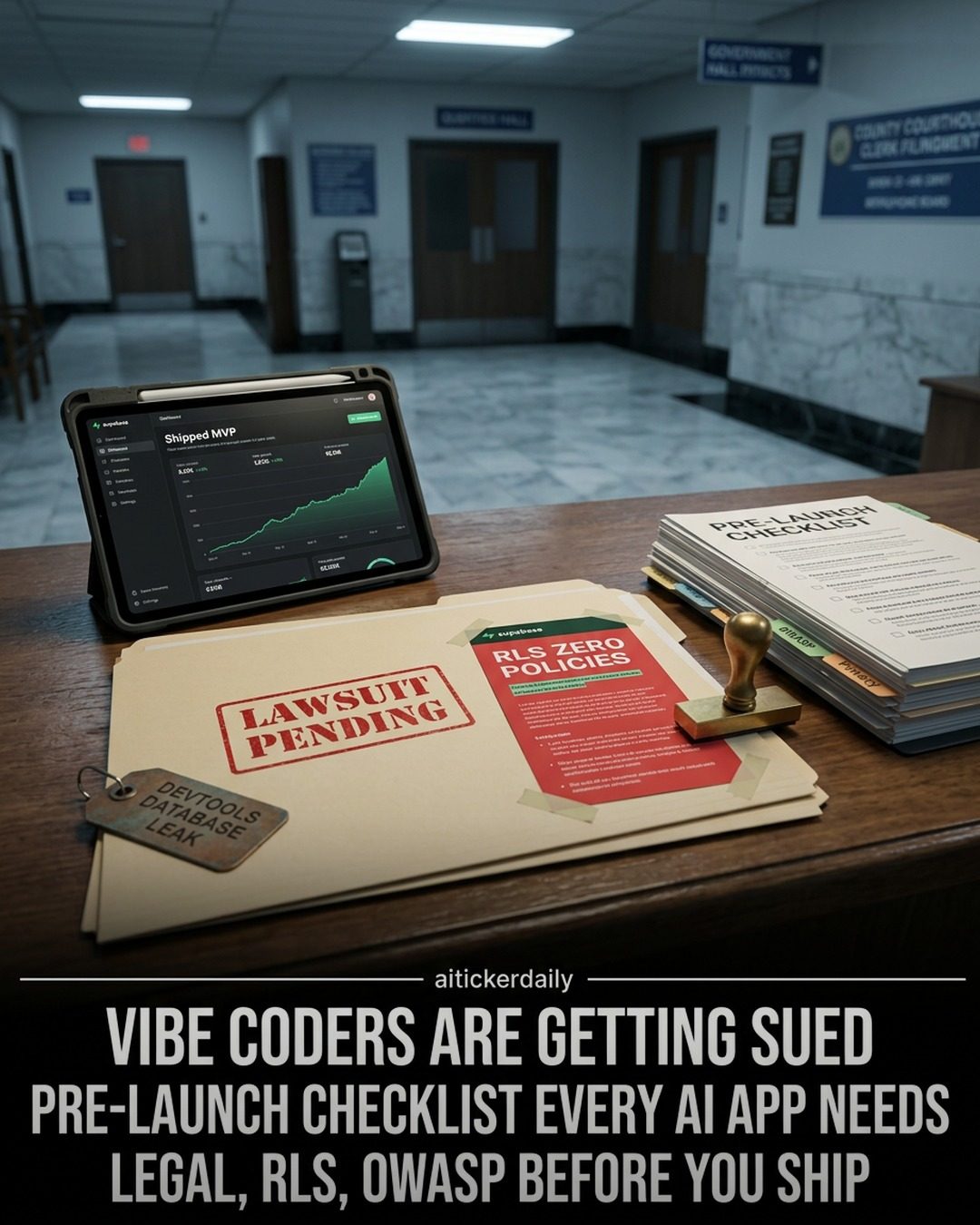
Vibe coders are facing lawsuits for shipping AI apps without essential security measures. This trend highlights the critical need for a comprehensive pre-launch checklist to ensure that AI applications are secure, compliant, and ready for deployment. Here, we'll explore the key components of a robust pre-launch checklist, focusing on legal requirements, security protocols, and best practices for AI development.
Why This Matters
AI apps handle vast amounts of sensitive data, making security a top priority. Failing to implement necessary security measures can lead to data breaches, legal consequences, and damage to a developer's reputation. A thorough pre-launch checklist helps mitigate these risks by ensuring that all critical aspects of security and compliance are addressed before the app goes live.
Row Level Security (RLS)
Row Level Security (RLS) is a fundamental security measure that restricts data access based on user authentication. Implementing RLS is crucial for protecting user data and preventing unauthorized access. Here’s why RLS is essential:
The Importance of RLS
Without RLS, anyone with access to the database can view the entire dataset, even sensitive information. This vulnerability can be exploited without any sophisticated hacking techniques. Simply opening the browser console and querying the database can reveal all records. Supabase, a popular backend service, emphasizes the importance of RLS by providing tools to implement these policies. By setting RLS policies, developers can ensure that each authenticated user can only access data they are authorized to view.
Implementing RLS
To implement RLS effectively, every table containing user data should have policies that restrict rows to the authenticated owner. This means that before inviting beta users, it is crucial to ship RLS policies. One missing policy can expose every customer record, making it a critical step in the development process. Here’s how to do it:
- Define Policies: Create policies that restrict access to rows based on the authenticated user. For example, a policy might allow a user to access only their own data.
- Apply Policies: Apply these policies to all relevant tables in the database. This ensures that even if a user gains access to the database, they cannot view data outside their permissions.
- Test Policies: Conduct thorough testing to ensure that the policies are correctly implemented and that unauthorized access is prevented.
Client-Side vs. Server-Side Validation
Client-side validation is often used to improve user experience by providing instant feedback. However, it is not a substitute for server-side validation, which is essential for data security. Here’s why:
Limitations of Client-Side Validation
Client-side validation, such as using Zod on the client, primarily enhances user experience (UX). It provides immediate feedback to users but does not prevent attackers from bypassing these checks. Attackers can disable JavaScript, use tools like Postman, and send malicious data directly to the API. If a form writes to the database, server-side validation is necessary to enforce security rules.
The Need for Server-Side Validation
Server-side validation ensures that data is validated and sanitized before it reaches the database. This layer of security is crucial for preventing data breaches and ensuring data integrity. Here’s how to implement server-side validation effectively:
- Duplicate Schemas: Use duplicate schemas on the client and server. The client schema provides instant feedback to users, while the server schema enforces data validation.
- Never Trust the Browser: Never rely on the browser as the security boundary. Always validate data on the server side to prevent unauthorized access.
- Validate API Routes: Ensure that every API route is validated. One unvalidated route can bypass all frontend validators, leaving the system vulnerable.
Pre-Launch Checklist
A comprehensive pre-launch checklist for AI app builders should include the following steps:
Legal and Compliance
- GDPR and CCPA Privacy Basics: Ensure that your app complies with data protection regulations such as GDPR and CCPA. This includes implementing privacy policies, obtaining user consent, and providing clear information on data usage.
- Privacy Policy: Clearly outline how user data is collected, used, and protected. Provide a link to the privacy policy in the app and make it easily accessible to users.
Security Measures
- Row Level Security (RLS): Implement RLS policies before inviting beta users. Ensure that every table with user data has policies that restrict access to authenticated users.
- OWASP Prompts: Follow OWASP (Open Web Application Security Project) guidelines to identify and mitigate security risks. This includes regular audits, vulnerability assessments, and best practices for secure coding.
- Server-Side Validation: Always validate data on the server side to enforce security rules. Use duplicate schemas for feedback and enforcement.
Testing and Monitoring
- Failure-Path Testing: Conduct failure-path testing to identify vulnerabilities and ensure that the app can handle unexpected scenarios gracefully.
- Security Headers: Implement security headers to protect against common web vulnerabilities, such as cross-site scripting (XSS) and clickjacking.
- Monitoring and Logging: Set up monitoring and logging to detect and respond to security incidents. Regularly review logs for suspicious activity and take appropriate action.
Practical Tips
Regular Audits
Conduct regular security audits to identify and address vulnerabilities. This includes code reviews, vulnerability assessments, and penetration testing. Regular audits help ensure that your app remains secure as it evolves.
Stay Updated
Keep your app and its dependencies up-to-date. Regularly update libraries, frameworks, and tools to patch known vulnerabilities and improve security. Stay informed about the latest security trends and best practices in AI development.
User Education
Educate users about the importance of security and provide clear instructions on how to protect their data. This includes using strong passwords, enabling two-factor authentication, and being cautious about sharing sensitive information.
Important Takeaways
- Security is a Priority: Implementing security measures such as RLS, server-side validation, and compliance with data protection regulations is essential for protecting user data and avoiding legal consequences.
- Comprehensive Checklist: A thorough pre-launch checklist ensures that all critical aspects of security and compliance are addressed. This includes legal considerations, security measures, and testing protocols.
- Continuous Improvement: Security is an ongoing process. Regular audits, updates, and monitoring are necessary to maintain the security of your AI app.
Conclusion
As AI app development continues to advance, ensuring the security and compliance of these applications is more critical than ever. By following a comprehensive pre-launch checklist that includes RLS, server-side validation, legal considerations, and regular testing, developers can build secure and compliant AI apps. This not only protects user data but also safeguards the developer's reputation and avoids potential legal issues.
Questions readers ask
What are the key legal requirements to include in an AI app pre-launch checklist?
Key legal requirements for an AI app pre-launch checklist include compliance with data protection regulations such as GDPR, CCPA, and local laws. Ensure that your app has clear terms of service, privacy policies, and user consent mechanisms. Additionally, verify that your app adheres to industry-specific standards and guidelines.
How can I validate the security of my AI app before launch?
To validate the security of your AI app, conduct thorough security audits and penetration testing. Implement encryption for data at rest and in transit. Regularly update and patch your app to address known vulnerabilities. Consider hiring a third-party security expert to review your app's security measures.
What security protocols should be in place to protect sensitive data in an AI app?
Essential security protocols for protecting sensitive data in an AI app include implementing robust access controls, such as multi-factor authentication and role-based access. Ensure that data is encrypted both in transit and at rest. Regularly monitor and log data access and usage to detect and respond to potential breaches promptly.
How can a pre-launch checklist help maintain user trust in an AI app?
A pre-launch checklist helps maintain user trust by ensuring that the app is secure, compliant with laws, and transparent about data handling practices. By addressing security protocols, legal requirements, and best practices, you demonstrate a commitment to protecting user data and providing a reliable service. This builds confidence and encourages ongoing user engagement.
What are the potential consequences of launching an AI app without adequate security measures?
Launching an AI app without adequate security measures can result in severe consequences, including data breaches that expose sensitive user information. This can lead to legal action, financial penalties, and significant damage to the app's reputation. Users may lose trust in the app, leading to decreased usage and potential legal ramifications.
Why is it important to include user consent mechanisms in an AI app's pre-launch checklist?
Including user consent mechanisms in an AI app's pre-launch checklist is crucial for legal compliance and ethical data handling. It ensures that users are informed about how their data will be used and have the option to consent or decline. This transparency helps build user trust and can protect the app from potential legal issues related to data misuse or unauthorized data collection.
What steps can be taken to ensure an AI app complies with industry-specific standards before launch?
To ensure an AI app complies with industry-specific standards, review and understand the relevant regulations and guidelines for your sector. Conduct regular compliance audits and update your app's features and data handling practices accordingly. Engage with industry experts or consultants who specialize in your sector to ensure all necessary standards are met and maintained.
Related deep dives
Similar reads based on topic and creator.




Recent articles
Fresh deep dives from the latest Reels we unpacked.




Comments
Be the first to comment.