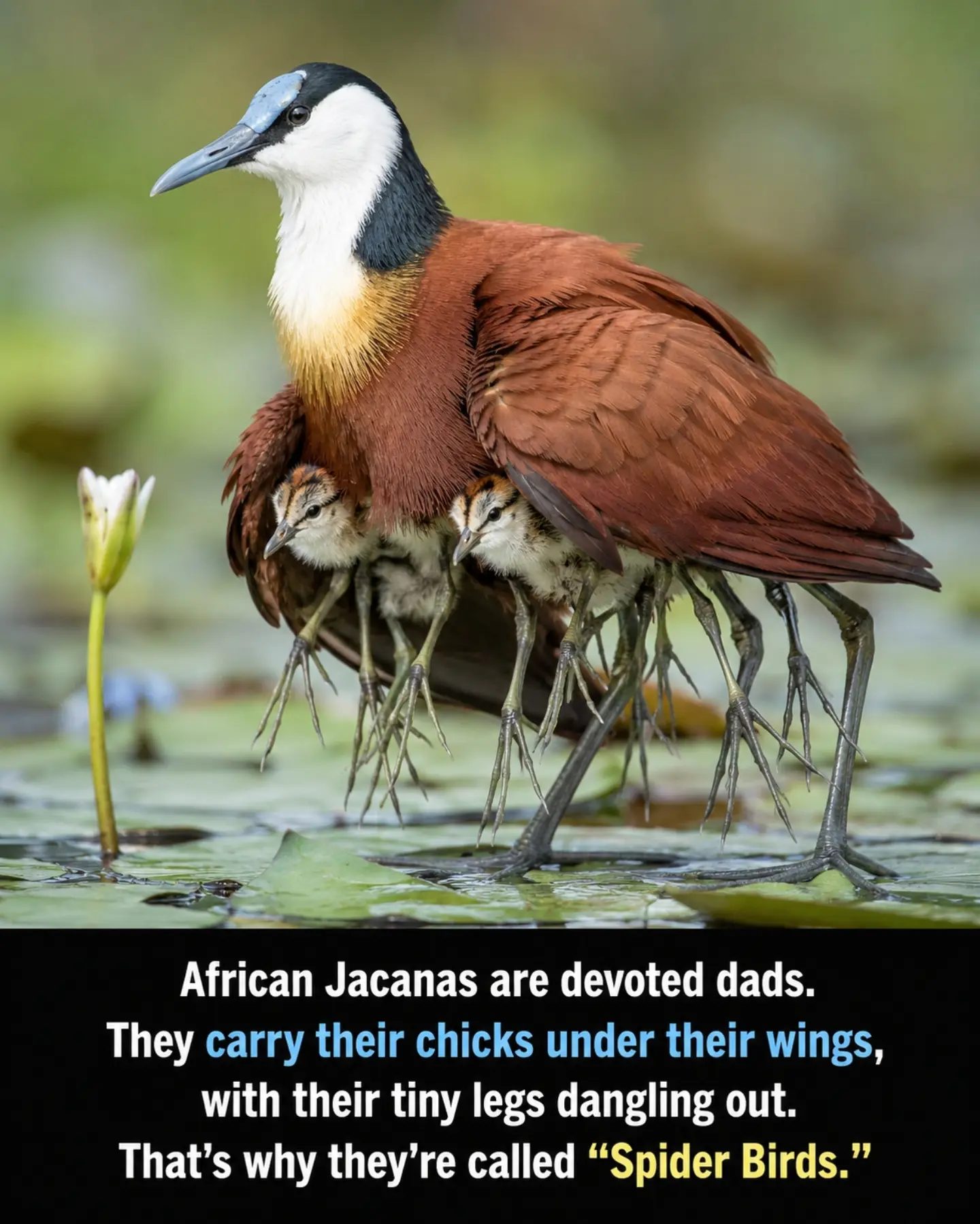
African Jacanas: The Fascinating World of "Spider Birds"
African Jacanas, often referred to as "Spider Birds," are a fascinating species known for their unique parenting behavior. These birds are native to sub-Saharan Africa and are easily recognized by their long toes and legs, which allow them to walk on floating vegetation and lily pads without sinking.
Why this matters
African Jacanas are not just known for their distinctive appearance but also for their remarkable parenting skills. Understanding their behavior can provide insights into the diverse strategies employed by birds to ensure the survival of their offspring. This is particularly important in the context of avian biology and ecology, where unique adaptations often play a crucial role in the survival and success of a species.
Main discussion
Unique Characteristics of African Jacanas
African Jacanas are medium-sized birds with a body length of up to 15 inches and a wingspan of around 12 inches. They have a distinctive black and white plumage with a chestnut-colored belly and a notable crest on their head. Their most striking feature is their long, slender legs and toes, which are adapted to walking on floating vegetation and lily pads. This adaptation is crucial for their survival in their natural habitats, which include marshes, ponds, and other aquatic environments.
Parental Care in African Jacanas
One of the most notable aspects of African Jacanas is their dedicated parental care, particularly the role of the males. Unlike many bird species where the female is the primary caregiver, African Jacanas exhibit a unique division of labor. The males take on the primary responsibility of incubating the eggs and caring for the chicks after they hatch. This behavior is relatively rare in the avian world and sets African Jacanas apart from many other bird species.
The "Spider Bird" Nickname
The nickname "Spider Birds" comes from the distinctive way African Jacanas carry their chicks. The chicks have long, spindly legs that dangle out from under the parent's wings as they are carried. This sight is reminiscent of a spider carrying its eggs, hence the nickname. The chicks are entirely dependent on their parents for the first few weeks of their lives, and the males, in particular, play a crucial role in ensuring their survival.
Habitat and Behavior
African Jacanas are typically found in freshwater wetlands, including marshes, ponds, and the edges of rivers and lakes. These habitats provide ample food sources, such as insects, small fish, and aquatic plants. The birds are known for their distinctive call, which is a loud, repetitive "chuck-chuck-chuck" sound. This call is often used to communicate with other members of the flock and to warn of potential predators.
Practical tips
For those interested in observing African Jacanas in their natural habitat, there are a few practical tips to keep in mind:
- Choose the Right Time of Day: Early morning or late afternoon are the best times to observe these birds, as they are more active during these periods.
- Be Quiet and Patient: African Jacanas are sensitive to noise and disturbance, so it's important to approach their habitats quietly and patiently.
- Use Binoculars: A good pair of binoculars can help you get a closer look at these birds without disturbing them.
- Respect Their Space: Always maintain a safe distance from the birds to avoid stressing them or disrupting their natural behavior.
Important takeaways
African Jacanas, or "Spider Birds," are a remarkable species with unique adaptations and behaviors. Their long, slender legs and toes allow them to navigate their aquatic habitats with ease, while their dedicated parental care ensures the survival of their offspring. The nickname "Spider Birds" highlights their distinctive method of carrying their chicks, which is a fascinating aspect of their biology. Understanding these birds can provide valuable insights into avian ecology and behavior, making them a subject of interest for both scientists and nature enthusiasts alike.
Conclusion
The world of African Jacanas, or "Spider Birds," is a fascinating one, filled with unique adaptations and behaviors that set them apart from other bird species. From their distinctive appearance to their remarkable parental care, these birds offer a wealth of information about the diverse strategies employed by birds to ensure the survival of their offspring. Whether you're a birdwatcher, a nature enthusiast, or a scientist, there is always more to learn and appreciate about these incredible creatures.
Questions readers ask
Why are African Jacanas called 'Spider Birds'?
African Jacanas are called 'Spider Birds' because of their long legs and toes, which resemble those of spiders. These adaptations allow them to walk on floating vegetation and lily pads without sinking, making them appear as if they are walking on water.
What role do male African Jacanas play in parenting?
Male African Jacanas take on the primary role in incubating eggs and caring for chicks. This includes sitting on the eggs to keep them warm and protecting the chicks from predators until they are old enough to fend for themselves.
How do African Jacanas care for their chicks?
African Jacana chicks are cared for primarily by the male parent. After hatching, the chicks ride on the male's back for safety and warmth. The male also feeds the chicks by regurgitating food into their mouths.
What are some unique adaptations of African Jacanas?
African Jacanas have long legs and toes, which help them move effortlessly across floating vegetation and lily pads. Their long toes are also useful for distributing their weight, preventing them from sinking into the water surface.
Where are African Jacanas typically found?
African Jacanas are native to sub-Saharan Africa.They inhabit various wetlands, including marshes, swamps, and shallow lakes, where they can find an abundance of floating vegetation to build their nests and raise their young.
How do African Jacana chicks learn to swim?
African Jacana chicks are precocial, meaning they are relatively independent and mobile from birth. They learn to swim and forage for food shortly after hatching, often with the guidance and protection of their male parent.
Related deep dives
Similar reads based on topic and creator.



Recent articles
Fresh deep dives from the latest Reels we unpacked.

Comments
Be the first to comment.