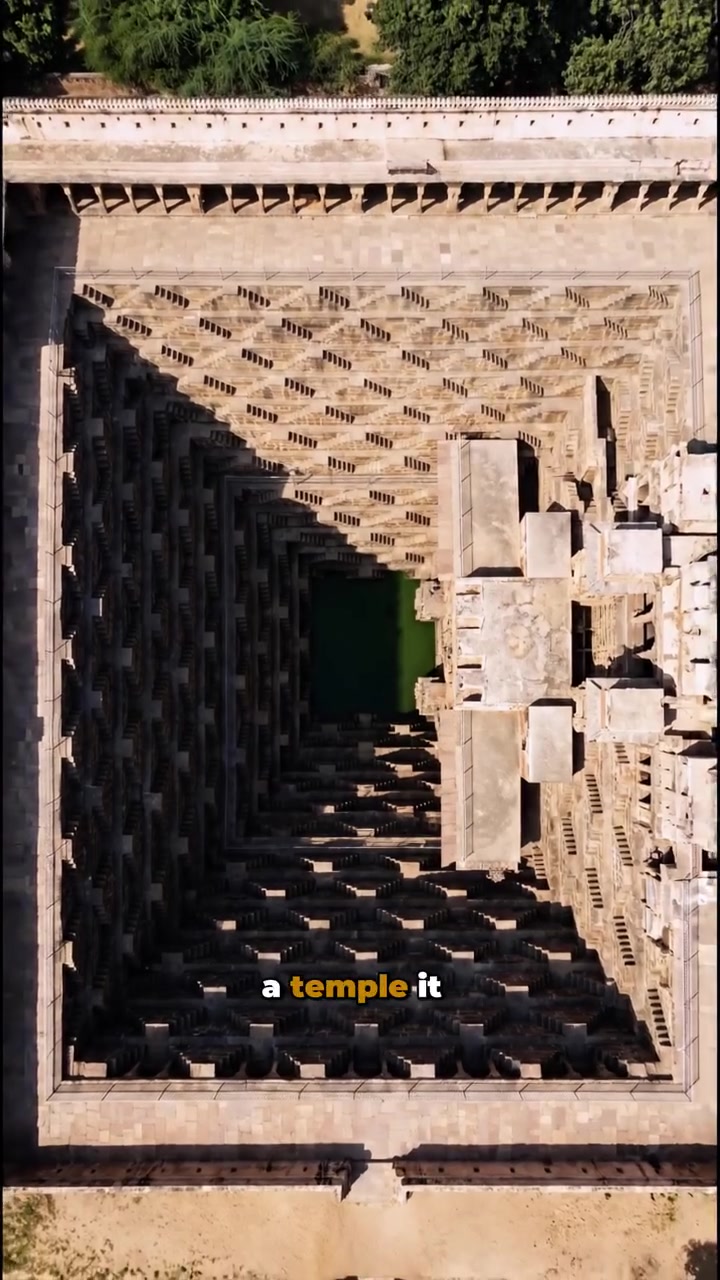
The Chand Baori: A Vertical Oasis
In the village of Abhaneri, Rajasthan, lies the Chand Baori, a structure that seems more like an architectural mirage than a practical design. It plunges 13 stories down into the earth, neatly organizing 3,500 steps into a geometric spiral along three walls of a square. There are no grand inscriptions, no boastful names carved in stone, just a functional yet breathtaking feat of engineering that has served the community for over a thousand years. To clarify the misunderstanding, this is not a temple, as one might assume from its commanding structure and delicate carvings. It is a well, designed to collect and distribute water. The design allows the entire town to access water, down to the last drop. For instance, when the water level is highest in the rainy season, people can simply go down a few steps. When the water line falls, they can still descend to reach it.
The Role of Stepwells in Rajasthan's Heat and Drought
Stepwells may not be as famous as other historic sculptures and monuments. Yet, they are essential landmarks in Rajasthan, where temperatures regularly exceed 110°F (43°C) and rain is scarce. The region's harsh climate makes water access a matter of life and death. If the Chand Baori is made famous by its beauty and grandeur, the lesser-known Baoris in other villages are equally vital to the survival of their communities. The Chand Baori and others like it serve two key purposes: they provide water and offer refuge from the scorching sun. Because the temperature drops about 10°F (5°C) for each story below the surface, the structure functions as a natural air conditioner. Villagers gather in the confines of the Chand Baori to cool off, as well as to draw water for their crops and livestock. In a region without electricity, running water, or air conditioning, these stepwells are more than just water sources — they are community hubs.
The Engineering of a Vertical Oasis
The Chand Baori's design is a marvel of ancient Indian engineering. Each level of the well was carved out of the stone. Generally emerging during the eighth and ninth centuries, the town's residents can access the water. The walls of the well are lined with steps, with a total of 1,360 steps. Its depth measures 98 feet, or 30 meters, which is more than half of the Empire State Building, one of the world’s most iconic towers. The stairs are designed to be exactly 10 degrees cooler the deeper you go. The well’s water level changes with the seasons, and the steps drop about 100 feet on three walls of a square, providing access to water year-round. At the bottom, the water forms a small green pool, fulfilling its purpose as a water source for the community.
The Art of the Chand Baori
The Chand Baori’s intricate design and geometrical patterns are often mistaken for those of a temple due to its grandeur. The well features intricately carved pillars, arches, and pavilions. The architecture showcases a unique blend of elements from both Hindu and Islamic styles, reflecting the diverse cultural influences that shaped Rajasthan. While the well serves a practical purpose, its aesthetic value is undeniable. The geometric patterns and carvings introduce a visual elegance to the structure, making it a beautiful example of Rajasthan’s rich architectural heritage.
A Forgotten Architect
The Chand Baori still stands today after over a thousand years, yet nobody knows the genius behind it. The architecture was named after the local ruler, but no inscriptions were left. Despite its historical significance, there are no records or inscriptions indicating the identity of the craftsman. Similar nearby ruins, the stepwells also bear no signature. The history behind its builder remains a mystery, adding to its allure and prestige. This lack of signature emphasizes the anonymous yet collective effort that went into building such a masterpiece—a testament to the community’s collective skills, resources, and resilience.
A Hollywood Connection
The Chand Baori has gained international recognition, not just for its historical and architectural significance, but also for its appearances in popular media. It has been featured in films and referenced in the design of one of the most famous prisons in cinema. However, the well was not built for fame or recognition. Stepwells, including the Chand Baori, were built for their practical use, not to serve as film sets. The well is also a UNESCO World Heritage Site, designated for its remarkable example of ancient Indian architecture.
Exploring the Chand Baori
Guided tours are available. If possible, visit during the evenings to appreciate its cooler temperatures, especially compared to the sweltering Rajasthan heat. Be ready for a long climb: The Chand Baori spans 13 stories. Pack plenty of water and leave yourself time to explore.
- Take a guided tour: Visitors can hire a guide to explain the intricate details. Understanding the history and significance of the well makes the visit more meaningful.
- Avoid the heat: The coolness of the well is most noticeable in the afternoon when the temperature rises. Even if you can’t fully escape the Rajasthan summer, the stepwell offers respite from the blazing sun.
- Prepare for the climb: Chand Baori is a 13-story deep well lined with almost 3,500 steps. Bring plenty of water to stay hydrated and take plenty of breaks.
The Architectural Mystery of the Chand Baori
Some mysteries remain unsolved, such as the identity of those behind these stepwells. If you’ve ever wondered who built the Chand Baori, you can stand at the rim of this 13 story, well and ask yourself if you would walk 3,500 steps to find out. The Chand Baori is not just a well; it is a testament to human ingenuity and resilience.
Questions readers ask
What makes the Chand Baori so unique compared to other stepwells in Rajasthan?
The Chand Baori stands out due to its sheer size and depth, plunging 13 stories into the earth with 3,500 steps organized in a geometric spiral. Unlike other stepwells, it provides water year-round and has served the community as a natural air conditioner and community hub. Its unique design is a blend of Hindu and Islamic architectural styles and is often mistaken for a temple due to its grandeur.
Why is the Chand Baori so crucial for the village of Abhaneri?
The Chand Baori is crucial for Abhaneri because it provides a reliable water source in a region where temperatures often exceed 110°F and rain is scarce. The well's design allows villagers to access water even when the water level is low, ensuring the survival of crops and livestock. Additionally, it serves as a refuge from the scorching heat, making it a vital community hub.
How does the Chand Baori's design help with water distribution?
The Chand Baori’s design includes steps that descend on three walls of a square, allowing villagers to access water at different levels depending on the season. When the water level is high during the rainy season, people only need to go down a few steps. When the water level drops, they can descend further to reach it, ensuring that the entire community can access water year-round.
What is the significance of the temperature drop in the Chand Baori?
The temperature drop in the Chand Baori is significant because it makes the well a natural air conditioner. As you descend, the temperature drops about 10°F for each story, providing a cool refuge from the scorching heat above. This makes the well not just a water source, but also a place for villagers to gather and cool off, especially in the harsh summers of Rajasthan.
Can visitors explore the Chand Baori today, and if so, how accessible is it
Yes, visitors can explore the Chand Baori today. It is a popular tourist attraction and is accessible to visitors year-round. The well's steps are well-maintained, and visitors can descend to experience the unique architecture and the cooler temperatures below the surface. However, it is always advisable to check the latest travel advisories and local conditions before planning a visit.
Related deep dives
Similar reads based on topic and creator.




Recent articles
Fresh deep dives from the latest Reels we unpacked.




Comments
Be the first to comment.