Iceland Travel Itinerary
Iceland is a land of contrasts, where fire and ice coexist in breathtaking harmony. For those planning a 10-day adventure, a well-planned itinerary is essential to make the most of this stunning destination. This guide will help you navigate through a journey filled with awe-inspiring landscapes, from the Golden Circle to the South Coast, and even the mystical Snaefellsnes Peninsula.
Context: Why this matters
First, let's consider the allure of Iceland. This Nordic island is renowned for its natural wonders, including glaciers, geothermal spas, and dramatic coastlines. Whether you’re a nature enthusiast, a geology buff, or simply seeking a unique experience, Iceland offers a diverse range of attractions. A well-structured itinerary ensures that you can cover these highlights without feeling rushed or overwhelmed.
Main discussion
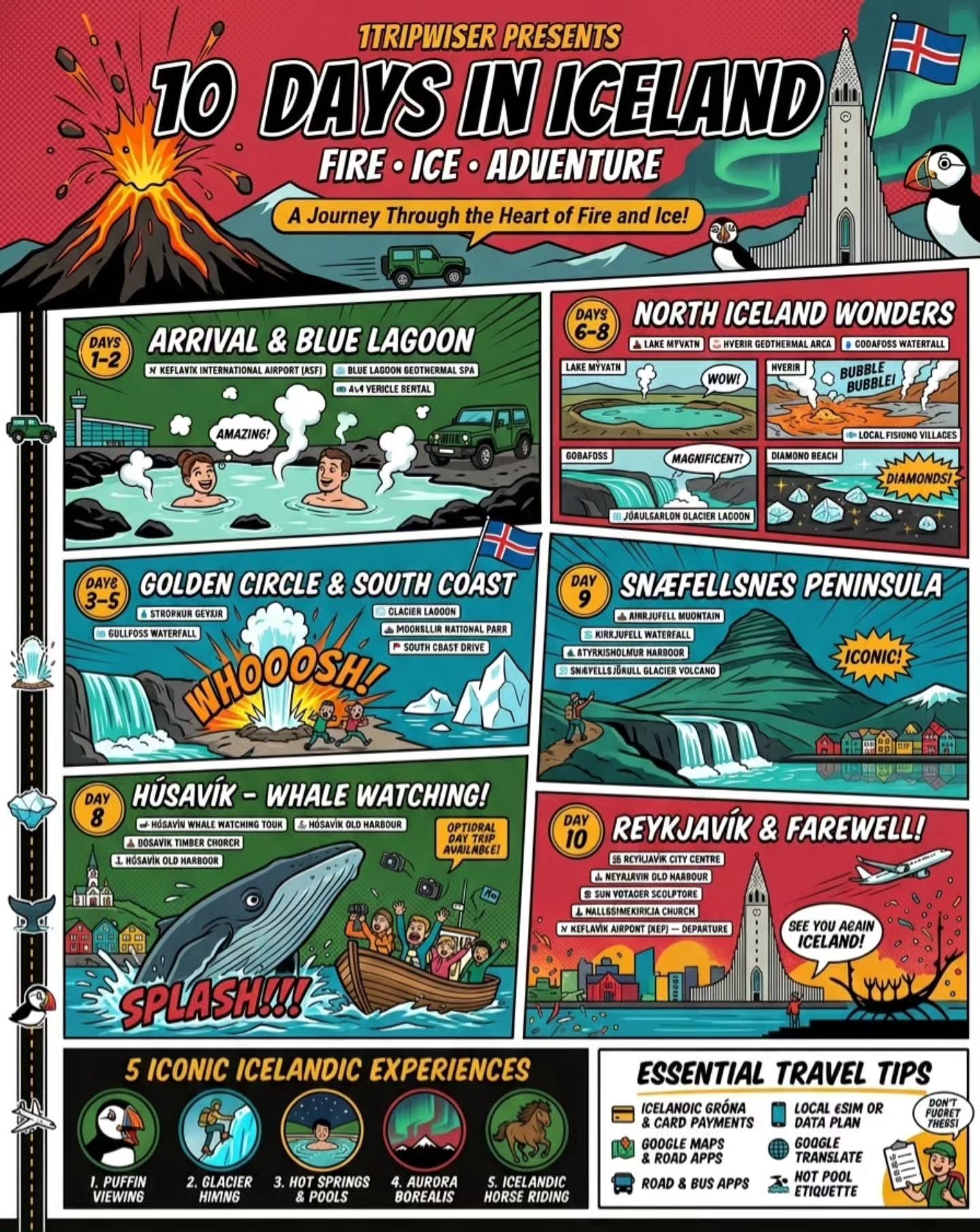
Days 1-2: Arrival & Blue Lagoon
Your Icelandic adventure begins at Keflavik International Airport (KSF). After landing, the first stop on your itinerary is the iconic Blue Lagoon Geothermal Spa. This geothermal spa, rich in minerals like silica and sulfur, is renowned for its therapeutic properties. Relaxing in the milky blue waters surrounded by lava fields sets the perfect tone for your journey.
Days 3-5: Golden Circle & South Coast
The Golden Circle is a must-visit route that encompasses some of Iceland’s most famous landmarks. This includes Þingvellir National Park, a UNESCO World Heritage site where the world's first parliament, Alþingi, was established. The ethereal Gullfoss waterfall and the geothermal area of Geysir are also part of this loop. The South Coast, known for its black sand beaches, dramatic cliffs, and the towering Seljalandsfoss and Skógafoss waterfalls, offers a striking contrast to the lush landscapes of the Golden Circle.
Day 5: Snaefellsnes Peninsula
The Snaefellsnes Peninsula is often referred to as "Iceland in miniature" because it encapsulates many of the country's natural wonders in a compact area. Here, you can explore lava fields, black sand beaches, and the iconic Kirkjufell mountain. The Snaefellsnes Peninsula also offers a chance to see puffins, a quintessential Icelandic bird, during the summer months.
Day 10: Reykjavik & Farewell
No trip to Iceland is complete without spending time in Reykjavik, the vibrant capital city. Explore its colorful streets, visit the iconic Hallgrimskirkja church, and enjoy the local cuisine at one of the many cozy cafes. Before you leave, make sure to pick up some souvenirs to remind you of your adventure.
Practical tips
Essential Travel Tips
- Local SIM & Google Maps: Ensure you have a local SIM card and use Google Maps to navigate the country. Download offline maps in case of spotty signal.
- Google Earth & Road & Bus: Planning your route in advance using Google Earth can save time and ensure you don’t miss any key spots. Public transportation is reliable, but be sure to check the schedules.
- Travel Etiquette: Icelanders value respect for nature and local customs. Always follow designated hiking trails, stay on marked paths, and adhere to guidelines for visiting geothermal areas.
What to See and Do
- Puffins and Glaciers: If you visit during the summer, don’t miss the opportunity to see puffins. Glacier hiking tours are also a highlight, offering a unique perspective on the country’s icy landscapes.
- Hot Springs and Aurora: Iceland is famous for its geothermal pools and hot springs. The Blue Lagoon is just the beginning; many hidden gems are scattered around the country. If you’re there during the winter months, be sure to look for the Northern Lights.
- Icelandic Culture: Engaging with local culture is a rewarding part of any trip. Visit museums, try traditional Icelandic cuisine, and consider taking a language class to learn some basic Icelandic phrases.
Important takeaways
Iceland's beauty lies in its diversity. From the geothermal wonders of the Golden Circle to the serene landscapes of the South Coast, every day offers a new adventure. Planning your itinerary with key highlights and practical tips ensures a seamless and enjoyable experience. Whether you're a first-time visitor or a seasoned traveler, Iceland’s allure will leave you with unforgettable memories.
Conclusion
Iceland offers an unparalleled travel experience, blending natural wonders with a rich cultural tapestry. A 10-day itinerary allows you to immerse yourself in the country’s landscapes and traditions, from the Blue Lagoon to the Snaefellsnes Peninsula. With careful planning and a respectful approach to travel, your journey through Iceland will undoubtedly be one of the most rewarding adventures you’ll ever undertake.
Questions readers ask
When is the best time to visit Iceland for a 10-day itinerary?
The best time to visit Iceland is during the summer months of June, July, and August. During this period, you can enjoy up to 22 hours of daylight, allowing ample time for sightseeing and activities. However, if you prefer fewer tourists and the possibility of seeing the Northern Lights, consider traveling in late August or early September.
What should I pack for a 10-day trip to Iceland?
Packing for Iceland requires careful consideration of the weather. Essential items include waterproof and windproof outerwear, thermal base layers, sturdy hiking boots, and gloves. Don’t forget a swimsuit for geothermal pools like the Blue Lagoon, and a reusable water bottle to stay hydrated. A good camera is also recommended to capture the stunning landscapes.
Can I complete the Golden Circle and South Coast in one day?
While it’s technically possible to visit the Golden Circle and South Coast in one day, it’s not recommended. The Golden Circle includes Þingvellir National Park, Geysir Geothermal Area, and Gullfoss waterfall, while the South Coast features black sand beaches, waterfalls, and glaciers. To fully appreciate both areas, allocate at least two to three days for a more relaxed pace.
What are the must-see attractions in the Snaefellsnes Peninsula?
The Snaefellsnes Peninsula is known for its dramatic landscapes and unique attractions. Must-see spots include the iconic Kirkjufell mountain, the picturesque Djúpalónssandur black beach, and the Arnarstapi coastal cliffs. Additionally, the Snaefellsjökull National Park and the charming fishing villages of Grundarfjörður and Ólafsvík offer a mix of natural beauty and cultural experiences.
How much time should I spend at the Blue Lagoon?
Plan to spend at least 2-3 hours at the Blue Lagoon. This will give you enough time to enjoy the geothermal spa, try the various saunas, and apply the silica mud mask. Keep in mind that the later in the day you visit, the more crowded it will be. Arriving early in the morning or later in the evening can help avoid the busiest times.
What is the best way to travel between locations in Iceland?
Renting a car is the most convenient way to travel between locations in Iceland. This allows for flexibility and the ability to explore at your own pace. The ring road connects most major attractions and is well-maintained. Alternatively, organized bus tours and domestic flights can also be considered for specific routes.
Are there any essential tips for driving in Iceland?
Driving in Iceland requires caution, especially during the winter months when roads can be icy and weather conditions unpredictable. Always check road conditions before setting out, and equip your vehicle with studded tires if necessary. Stay alert for single-lane bridges and adhere to speed limits, which are strictly enforced. Additionally, be prepared for sudden weather changes and have an emergency kit on hand.
Related deep dives
Similar reads based on topic and creator.
Recent articles
Fresh deep dives from the latest Reels we unpacked.

Comments
Be the first to comment.